
Loading the latest stories…

Woven lace often doesn’t look very lacy when it’s still on the loom—it takes the magic of wet-finishing to transform it into its final form.
Christina Garton2 min read
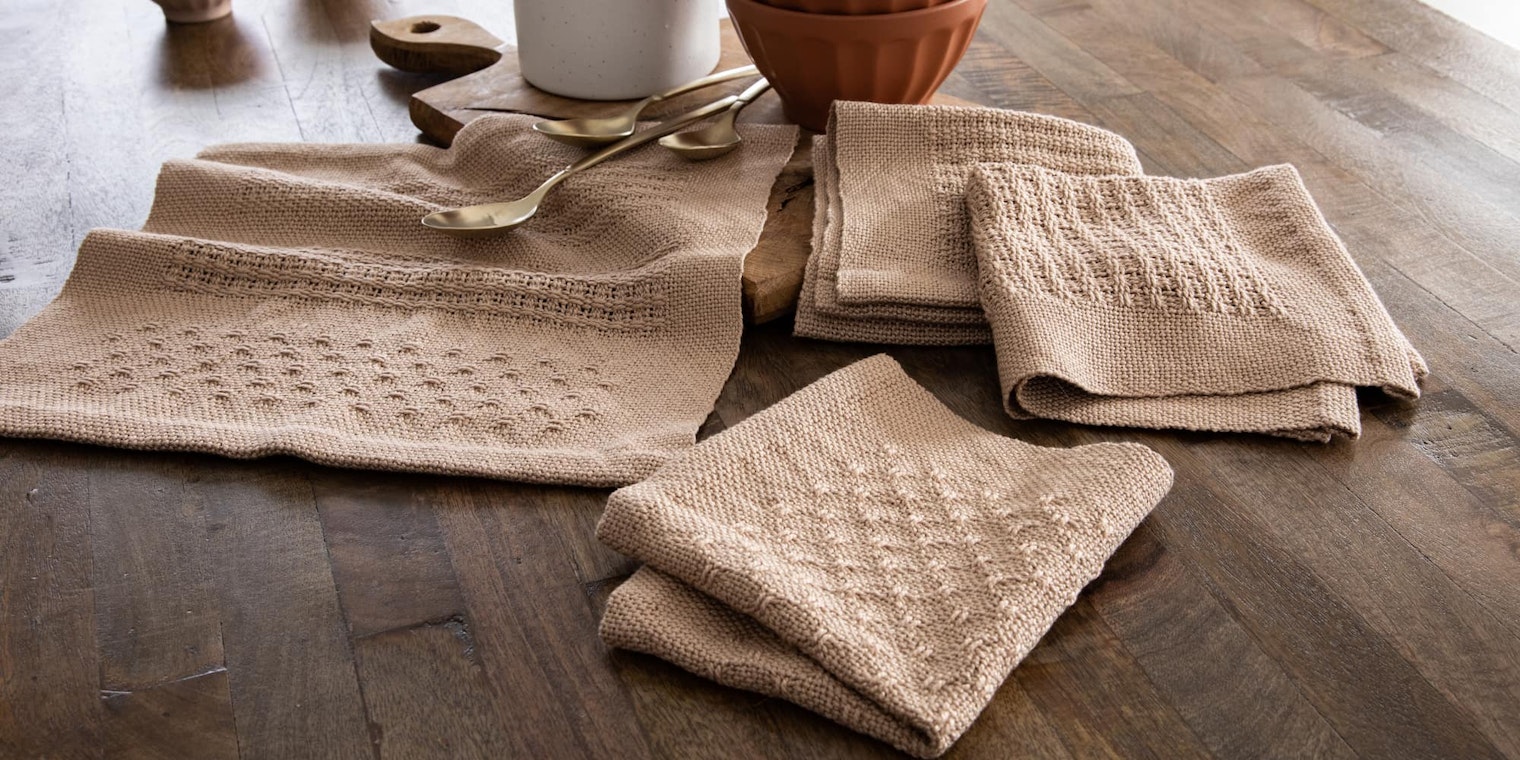
The first time you weave lace, it can be nerve wracking. Unlike other types of lace (knitted, crocheted, tatted, etc.), the lace on your loom looks very different from the final product. When you first weave the lace areas, they’ll look like odd floats. It’s easy to worry that you’ve done something wrong—but do not fret! Remember the weaving mantra: It’s not finished until it’s wet-finished!
Wet-finishing is an important part of just about any weaving project (tapestries being one of the few exceptions) because it allows the fibers to move and adjust to their final form. Threads slip and slide into place, some wools might full, and other fibers often “bloom.” While you might not see much difference if you’re weaving some cotton towels in plain weave, for other structures, wet-finishing makes an enormous difference.
 Sara’s lace sampler on the loom doesn’t look too much like lace—yet. Photo credit: Tiffany Warble
Let’s see this in action. In the photo above, taken during the shooting of Sara Bixler’s new video course Huck Lace on the Rigid-Heddle Loom, you can see some examples of modified huck lace while still on the loom. The lace areas don’t look terribly lacy; the floats seem pretty loose, and the open areas aren’t obvious. It’s pretty fabric, but it doesn’t look like lace.
Now let’s look at this same fabric after it’s been wet-finished, which you can see in the photo below. The threads have shifted and bloomed to create what is now obviously woven lace. Areas that once looked just kind of sleazy now look properly lacy and much more stable. The cloth is so much more interesting with more texture.
 In this example from her huck lace course, Sara Bixler shows the difference between unwashed (left) and washed (right) lace fabric. Photo by Matt Graves
While the change in fabric might seem like magic, it doesn’t take much on your part to wet-finish lace. As with any other project, you need water, a small amount of mild detergent (no-rinse detergents such as Eucalan and Soak are fine), and a bit of agitation (fiber type will determine the type of agitation needed). If you’re weaving a project, make sure to follow the wet-finishing directions given because sometimes there are special fiber considerations: wools that might full if agitated too much or yarns that have an excess of dye that should be rinsed out.
If you don’t have any instructions on how to wet-finish a project, the general rule of thumb is to treat it the way you would wash the fabric. For cotton napkins, such as Sara Bixler’s À La Carte Napkins shown in the photo at top, you don’t need to be gentle or delicate with them the same way you might with a wool that might full. If you’re not sure, weave a sample or set of samples you can test. Not only will these samples tell you how best to wet-finish your final project, they’ll also be excellent additions to your weaving notes to reference for future projects.
For more information about weaving—and wet-finishing—laces on the rigid-heddle loom, make sure to check out Sara’s new video course.
Happy Weaving!
Christina
Originally published 7/6/2022; updated 11/14/2024
More from Little Looms
 Dealing with Selvedges that Go BumpLace weaves are notorious for creating uneven, scalloped, and overall lumpy-bumpy selvedges. Learn two different methods for handling these selvedges in the first installment of our Summer Selvedge Series. Christina Garton · June 4, 2026
 Skill Builder: Explore Two Takes on Textured WeavesCraving more visual interest in your projects? Try these simple pick-up patterns to add texture to your weaving.Christina Garton · December 18, 2025
 Mini Skill Guide: Lace Techniques in BandweavingLearn how you can use hand-manipulated techniques for the rigid-heddle loom to create unique and interesting patterns in your bandweaving.Christina Garton · March 13, 2025
 Pick Up Some Tips for Pick-Up SticksIntimidated by pick-up sticks? Sara Bixler has you covered with five amazing video tips (plus two bonus tips in the article). Christina Garton · February 12, 2025
 Consider This: Choosing Lace YarnsWant to weave pick-up lace on the rigid-heddle loom? Make sure you pick the right yarn for the job. Christina Garton · January 28, 2025
 Clasped Warp and LaceDid you know that you can use the clasped-warp technique with more than just plain weave? Christina Garton · January 23, 2025
 Beach House Placemats and NapkinsBring the beach to your loom--minus the sand and hermit crabs--with these tranquil placemats and napkins from Jodi Ybarra. Jodi Ybarra · July 18, 2023
 Viva Magenta! Projects to Celebrate the 2023 Color of the YearMeet Pantone's color of the year and ten inspiring designs for small looms to get your magenta magic going.Little Looms Editors · January 10, 2023
 A Trio of Techniques: Leno Lace, Brooks Bouquet, and Danish MedallionsLearn how to do Leno lace, Brooks bouquet, and Danish medallions on the rigid-heddle loom. With these hand-manipulated techniques you can take your designs to the next level. Christina Garton · November 17, 2022
 Challenge Yourself With Weaving ParametersI would like to have a set of handwoven placemats that match my everyday dishes. I have been using store-bought placemats for the past 25 years, and for almost that entire time, I have been thinking about weaving placemats of my own design.Susan E. Horton · September 21, 2022
From the Library




Comments
No comments yet — be the first to share your thoughts.
Sign in to join the conversation — commenting is for signed-in members.