
Loading the latest stories…




No matter what loom(s) you love to weave on, understanding the different characteristics of a fiber can help you make better choices when picking yarns for projects.
Christina Garton11 min read
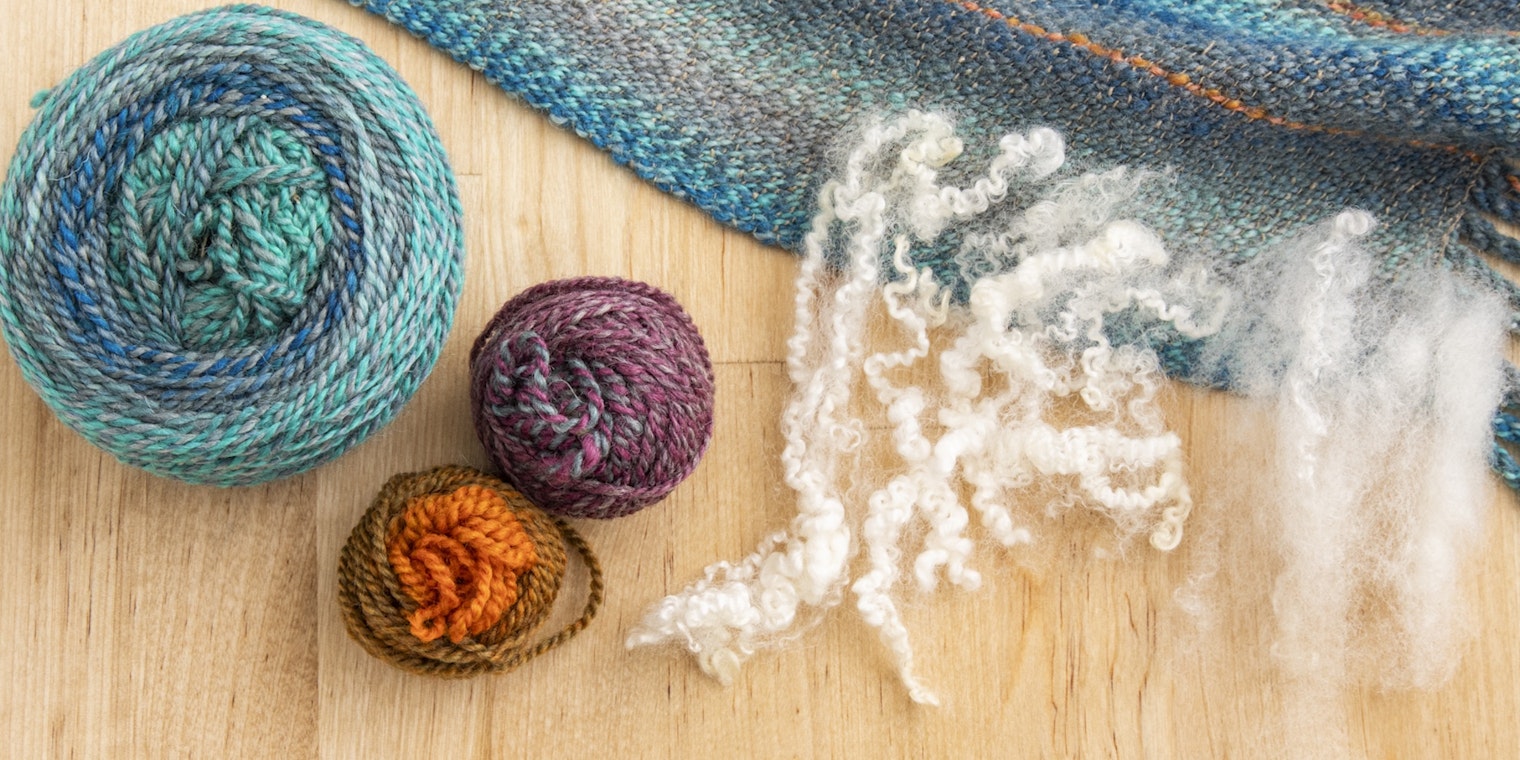

If you’re new to the world of fibers, choosing the right yarn for your weaving project can feel overwhelming. Fortunately, with a little education on the most commonly available weaving fibers, you can go into any yarn shop and confidently pick out a skein or two (or three or four). No matter what kind of weaving you do—rigid-heddle, pin, inkle, tapestry, or tablet—understanding the differences between fibers will help you become a better weaver. Today’s skill guide will give you a solid foundation as we go over the basics of protein (animal), plant, and synthetic fibers. As you read, you’ll learn facts about these fibers, including:
Every item we’ve selected for this guide is part of your All Access program and will help you get the most out of your subscription. Check out the Little Looms Library and our video course website for more learning opportunities.
Happy weaving,
Christina
For this article, the term wool is used to mean the fiber from sheep, although many fiber folks use wool to mean fiber from any animal. Most sheep wools share some common characteristics: they are warm, elastic, and durable. Wools can absorb a significant amount of water and still be warm; they are strong when dry and much weaker when very wet. Wools usually require handwashing to prevent fulling, although the amount they shrink varies across breeds.
Characteristics
Other characteristics of wool also vary considerably across breeds. Some produce very soft fiber (Merino or Cormo), while others produce exceptionally strong and durable fiber (Suffolk or Montadale). Fabrics made from breeds such as Targhee are wrinkle-resistant, while those made from Merino are not.
You're not signed in.
More from Little Looms
 Tutorial: Continuous-Strand WeavingLearn the basics of using the continuous strand–weaving method on a pin loom.Jennifer Chapman · July 30, 2026
 Twill for the Rigid-Heddle Loom: It’s Easier Than You Think!Learn why weavers love twill—and what makes it a great weave for the rigid-heddle loom.Christina Garton · July 14, 2026
 Long Thread Podcast: Angela Tong, Multidisciplinary MakerSeason 14, Episode 7: A jeweler, knitter, crocheter, weaver, and potter sit down for a chat—and it turns out she's the same person. Angela Tong talks about a creative life built on detail, technique, and staying true to her own voice.Anne Merrow · May 2, 2026
 Long Thread Podcast: Heather Torgenrud, Pick-Up BandweavingSeason 14, Episode 4: Although her weaving interests vary from Anne Merrow · March 21, 2026
 Long Thread Podcast: Christina Garton, Little LoomsSeason 14, Episode 2: Ten years since the first issue of Easy Weaving with Little Looms, editor Christina Garton is still finding delightful new ideas in small-loom weaving.Anne Merrow · February 21, 2026
 Weave a Pin-Loom Pet for National Love Your Pet DayWeave a pet—all it takes is a pin loom, a few put-ups of yarn, and a copy of Zoo Crew. Christina Garton · February 12, 2026
 Long Thread Podcast: Laverne Waddington (classic)Season 13, Episode 8: Using her hands, fine threads, and simple tools, Laverne Waddington uses backstrap looms to explore a world of weaving techniques and traditions.Anne Merrow · December 27, 2025
 Skill Builder: Explore Two Takes on Textured WeavesCraving more visual interest in your projects? Try these simple pick-up patterns to add texture to your weaving.Christina Garton · December 18, 2025
 Skill Builder: How to Thread Weaving TabletsLearn how to go from draft to a perfectly threaded set of tablets.Little Looms Authors · November 13, 2025
 Call for Submissions! Winter 2026: Wonderful WoolIn this issue, we’re looking for projects that highlight the beauty and versatility of wool and wool blends. Christina Garton · November 4, 2025
From the Library


Comments
No comments yet — be the first to share your thoughts.
Sign in to join the conversation — commenting is for signed-in members.