
Loading the latest stories…



Add extra flair to your selvedges and hems with these terrific trims.
Christina Garton3 min read
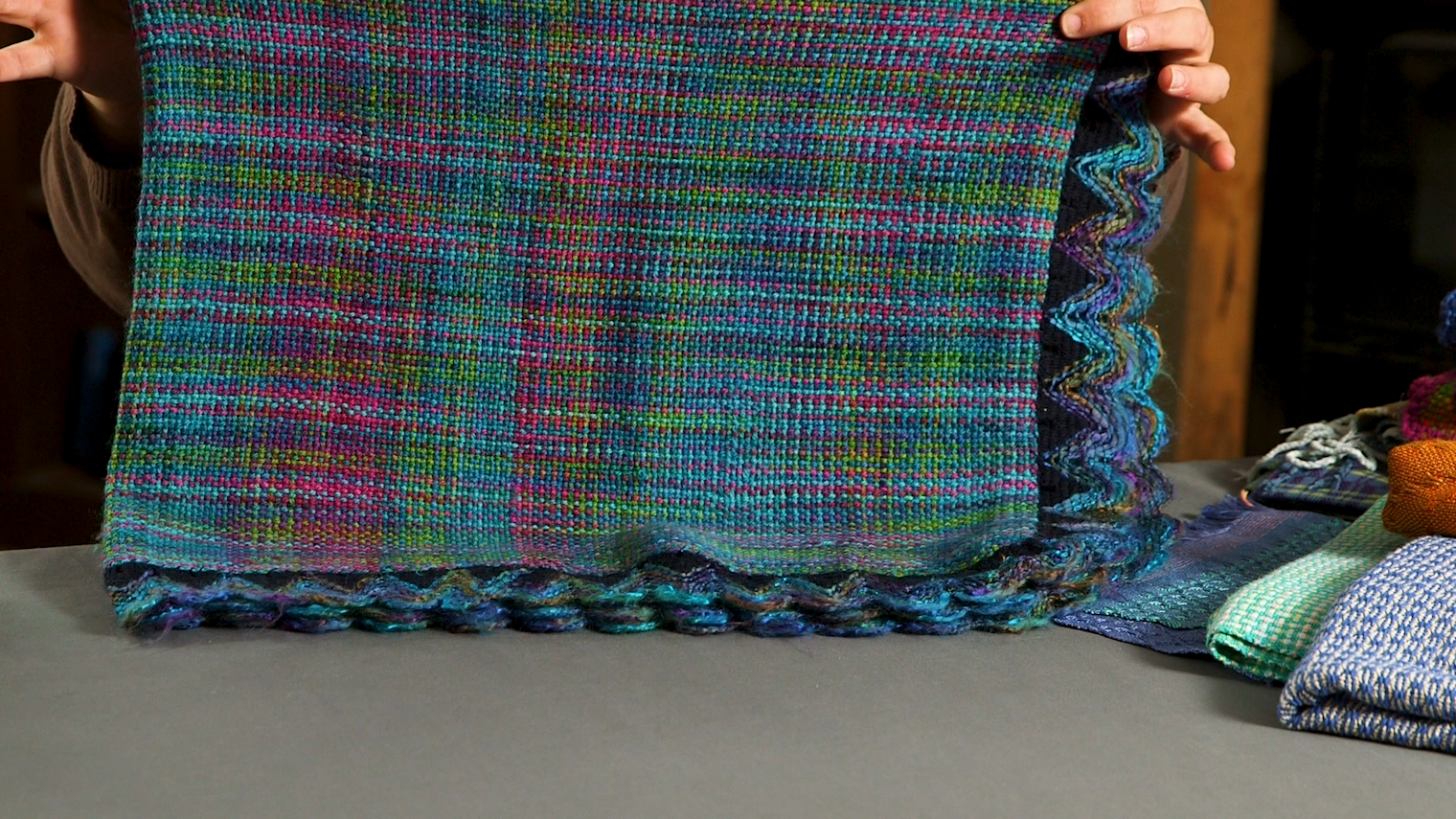
“Wait, you can do that?!” This is a phrase I’ve uttered more than a few times during my 15 years editing weaving magazines as I discover new-to-me tips, tricks, and techniques that go beyond useful and into life-changing territory. While watching the third video in our Spice Up Your Selvedges Series on adding trims and edging to your hems and selvedges, my exclamation was so loud, I scared my dog.
I’m sure you’re wondering what it was that got me so excited about trims and edging. I’m sure more of us have seen textiles that use bias tape or satin blanket binding as a trim. In her video, instructor Sara Bixler goes beyond these well-known trims and shows some examples and techniques that take designs to a whole new level. You can see for yourself in the video below!
What I appreciated about Sara’s approach to adding these trims was how much they added to the overall aesthetic of the finished item. Sara’s use of twill tape is a perfect example. The tape is store-bought but looks handwoven, so when it’s added to the hem of a rag rug, it doesn’t stick out and distract from the rest of the weaving. On the other side of the spectrum, both Sara’s handmade braided rug trim and her store-bought trim not only match her weaving perfectly, but they also add just the right touch of flair.
After watching the video, I was reminded of some previous projects in Little Looms and Handwoven where weavers used methods similar Sara’s to finish their hems and selvedges. Here are just three fun examples of what’s out there.
 Hazel Spencer wove her own bespoke loopy fringe on a pin loom. Photo by Matt Graves
Did you know you can use pin looms to weave fringed edging? Designer Hazel Spencer did just that in her The Fringe Element pillow from the Fall 2022 issue. She used a rectangular pin loom to make a delightfully loopy fringe attached to a plain-weave base. It’s such a simple weave, and it adds so much to the finished project. She used a 3½" x 14" rectangle loom, but you can use her method on pretty much any size of rectangular loom, and I bet it would work on bias-style square pin looms, too.
 Deb Essen elevated a simple store-bought bias-tape trim with a bit of embroidery in her Building Blocks Blanket from the Fall 2022 issue. Photo by Matt Graves.
Want to use a store-bought trim, but want to make it feel a bit more homemade? Try adding a simple bit of stitching. In her Building Blocks Blanket, also from Fall 2022, designer Deb Essen trimmed her blanket with a simple bias tape. Instead of leaving it at that, she embroidered the trim with a simple herringbone design. This extra touch really helps take an otherwise simple trim treatment to the next level.

John Mullarkey trimmed his Controlled Chaos Vest from Handwoven September/October 2011 with a showstopping tablet-woven band. Photo by Joe Coca.
Okay, so this one is probably cheating because it’s something we’ve not had (yet) in Little Looms, but I’ve seen over the years in Handwoven: Using bands as trims. John Mullarkey’s Controlled Chaos vest from Handwoven September/October 2011 is a great example of using handwoven bands as trim. Now, technically he didn’t use it on his selvedges, but he does use it as a way to enhance the edging of the vest. You could easily use inkle- or tablet-woven bands to trim not just wearables, but also rugs, placemats, and anything else your heart desires.
These are just a few of the many possibilities—I didn’t even touch on kumihimo, rope, or passementerie. There’s a whole world of exciting ways to take your trim to the next level, have fun exploring!
Happy Weaving,
Christina
More from Little Looms
 Skill Guide: A Weaver’s Guide to FiberNo matter what loom(s) you love to weave on, understanding the different characteristics of a fiber can help you make better choices when picking yarns for projects.Christina Garton · July 31, 2026
 From WIF to Woven ClothLearn how to use WIFs and weaving software to create and edit patterns—before you put a single thread on the loom. Christina Garton · July 23, 2026
 Give Yourself the Gift of a Weaving GetawayWhat’s better than learning to master a new weaving? Doing it among friends, new and old! Little Looms Editors · July 21, 2026
 Twill for the Rigid-Heddle Loom: It’s Easier Than You Think!Learn why weavers love twill—and what makes it a great weave for the rigid-heddle loom.Christina Garton · July 14, 2026
 A Celebration of Stripes: Call for Submissions Fall 2027We're looking for striped projects of all kinds for our Fall 2027 issue—and that includes plaids and checks, too!Christina Garton · July 9, 2026
 Make Your Own Cardboard Mini-ShuttlesButterflies are beautiful, but they’re not always the best choice when you’re weaving. Try winding small bits of weft on these simple, DIY cardboard shuttles instead!Christina Garton · July 7, 2026
 A Trio of Table ToppersGo beyond rectangular runners with table toppers. Christina Garton · June 30, 2026
 Crochet for Your Selvedges? Your Edges Will Thank YouFind out why Sara Bixler finishes some of her woven pieces with crochet. Watch her free video clip, and then dive into several stitch options to try on your next project. Little Looms Editors · June 25, 2026
 Compose a Masterpiece on Your LoomAfter all, a loom is just another type of stringed instrument. Christina Garton · June 23, 2026
 Two Ways to Make Terrific TasselsTurn loom waste or small bits of extra-special yarns into beautiful, custom-made tassels perfect for trimming handwoven projects and so much more!Christina Garton · June 18, 2026
From the Library


Comments
No comments yet — be the first to share your thoughts.
Sign in to join the conversation — commenting is for signed-in members.