
Loading the latest stories…

Learn why weavers love twill—and what makes it a great weave for the rigid-heddle loom.
Christina Garton3 min read
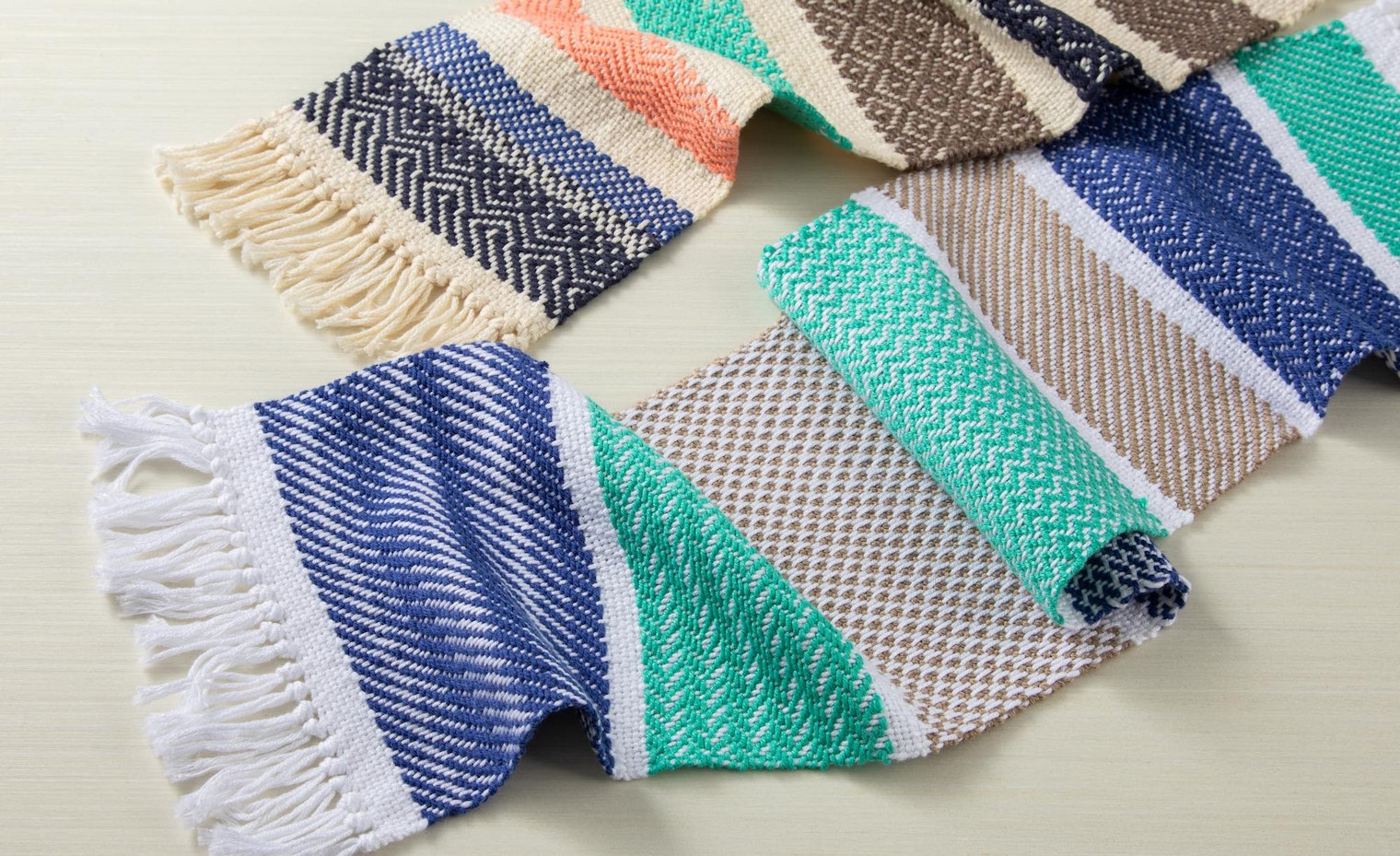
Let’s talk twill! Many multi-shaft and floor-loom weavers love weaving twill—it’s relatively easy, endlessly versatile, and attractive. I don’t want to talk about floor-loom weavers, though; I want to talk about the virtues of twill and why rigid-heddle weavers should give it a go. Before we get into twill on the rigid-heddle loom, let’s take a look into what makes twill, well, twill.
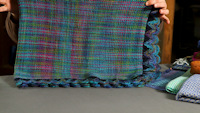
 In this sample you can see examples of plain wave (the borders at the top and bottom) and a bird's eye twill (the brown patterning in the center). Note how the weft floats of the twill create diagonal lines, something not possible in plain weave.
When you weave plain weave, you create a grid of right angles—designs go horizontally or vertically. With twill, you’re weaving diagonal lines created by floats. When you see a twill characterized by 2 numbers with a slash between, it refers to the number of warp threads the weft goes under and over. For example, with a 1/3 twill, your weft will go under 1 warp end and over 3. The order in which you change your sheds determines which direction the twill will go, and that allows you to create diagonals, zigzags, diamonds, and more.
Now let’s talk about why you might want to weave twill instead of plain weave. First, there’s the versatility of design. With the same yarn and same loom set-up you can weave multiple patterns simply by changing the order in which you change your sheds. Along with creating patterns, the diagonals of twill have another benefit: they create a more pliable, bendable fabric that we think of as drape. If you were to weave a sample in plain weave and then use the exact same yarns to weave it in twill, the twill would be less rigid and thus fold and bend better.
You might think this drapability would make for a weaker fabric, but the opposite is true. Because we sett twill denser than plain weave, it makes for a stronger fabric. Blue jeans and sail cloth are both fabrics that need to be incredibly durable—they’re also both traditionally woven in twill.
Another benefit of twill comes from the floats. Because the weft goes over multiple threads before heading under—and being interrupted by a warp thread going in the opposite direction—you end up with a fabric with better sheen. If you’ve ever shopped for sheets and wondered what makes sateen sheets so much shinier looking than percale, it’s because sateen is woven in twill and percale is plain weave.
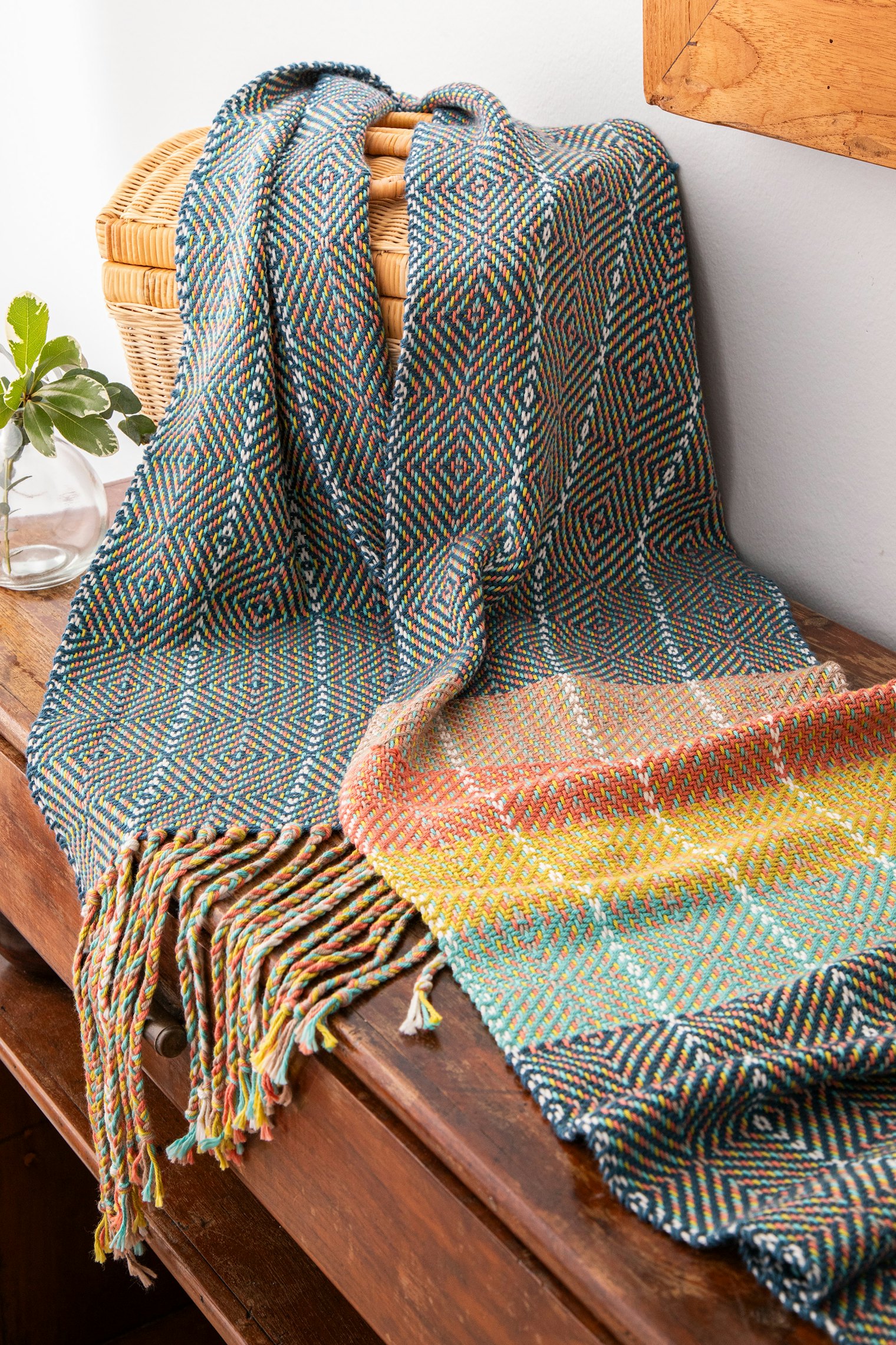

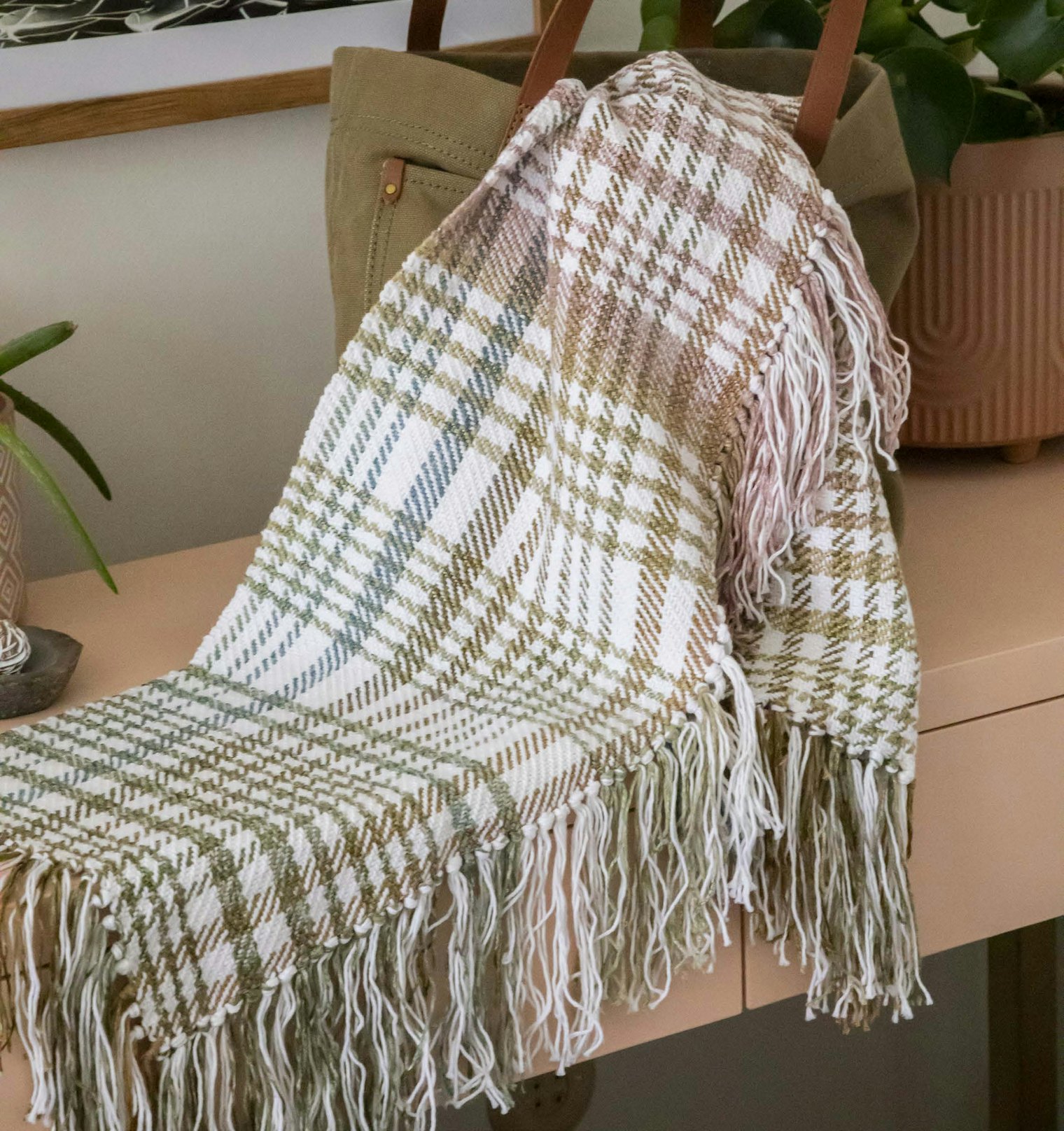
We’ve talked twill and just some of its benefits, so now I'd like to clear up something about twill on the rigid-heddle loom. Many people think it’s much more complicated than weaving it on a floor loom, but I don’t think that’s true. With both looms, you need to set up your loom according to the draft and change sheds according to the draft/weaving sequence. With both looms, every single thread must be threaded carefully by hand in just the right way.
The benefit of the rigid-heddle loom is the ease and speed with which you can get your loom warped properly for twill. With a floor loom, every single thread needs to be pulled through the exact right spot in the reed and then again in the exact right heddle on the exact right shaft. It’s very easy to mix up heddles—and if you warp your loom and have warped 1 or more heddles incorrectly, it’s not always easy to rethread. (Speaking from experience, here.) With a rigid-heddle loom, you’ve got 2 heddles to warp (no reed!), and then you use a pick-up stick to “thread” the rest. Warping mistakes are much easier to fix—especially if they’re ones done with the pick-up stick. Warping a floor loom for twill takes hours—probably 3 or 4. Warping a rigid-heddle loom for twill takes much less time—I bet you could get your loom warped and ready to weave in an hour or two—even factoring in making string heddles.
So there you have it—the basics of twill and why it’s great to weave on a rigid-heddle loom. If you want to know the details on how, check out Sara Goldenberg White’s new course, Twill on the Rigid-Heddle Loom: Weave Diagonals, Diamonds, and More. She’ll give you the details on how to warp your loom, how to read drafts and weaving sequences, how to weave multiple patterns with one draft, and much, much, more.
Happy Weaving!
Christina
Originally published 4/26/2023; updated 7/14/2026
More from Little Looms
 Skill Guide: A Weaver’s Guide to FiberNo matter what loom(s) you love to weave on, understanding the different characteristics of a fiber can help you make better choices when picking yarns for projects.Christina Garton · July 31, 2026
 From WIF to Woven ClothLearn how to use WIFs and weaving software to create and edit patterns—before you put a single thread on the loom. Christina Garton · July 23, 2026
 Give Yourself the Gift of a Weaving GetawayWhat’s better than learning to master a new weaving? Doing it among friends, new and old! Little Looms Editors · July 21, 2026
 6 Easy Ways to Elevate Your Selvedges with TrimsAdd extra flair to your selvedges and hems with these terrific trims. Christina Garton · July 16, 2026
 A Celebration of Stripes: Call for Submissions Fall 2027We're looking for striped projects of all kinds for our Fall 2027 issue—and that includes plaids and checks, too!Christina Garton · July 9, 2026
 Make Your Own Cardboard Mini-ShuttlesButterflies are beautiful, but they’re not always the best choice when you’re weaving. Try winding small bits of weft on these simple, DIY cardboard shuttles instead!Christina Garton · July 7, 2026
 A Trio of Table ToppersGo beyond rectangular runners with table toppers. Christina Garton · June 30, 2026
 Crochet for Your Selvedges? Your Edges Will Thank YouFind out why Sara Bixler finishes some of her woven pieces with crochet. Watch her free video clip, and then dive into several stitch options to try on your next project. Little Looms Editors · June 25, 2026
 Compose a Masterpiece on Your LoomAfter all, a loom is just another type of stringed instrument. Christina Garton · June 23, 2026
 Two Ways to Make Terrific TasselsTurn loom waste or small bits of extra-special yarns into beautiful, custom-made tassels perfect for trimming handwoven projects and so much more!Christina Garton · June 18, 2026
From the Library




Comments
No comments yet — be the first to share your thoughts.
Sign in to join the conversation — commenting is for signed-in members.