
Loading the latest stories…


Go behind the scenes and learn a bit more about tablet weaver extraordinaire John Mullarkey.
Karen Donde3 min read
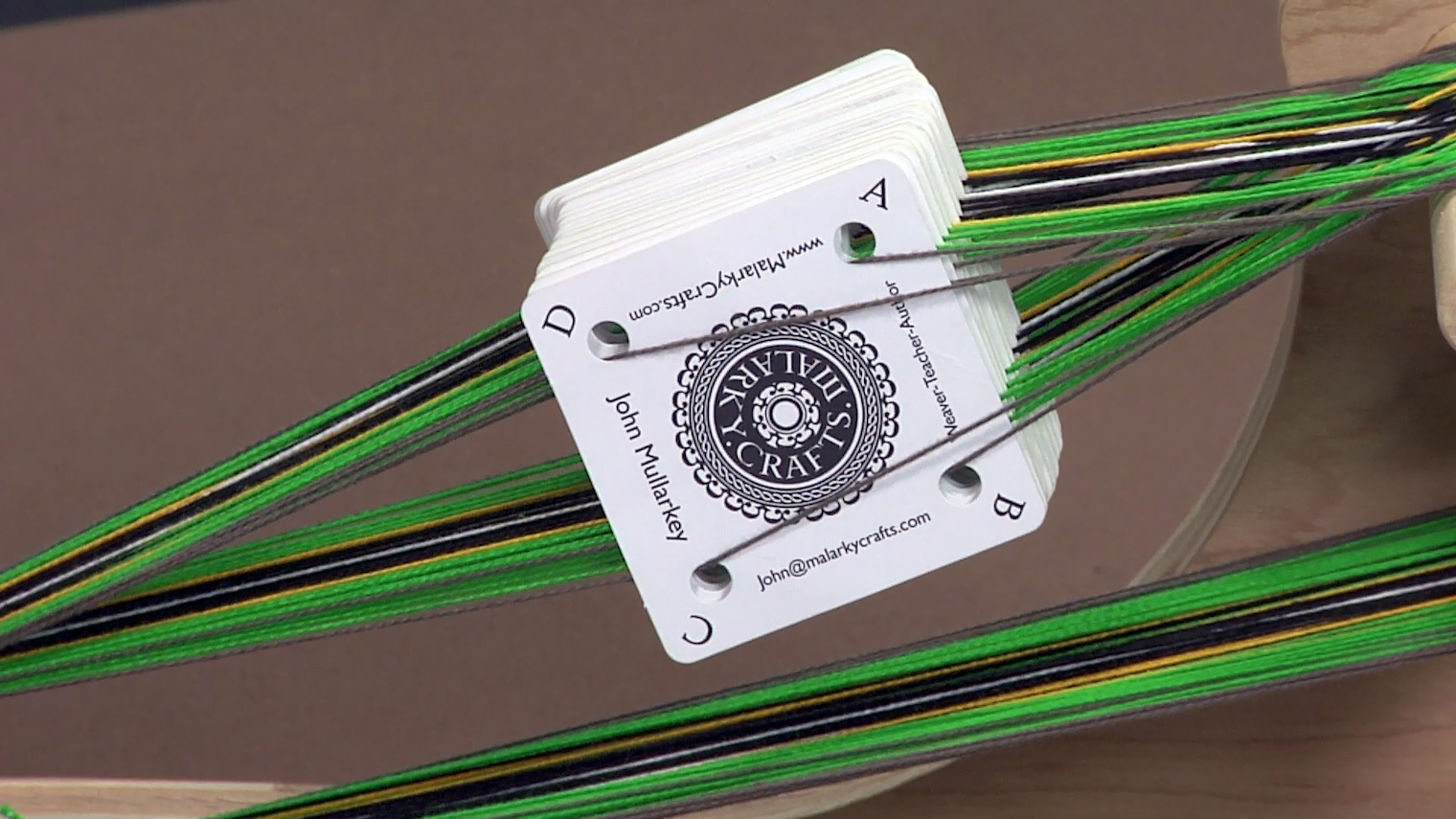
John Mullarkey has been bending and twisting fiber since learning macramé in highschool and crochet in college. Years later, he was given15 pounds of llama fleece and reasoned that investing in a spinning wheel would yield lots of nice, cheap yarn. While the llama yarn proved not as nice as he hoped, he enjoyed the spinning.
Having bought the spinning wheel, John looked around for an inexpensive way to give weaving a try and spotted weaving cards (or tablets, as they are officially known). Luckily for the students who fill his workshops and fans who read his books and watch his videos, card weaving stuck.
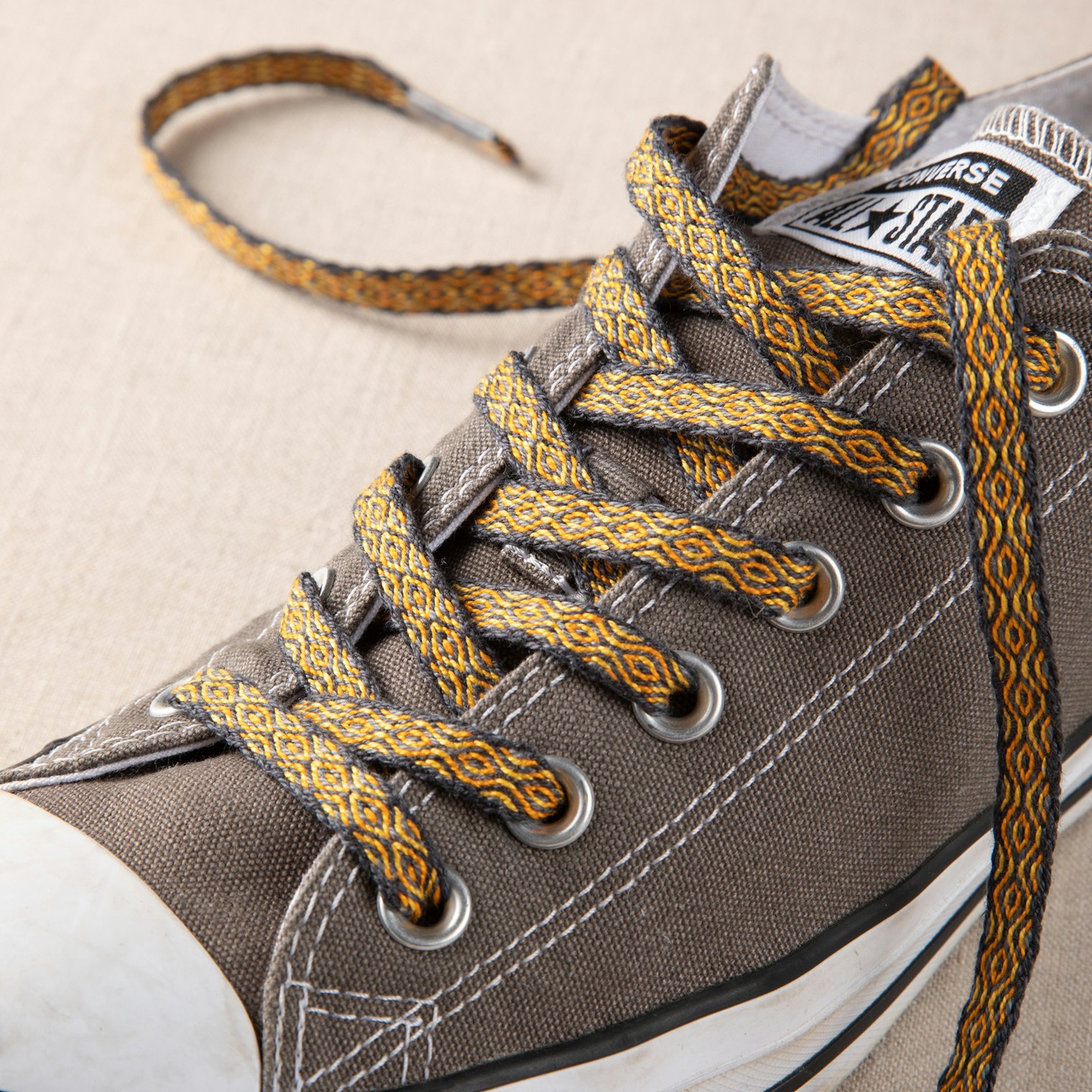 John Mullarkey's Astounding Laces from Little Looms Summer 2021 are tablet-woven. Photo credit: Matt Graves
“Tablet weaving is a primitive weave,” John explains. “Even though it does not offer as much structural variety as a floor loom, card weaving has more pattern flexibility.” Since buying his first set of tablets, he has tried other weaving styles, including floor looms, but he keeps coming back to cards. “I take workshops in other techniques and weave structures to test how they may be applied to card weaving,” he said. “Some have worked, others haven’t, but what interests me most is finding new ways to push tablet weaving toward more contemporary designs in ways the cards have never been used before.”
After starting with the backstrap traditionally used for card weaving, it didn’t take John long to look for an easier method. “Basically, I’m a lazy person, and by that I mean an efficiency expert,” John said. “I thought there must be an easier way to manipulate these cards.”
His first attempt was a copper-pipe loom “contraption” he built in one day and used for a couple of years before moving on to an inkle loom. He later worked with a friend to design a small card loom that would be smaller and more portable for workshops.
 Slouchy Box Hat by John Mullarkey, woven by Benjamin Krudwig. Photo credit: Joe Coca
It was his other venture into small-loom design that made it into full-scale production in collaboration with Schacht Spindle Co. In a pin-loom–weaving class, he and fellow students enjoyed the process but lamented that the once-popular Weavettes (also known as Weave-Its) were no longer available. The students spent the last part of class brainstorming a better pin-loom design and convincing John to build them.
“That was never part of the plan,” John said. But he saw a market niche that needed filling, hired an industrial designer, and they created a prototype. He mentioned the prototype during chance meetings with Jane Patrick and Barry Schacht at conferences, which led to a formal meeting at Schacht’s Boulder, Colorado, factory. The result was Schacht’s Zoom Loom, with credit to John Mullarkey on the box.
Equipment design, however, takes a backseat to John’s primary fiber passion: teaching. “I hate public speaking, but I love teaching,” he says. “The energy between you and a room full of students is very exciting.” And, he adds, he always learns something. Since his first teaching conference in 2009, John’s workshops have gained a national following. A few years ago, he left his part-time job as a software developer and began teaching full-time.
John typically has a busy teaching schedule, but if you can’t get to one of his workshops, you can check out his two video courses, Tablet Weaving Made Easy and Double-Faced Tablet Weaving. In addition to writing and designing for Handwoven, SpinOff, and (of course) Easy Weaving with Little Looms, he has also published two books: A Tablet Weaver’s Pattern Book, in cooperation with fellow Weavers Guild of St. Louis members, and Tablet Weaving: Egyptian Diagonals.
 Anne Merrow (left), John Mullarkey (middle), and Devin Helmen (right), admiring the handspun, handwoven Stormy Seas Scarf from Spin Off Fall 2021. Photo by Matt Graves
Originally published online 3/9/2023; updated 8/27/24
More from Little Looms
 Skill Guide: A Weaver’s Guide to FiberNo matter what loom(s) you love to weave on, understanding the different characteristics of a fiber can help you make better choices when picking yarns for projects.Christina Garton · July 31, 2026
 Give Yourself the Gift of a Weaving GetawayWhat’s better than learning to master a new weaving? Doing it among friends, new and old! Little Looms Editors · July 21, 2026
 6 Easy Ways to Elevate Your Selvedges with TrimsAdd extra flair to your selvedges and hems with these terrific trims. Christina Garton · July 16, 2026
 A Celebration of Stripes: Call for Submissions Fall 2027We're looking for striped projects of all kinds for our Fall 2027 issue—and that includes plaids and checks, too!Christina Garton · July 9, 2026
 Designing Borders for Pick-Up BandsLearn tips and tricks for designing borders for your pick-up bands, from simple stripes to more complex color-and-weave designs. Christina Garton · July 2, 2026
 Compose a Masterpiece on Your LoomAfter all, a loom is just another type of stringed instrument. Christina Garton · June 23, 2026
 Two Ways to Make Terrific TasselsTurn loom waste or small bits of extra-special yarns into beautiful, custom-made tassels perfect for trimming handwoven projects and so much more!Christina Garton · June 18, 2026
 An Invitation to SparkleLearn three approaches for using metallic threads to weave fabric that literally shines bright! Christina Garton · June 16, 2026
 Roll the Dice on Your Next DesignFind out how easy it is to kick-start your creativity when you leave your design choices up to chance. Tommye McClure Scanlin · June 9, 2026
 My New Obsession: Three-Color Pick-up on the Inke LoomFind out how this niche Lithuanian technique found its way to America, and why it’s Christina’s new favorite way to create patterns on her inkle loom.Christina Garton · May 5, 2026
From the Library


Comments
No comments yet — be the first to share your thoughts.
Sign in to join the conversation — commenting is for signed-in members.