
Loading the latest stories…


With tablet weaving, you can carry the equivalent of a multi-shaft loom in your pocket! Learn more about this unique subset of weaving and just how easy it is to get started.
Karen Donde4 min read
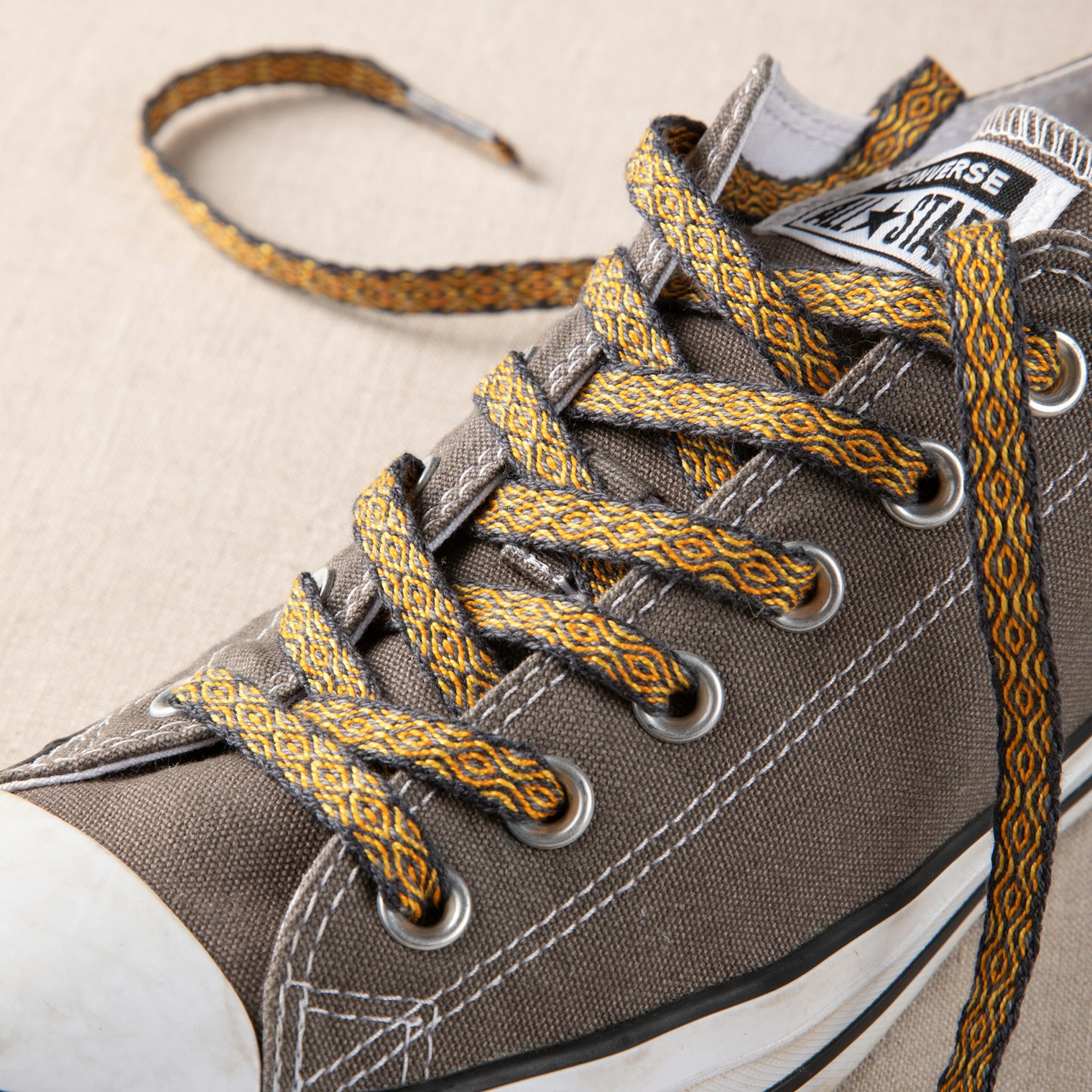
John Mullarkey is one of the most sought after tablet teachers in the country and there's good reason! Not only is he an incredibly talented weaver and designer, he's also patient, kind, and uproariously funny. If you want to take a class from him in person, he's also teaching at the 2026 Weave Together with Handwoven event this March. You can find out more information about the event (including John's classes) here. —Christina
Every fall, a former guild mate who had been absent for months used to return to our meetings and delight everyone with dozens of bands she had woven during her summer living on a sailboat on a northern lake. She would apologize that this was all she had been able to weave because tablet weaving was the only thing she could manage on the boat.
The bands were beautiful and magical and sold like hotcakes at the annual guild sale. Having never really understood tablet weaving, I couldn’t imagine how what looked to me like square playing cards with holes in each corner could produce such intricately patterned bands. The idea of weaving on a sailboat all summer was appealing, although in my dreams the floor loom and my bench fit perfectly and somehow stayed in one place and perfectly horizontal as we rocked gently in the calm water. Obviously I haven’t had much experience sailing either.
Wherever I vacation next, John Mullarkey might just have convinced me to pack a set of weaving tablets, also called cards, some yarn, a laptop, and probably an inkle loom. His video workshop, Tablet Weaving Made Easy, was surprisingly enlightening, even for this committed floor loom weaver.
I used to have weaving tablets, and still might, if I didn’t throw them away in a rare fit of studio cleaning. They probably came in a box of other weaving tools or yarn I bought from another weaver. The only time I ever used them was as supplementary warp holders with S-hooks and weights hanging from the holes. (I can see John cringing.) I had watched people card weave, but couldn’t imagine how simply turning these tablets forward and backward would create woven patterns. Didn’t the warp get all twisted and tangled?
Then I saw John card weaving on an inkle loom in the first scene. Aha! Already I felt more comfortable. I know how to weave striped bands and pick-up patterns on an inkle loom. However, where I would normally attach heddles, John had inserted a stack of tablets with four warp ends threaded through each one. You could even card weave on a floor loom, if you wanted, he said, which means rigid-heddle looms are game, too.
 Just a small selection of bands woven by John Mullarkey. Photo from Tablet Weaving Made Easy.
As I watched John’s demonstration of warping and weaving with tablets, it hit me. Tablet weaving is a little like loom-controlled complex patterning for inkle bands. I equated it to adding shafts to an inkle or floor loom or rigid heddles to a rigid-heddle loom. As my weaving philosophy has long been, “The more shafts, the better,” this gave me a new appreciation for card or tablet weaving, especially when he showed tablets with six and eight holes per card.
But I was getting ahead of myself. First I had to learn how to deal with four holes in both pattern drafting and warping, the difference between tablets threaded in the S direction vs. the Z direcrtion, and how to keep everything lined up and turning back and forth without the twisted mess I had envisioned. John clearly and carefully led the way one step at a time.
My favorite part was when he demonstrated checking the warp for errors. Of course he had intentionally made all possible errors when the video camera paused for him to finish warping. He showed how to find and fix them all without rethreading the whole loom. I would definitely mark that chapter for review before I start weaving.
The weaving process was a lot like inkle weaving, except with more sheds. Instead of raising the unheddled ends above and below the heddled ones as you would with an inkle loom, he simply turned the deck of tablets according to the draft. Then he showed how to freestyle patterns by changing the number of revolutions forward and backward, by moving threaded tablets into new positions in the deck or by changing the home position of the letters that mark each hole. He wove a tube, wove a two-layer band, wove in a slit for a buttonhole. He even wove a simple striped inkle band in the center with unwoven warps above and below.
And these, he pointed out, were only some of the many variations possible for a threaded-in pattern, which is the subject of this video. Threaded-in patterns, he explained, are those where the pattern is achieved only by the way the cards are threaded. All cards are turned together, either forward or backward.
Another class of patterns can be designed and woven that result from altering the turning sequence for particular cards according to a mapping diagram. Ooooo. I’m intrigued.
That's the way to do it, John. Always leave them wanting more . . . or another workshop video.

More from Little Looms
 Skill Guide: A Weaver’s Guide to FiberNo matter what loom(s) you love to weave on, understanding the different characteristics of a fiber can help you make better choices when picking yarns for projects.Christina Garton · July 31, 2026
 Give Yourself the Gift of a Weaving GetawayWhat’s better than learning to master a new weaving? Doing it among friends, new and old! Little Looms Editors · July 21, 2026
 A Celebration of Stripes: Call for Submissions Fall 2027We're looking for striped projects of all kinds for our Fall 2027 issue—and that includes plaids and checks, too!Christina Garton · July 9, 2026
 Compose a Masterpiece on Your LoomAfter all, a loom is just another type of stringed instrument. Christina Garton · June 23, 2026
 Two Ways to Make Terrific TasselsTurn loom waste or small bits of extra-special yarns into beautiful, custom-made tassels perfect for trimming handwoven projects and so much more!Christina Garton · June 18, 2026
 Long Thread Podcast: Angela Tong, Multidisciplinary MakerSeason 14, Episode 7: A jeweler, knitter, crocheter, weaver, and potter sit down for a chat—and it turns out she's the same person. Angela Tong talks about a creative life built on detail, technique, and staying true to her own voice.Anne Merrow · May 2, 2026
 Summer Weaving for Any OccasionDiscover a collection of cool projects for warm weather in Little Looms Summer 2026!Christina Garton · March 31, 2026
 Join the Band: A New Retreat Just for BandweaversJoin us this fall for four days of bandweaving fun at Band Camp for Weavers!Christina Garton · March 24, 2026
 Long Thread Podcast: Heather Torgenrud, Pick-Up BandweavingSeason 14, Episode 4: Although her weaving interests vary from Anne Merrow · March 21, 2026
 Little Looms is Turning 10!Celebrate ten years and twenty-five issues of Little Looms with a look back at the first issue—and a free project!Christina Garton · March 19, 2026
From the Library


Comments
No comments yet — be the first to share your thoughts.
Sign in to join the conversation — commenting is for signed-in members.