
Loading the latest stories…


Learn what makes tablet weaving different from other bandweaving methods and the tools you need to get started.
Christina Garton3 min read
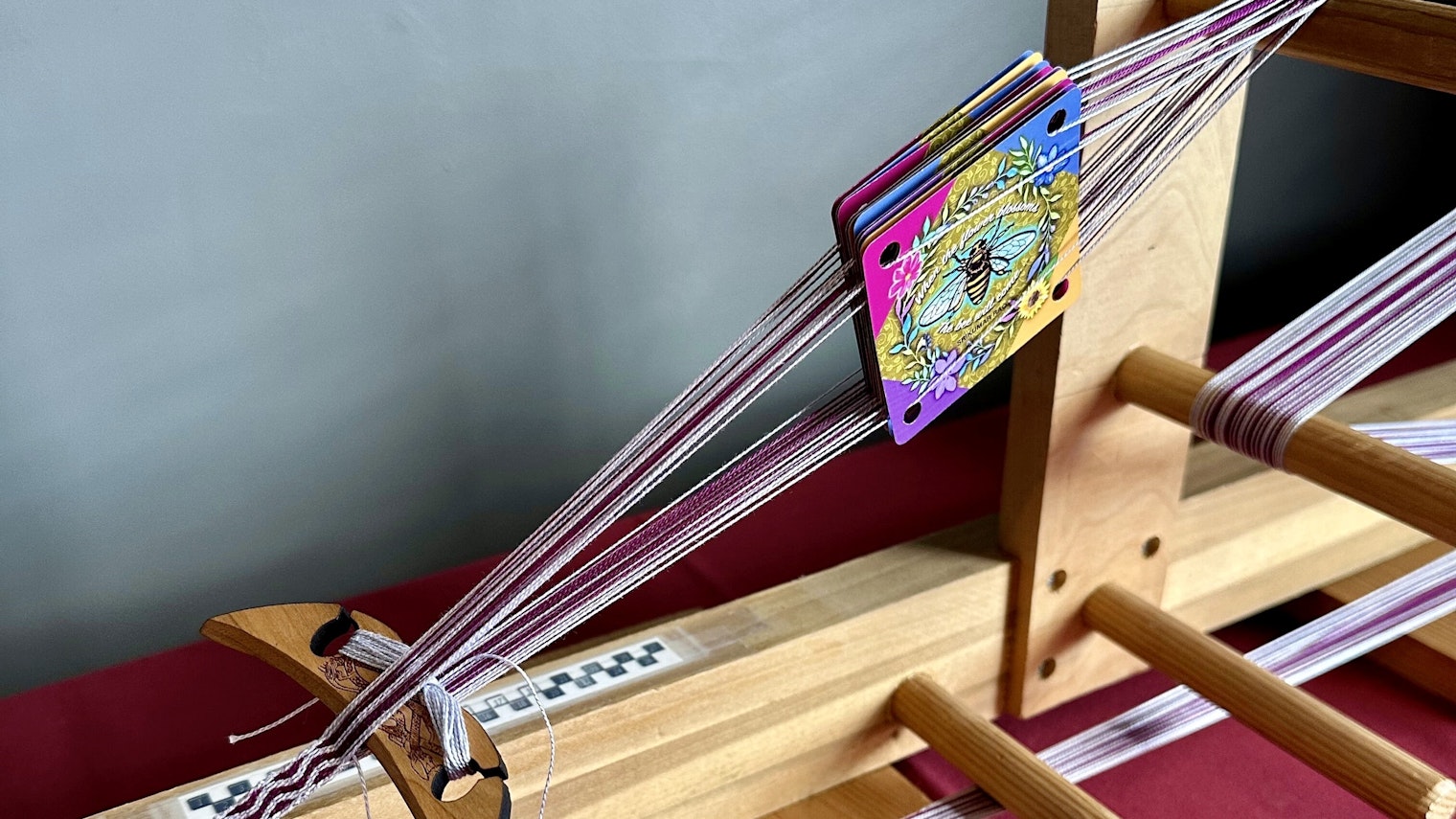
Love bandweaving and want to try something new? Consider tablet weaving! This craft is incredibly portable—all you need is a stable surface to tie your warp to and a set of weaving tablets, and you’re good to go! Of course, if you already have an inkle or bandloom, tablet weaving is another way to create incredible, creative cloth with your loom.
However, if you aren’t familiar with tablet weaving yet, it can be confusing to figure out what makes it different from other types of bandweaving. So what exactly is it?
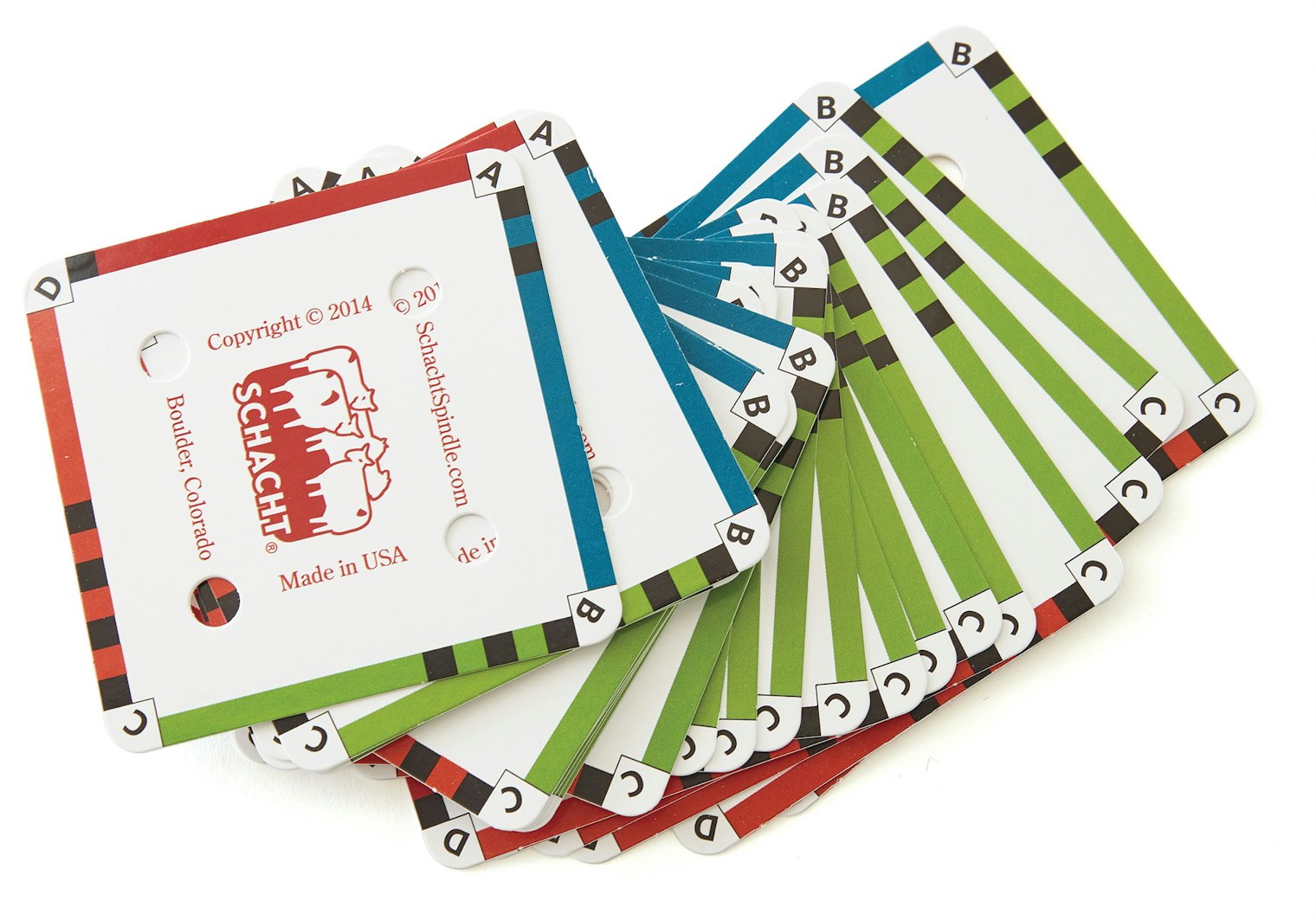
Tablet weaving is a subset of bandweaving that requires using weaving tablets, sometimes called cards, that have strategically placed holes, and you turn the cards to create patterns. Sometimes the holes might be on the corners, sometimes between the corners. Usually, these tablets are square, but you’ll also find other geometric shapes.
Weaving tablets can be used on almost any loom (or non-loom setup) you’d use for other types of bandweaving. They are placed in a starting position, and yarn is threaded through the holes in a specific way according to the draft. Often, the tablets will have letters on each corner, so you can make sure they are all positioned the same way when you begin. This is important because, in tablet weaving, turning the cards is what creates patterns. Sometimes all the cards turn together, and sometimes only select cards turn.
The turning of the cards is what creates the different sheds. In essence, tablet weaving is like having a multi-shaft loom that fits in your pocket—pretty cool, huh? After turning the cards according to the draft, you’ll place your weft pick and beat it in. While this all might sound complicated, the truth is that you can weave beautiful bands with a simple setup. Once you get the hang of simple patterns, you can introduce more complicated tablet-weaving techniques into your repertoire.
While you can find tablets in various shapes, most patterns in Easy Weaving with Little Looms use square tablets with holes in the corners. You can find tablets made from a variety of materials, and all work relatively well. Pick the one that feels best to you as you weave—you can even make your own by trimming down and punching holes in playing cards!
While you don’t need a loom to weave with tablets, looms can help you maintain tension and keep your band safe when not weaving. Most tablet weavers who use looms use an inkle loom, although you can use a rigid-heddle loom or a backstrap setup.
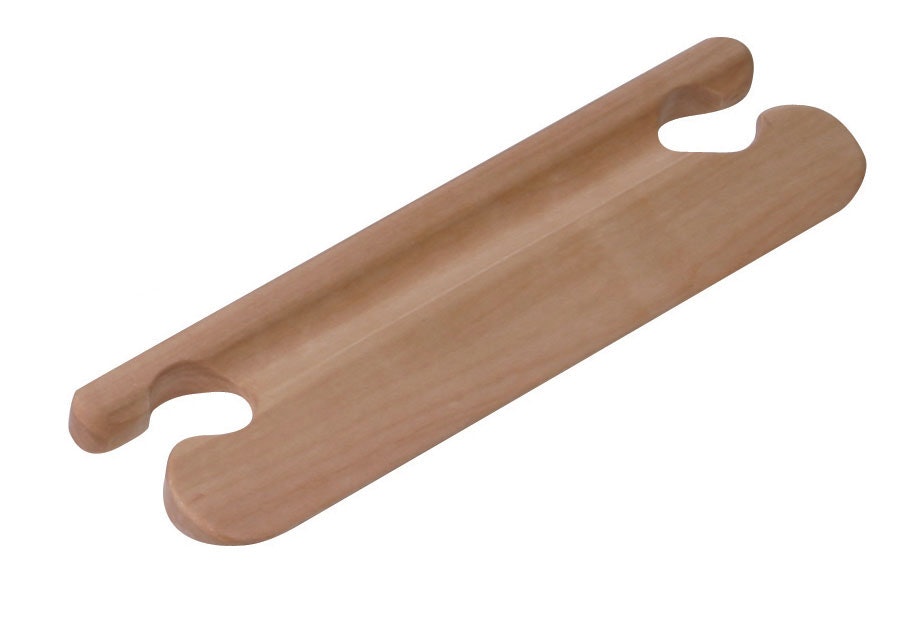
As with any other kind of inkle weaving, you’ll want a belt or band shuttle, preferably one with a beveled edge so you can pack in your weft. If your belt shuttle doesn’t pack in weft the way you like it, a weaving knife can be used along with a shuttle. The image below is an example of a belt shuttle.
Any yarns you use should be smooth and even (no lumps or bumps). You’ll often see projects made with cotton, but don’t feel limited to using only cotton yarn.
Once your supplies are gathered, it’s time to learn how to read a pattern and set up your tablets. Don’t worry—reading and threading tablets is easy once you know how! For these next steps, we recommend you check out our free skill guide on tablet weaving basics, or the top-rated video, Tablet Weaving Made Easy with John Mullarkey.
Happy Weaving!
Christina
More from Little Looms
 Give it a try! Easy tablet weaving with this free shoelace projectNo tablet weaving experience or equipment? No problem! Weave yourself a pair of shoelaces with this beginner-friendly free project.Christina Garton · November 27, 2025
 How to Make String Heddles for an Inkle LoomBefore you can weave on your inkle loom, you need to make string heddles. Learn the steps for making double-string heddles for any inkle loom. Christina Garton · June 19, 2025
 Inkle on the Fly: Tips for Easy Inkle WeavingLearn how Elisabeth Hill weaves smarter, not harder when it comes to warping and weaving her inkle loom. Her tips will leave you wanting to add inkle embellishment on everything. Elisabeth Hill · April 24, 2025
 Bonus Project: Inkle PouchesWe’ve got an inkling that you’ll love weaving this subscriber-exclusive pattern for a fun and functional inkle pouch!Christina Garton · November 20, 2024
 Five Questions with Aarthi NeelakrishnanLearn a bit more about weaver and designer Aarthi Neelakrishnan, including why she loves weaving diversified plain weave on a rigid-heddle loom. Christina Garton · June 6, 2024
 Bespoke Inkle Bands I enjoyed having a plan in mind for my inkle bands as I wove them, and I find that’s often the case in weaving; an end purpose makes it more fun and interesting.Susan E. Horton · April 4, 2023
 The Well-Dressed Pup CollarUsing the commercial collar as her example, Elisabeth Hill found the necessary hardware online and then designed an inkle loom for her proud pup Fiona.Susan E. Horton · March 21, 2023
 Get Ready for the Holidays—Little Looms HolidayJust because it’s still autumn doesn’t mean you can’t get excited about the winter holiday season!Christina Garton · September 30, 2020
 Nothing Says Happy Fourth! Like a Dog LeashI might not have a holiday table, but I’ll have a Fourth of July dog.Susan E. Horton · July 2, 2020
 Braided In Eternity BraceletsThere is so much to love about Jennifer’s Braided in Eternity Bracelets. You can either weave the more traditional bands or you can learn tubular inkle weaving.Christina Garton · April 9, 2018
From the Library


Comments
No comments yet — be the first to share your thoughts.
Sign in to join the conversation — commenting is for signed-in members.