
Loading the latest stories…


No tablet weaving experience or equipment? No problem! Weave yourself a pair of shoelaces with this beginner-friendly free project.
Christina Garton4 min read
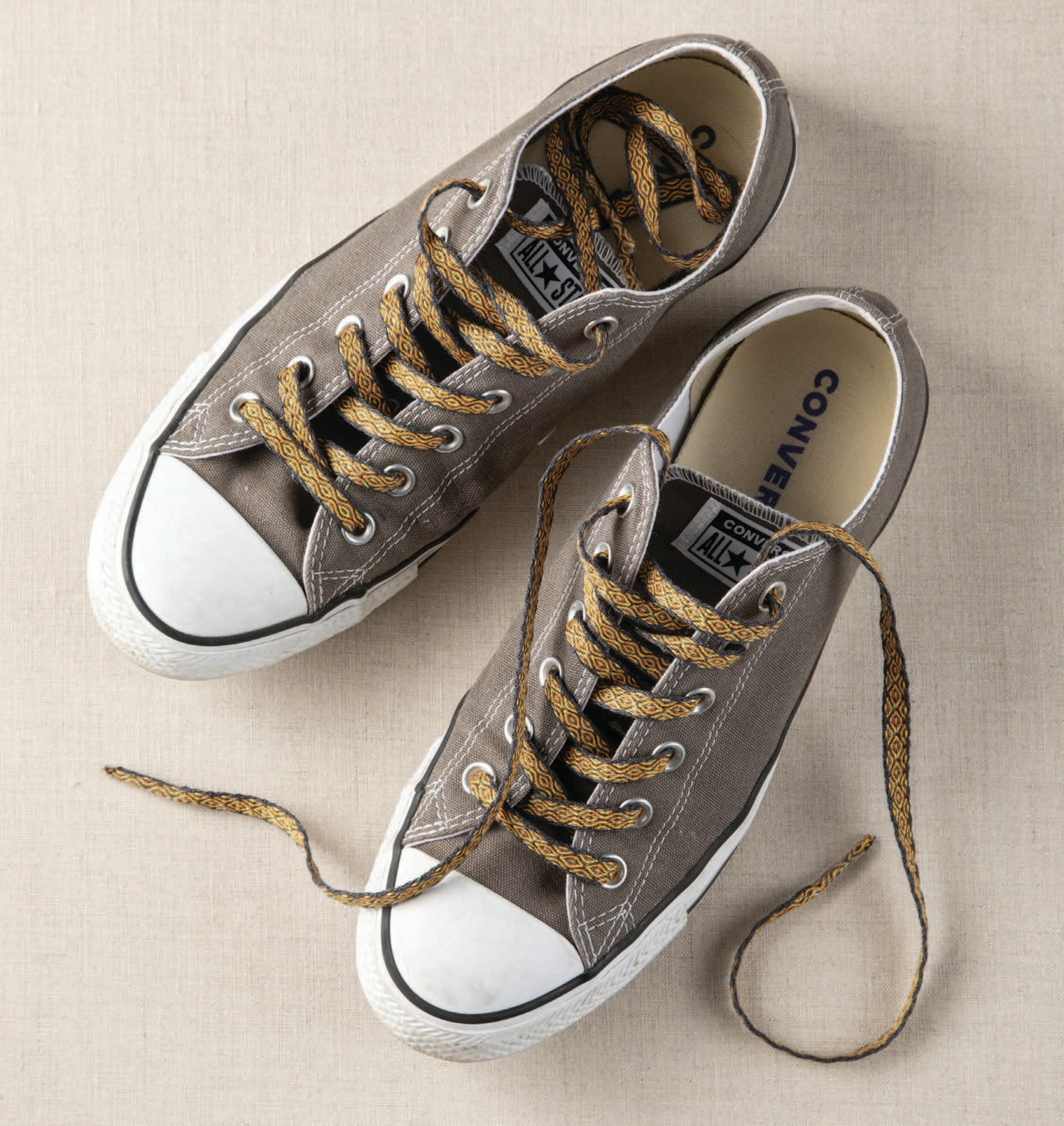
If you’re in the United States reading this article the day it comes out, it’s currently Thanksgiving. While this holiday can evoke many different emotions—often at the same time—a feeling of gratitude is often in the mix. As I write this post and ruminate on all I’m grateful for, I can’t help but think of you, our readers, who have supported and continue to support Easy Weaving with Little Looms.
Whether you have been with us since the first issue came out in 2016 or you have joined the world of small-loom weaving only recently, I’m so very happy you’re here. As a small token of my appreciation, I’m offering one of our most popular projects as a free download: John Mullarkey’s Astounding Laces.
As a more experienced tablet weaver, I appreciate the simplicity of the shoelaces. Using just ten tablets and a straightforward threaded-in pattern with an equally uncomplicated turn sequence, this particular project is quick to warp and easy to weave. (Need help reading a tablet draft or figuring out S- vs. Z-threading? Check out this skill guide!)
I love this project for many reasons, but the fact that it’s so accessible is a big one. First, it’s beginner friendly—if you’re looking for a project to tiptoe into tablet weaving, I don’t think you could find anything better. Don’t have weaving tablets? You can make your own tablets out of playing cards or sturdy cardstock (weavers have been making their own tablets for centuries, after all).
No inkle loom? You don’t need one—all you need is a way to tension your warp. You can even use a modified verstino of the backstrap method demonstrated in this incredible (and free!) video featuring former Spin Off and current Farm & Fiber Knits editor, Kate Larson. In the video, Kate winds the warp in a figure 8 pattern and adds popsicle crosses to help keep the cross. In tablet weaving, however, we don't need to worry about a cross. Instead, wind your warp in an O pattern. Wind all the ends you need of one color and then wind the ends you need of the second color—you do not need to change colors as you wind. Once the warp is wound, you'll then thread your tablets, instead of the rigid heddle shown in the video. Easy peasy!
Tablet projects are incredibly portable, too, so if you have holiday travel coming up, it’s easy to pack up your loom or backstrap setup and take your weaving with you. Just make sure you stabilize your tablets and warp so they don’t shift out of place during transport. (A tip I learned from John is to use stitch markers in each of the tablets’ holes so if they move, they all move together.)
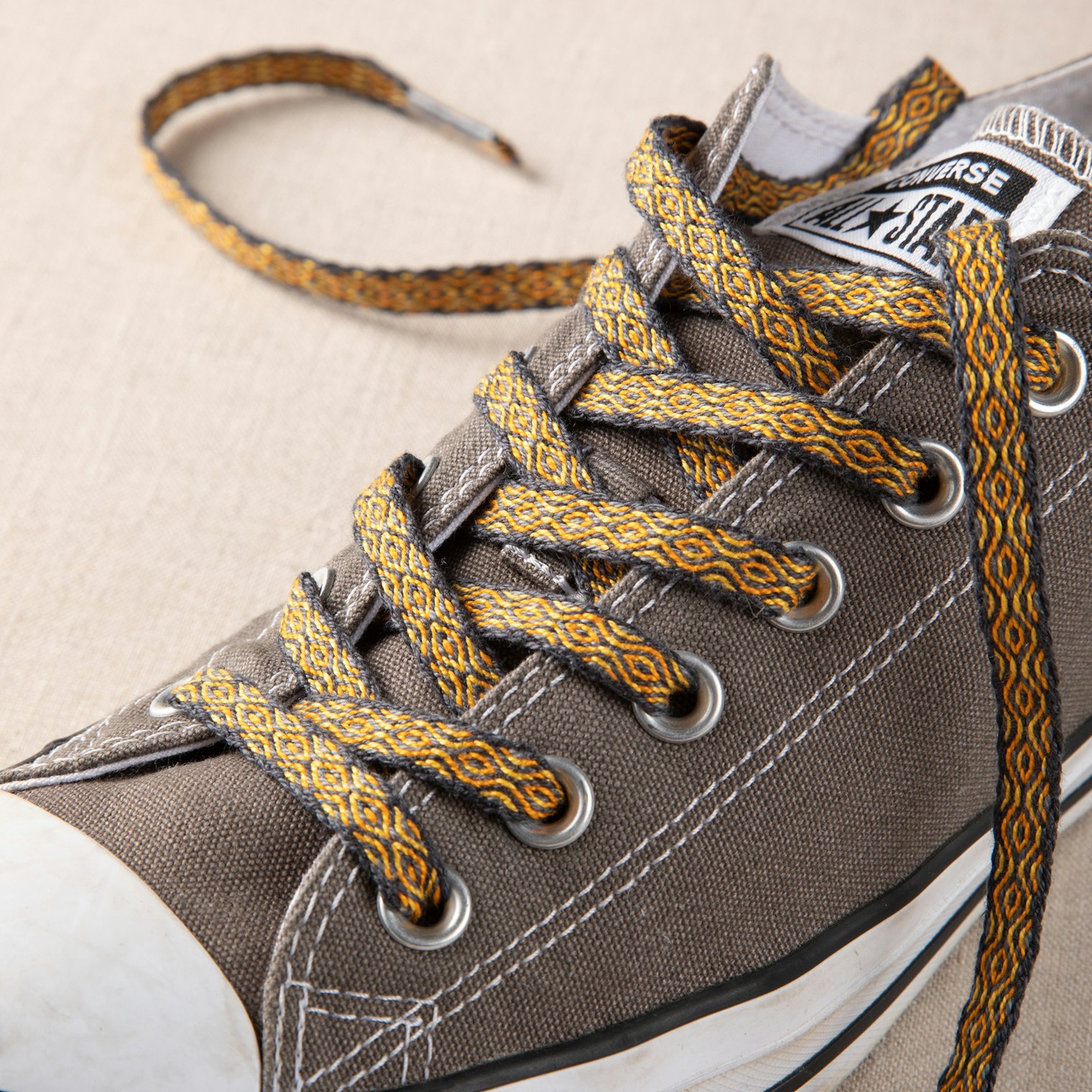 Photo by Matt Graves
If you, like me, rarely make a project exactly as written, you should know that these shoelaces provide the perfect palette for improvisation and experimentation. Here are just a few ideas:
Just don’t be afraid to make mistakes—once these laces are woven and on your shoe, any problem areas will probably be hidden, and you’ll still have an incredible pair of handwoven shoelaces that you can show off.
 For her own version of the Astounding Laces, Christina wove one lace using blue for the border/background and purple for the pattern and then used purple for the border/background and blue for the pattern on the other. Photo by Christina Garton
Somebody who has never woven shoelaces before might be tempted to tell you “these make the perfect gift for anyone and everyone on your list,” but I am not that person. Tablet laces are fun and easy to weave, yes, but they do take time. Instead, use these shoelaces as a reason to give yourself the time and space to weave something that will fill you with joy. Something that’s just for you.
I really and truly hope you love this project as much as I do. Shoelaces were my first tablet-weaving project, and while I’ve woven more complex patterns with complicated turn sequences, I always turn back to these Astounding Laces because they truly are such a delight to weave and wear.
Happy Weaving,
Christina
More from Little Looms
 Skill Guide: A Weaver’s Guide to FiberNo matter what loom(s) you love to weave on, understanding the different characteristics of a fiber can help you make better choices when picking yarns for projects.Christina Garton · July 31, 2026
 Give Yourself the Gift of a Weaving GetawayWhat’s better than learning to master a new weaving? Doing it among friends, new and old! Little Looms Editors · July 21, 2026
 A Celebration of Stripes: Call for Submissions Fall 2027We're looking for striped projects of all kinds for our Fall 2027 issue—and that includes plaids and checks, too!Christina Garton · July 9, 2026
 Compose a Masterpiece on Your LoomAfter all, a loom is just another type of stringed instrument. Christina Garton · June 23, 2026
 Two Ways to Make Terrific TasselsTurn loom waste or small bits of extra-special yarns into beautiful, custom-made tassels perfect for trimming handwoven projects and so much more!Christina Garton · June 18, 2026
 Long Thread Podcast: Angela Tong, Multidisciplinary MakerSeason 14, Episode 7: A jeweler, knitter, crocheter, weaver, and potter sit down for a chat—and it turns out she's the same person. Angela Tong talks about a creative life built on detail, technique, and staying true to her own voice.Anne Merrow · May 2, 2026
 Summer Weaving for Any OccasionDiscover a collection of cool projects for warm weather in Little Looms Summer 2026!Christina Garton · March 31, 2026
 Join the Band: A New Retreat Just for BandweaversJoin us this fall for four days of bandweaving fun at Band Camp for Weavers!Christina Garton · March 24, 2026
 Long Thread Podcast: Heather Torgenrud, Pick-Up BandweavingSeason 14, Episode 4: Although her weaving interests vary from Anne Merrow · March 21, 2026
 Little Looms is Turning 10!Celebrate ten years and twenty-five issues of Little Looms with a look back at the first issue—and a free project!Christina Garton · March 19, 2026
From the Library


Comments
No comments yet — be the first to share your thoughts.
Sign in to join the conversation — commenting is for signed-in members.