
Loading the latest stories…

Winter is the perfect time for weaving with wool, so Christina is sharing her top 5 tips for using this wonderful, versatile fiber and 2 subscriber-exclusive projects for cozy wool scarves.
Christina Garton3 min read
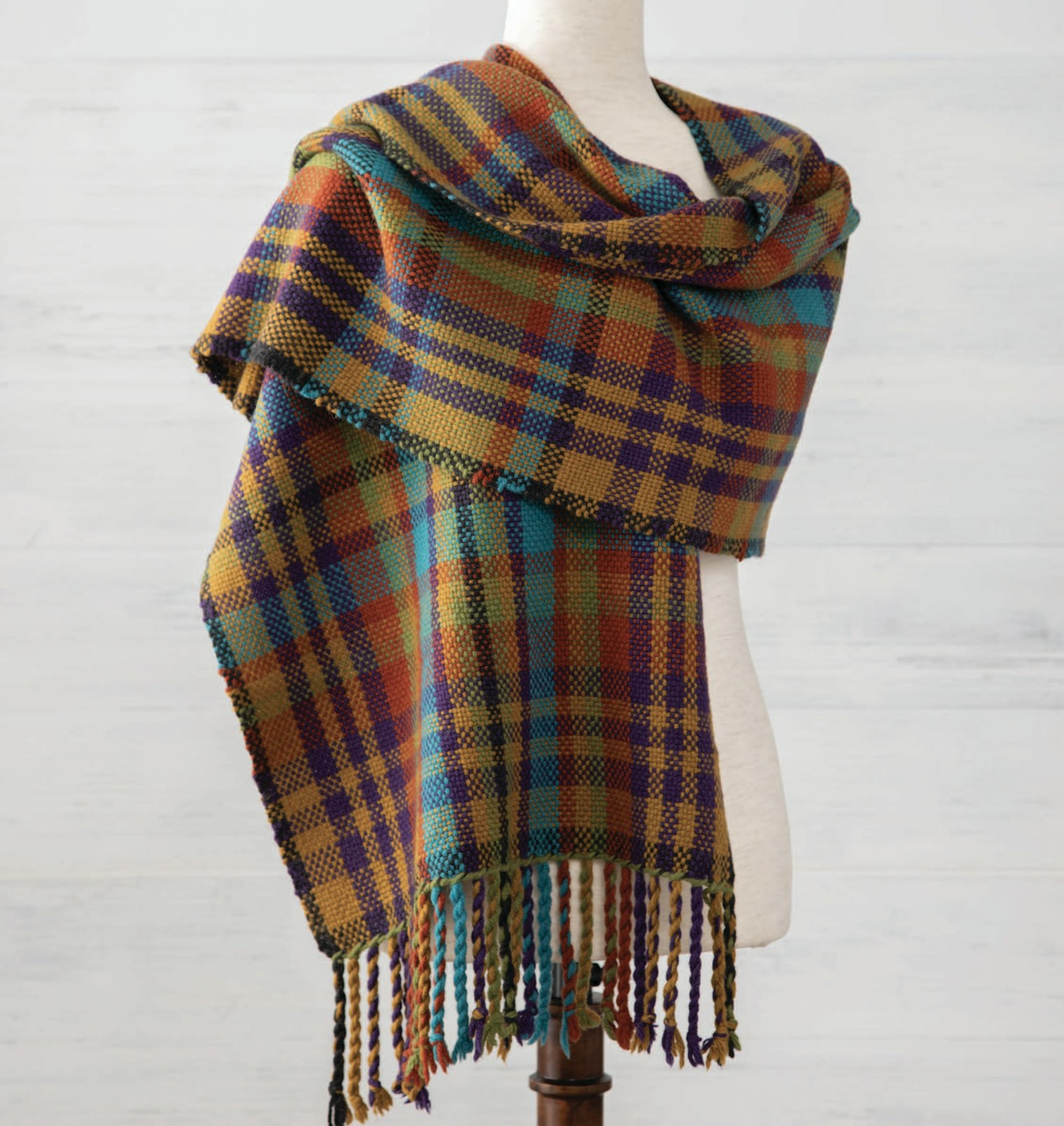
Now that the winter is getting extra chilly, I’ve been grabbing my handwoven wool scarf more often than not. I love how soft and warm it is, especially on windy days when I use it to protect my face. Wool is one of my absolute favorite fibers to weave with and to wear.
It wasn’t always that way—back when I first started out, I didn’t know very much about wool as it related to weaving, and I made a few mistakes. Over the years I’ve learned a few tips for weaving with wool that have helped guide me, and I’d like to share them with you and, as a bonus just for subscribers, share a couple of the most popular wool projects from Easy Weaving with Little Looms. (Not a subscriber? Go here for more information.)
 Anu Bhatia’s Yarn to Love Scarf. Photo credit: Caleb Young (Good Folk Photography)
Not all wools are created equal. Rug yarns are designed to be hardwearing and durable so they won’t wear down and break after being stepped on day after day. They’re perfect for rugs, runners, and even placemats, but they’re probably not something you’d want to wear next to your skin as a scarf. If you’re weaving a wearable, make sure to pick a yarn that feels good to you. If you’re weaving a rug (or mug rugs), choose a yarn that’s strong and sturdy even if it’s scratchy.
Mix and match yarns with care. Rigid-heddle looms lend themselves well to weaving with mixed-yarn warps, especially when you’re using a variable-dent heddle. Problems can occur, though, if you don’t pay attention to fiber content of each yarn you mix into your warp. Even if you have an all wool warp, not all wools will full at the same rate, and some wools, such as superwash-treated wools, won’t shrink at all. Read all your yarn labels and choose yarns wisely; otherwise you might end up with unwanted differential shrinkage.
Weave with roving in moderation or in wall hangings. For some reason, I’ve been seeing loads of people using roving to make projects such as sweaters and blankets. While these items are pretty, they’re also all but unusable. Roving is unspun, so it’s not strong enough to hold up to much use or washing. Roving looks beautiful in weaving, but it’s best to use it in small amounts in pieces that don’t have to be washed regularly. Wall hangings, for example, are a great use of roving. A scarf you wear daily? Not so much.
Wool blooms, so sample for a perfect sett. When you wet-finish wool, the fibers fluff out and take up more space. This means that if you have a wool yarn and a cotton yarn that have the same number of wraps-per-inch, you’ll need to sett the wool yarn slightly looser than the cotton to account for the bloom. If you’re not sure exactly how to sett your loom, make sure to sample.
Wet-finish and wash with care, but don’t stress out too much. As I mentioned above, most wools will full and shrink to some extent, so any washing and wet-finishing needs to be done carefully. I prefer to use no-rinse wool washes such as Eucalan and Soak Wash. These products let you soak your items to clean them without agitation or rinsing. Both options work well, although if you’re worried about throwing wool in your washer, you can check it every few minutes the first time to see whether there’s any unwanted fulling.
Now that you have these tips for weaving with wool, you can put them to good use with one of these cozy projects, perfect for your next winter weaving project. Download them now by clicking the links below.
Yarn to Love Scarf by Anu Bhatia
Happy Weaving!
Christina
More from Little Looms
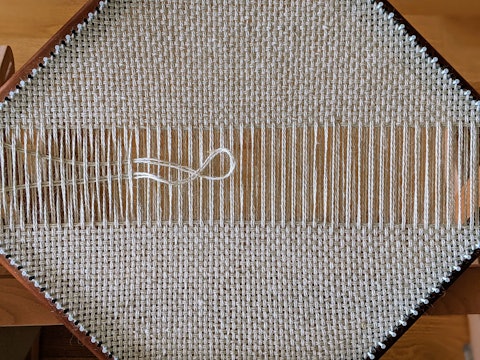 Tutorial: Continuous-Strand WeavingLearn the basics of using the continuous strand–weaving method on a pin loom.Jennifer Chapman · July 30, 2026
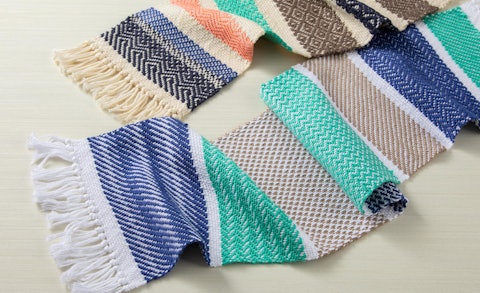 Twill for the Rigid-Heddle Loom: It’s Easier Than You Think!Learn why weavers love twill—and what makes it a great weave for the rigid-heddle loom.Christina Garton · July 14, 2026
 Dealing with Selvedges that Go BumpLace weaves are notorious for creating uneven, scalloped, and overall lumpy-bumpy selvedges. Learn two different methods for handling these selvedges in the first installment of our Summer Selvedge Series. Christina Garton · June 4, 2026
 My New Obsession: Three-Color Pick-up on the Inke LoomFind out how this niche Lithuanian technique found its way to America, and why it’s Christina’s new favorite way to create patterns on her inkle loom.Christina Garton · May 5, 2026
 Long Thread Podcast: Angela Tong, Multidisciplinary MakerSeason 14, Episode 7: A jeweler, knitter, crocheter, weaver, and potter sit down for a chat—and it turns out she's the same person. Angela Tong talks about a creative life built on detail, technique, and staying true to her own voice.Anne Merrow · May 2, 2026
 Get Started: Read a Basic Rigid-Heddle PatternHere's what you'll see in a rigid-heddle pattern in Little Looms—and how to translate that information to the loom!Christina Garton · April 23, 2026
 Up Your Design Game with the Fibonacci SequenceLearn how easy it is to design beautiful, asymmetric patterns using a simple bit of math. Christine Jablonski · April 21, 2026
 Perfectly Portable Looms for Weaving on the GoInterested in weaving on small looms? Learn how easy it is to build your own tiny weaving studio and sampler looms using simple household items. Elizabeth Jensen · March 26, 2026
 Join the Band: A New Retreat Just for BandweaversJoin us this fall for four days of bandweaving fun at Band Camp for Weavers!Christina Garton · March 24, 2026
 Long Thread Podcast: Heather Torgenrud, Pick-Up BandweavingSeason 14, Episode 4: Although her weaving interests vary from Anne Merrow · March 21, 2026
From the Library


Comments
No comments yet — be the first to share your thoughts.
Sign in to join the conversation — commenting is for signed-in members.