
Loading the latest stories…

Here's what you'll see in a rigid-heddle pattern in Little Looms—and how to translate that information to the loom!
Christina Garton3 min read
After you’ve learned how to warp and weave on your rigid-heddle loom, the next step is to learn how to weave a basic weaving pattern. In the patterns in Little Looms, like the one you can see below, you'll find information about what materials you need to weave the project; the size of the project on the loom and after finishing; step-by-step instructions to walk you through warping, weaving, and finishing; tips from the designer; and sometimes there will also be different charts and figures.
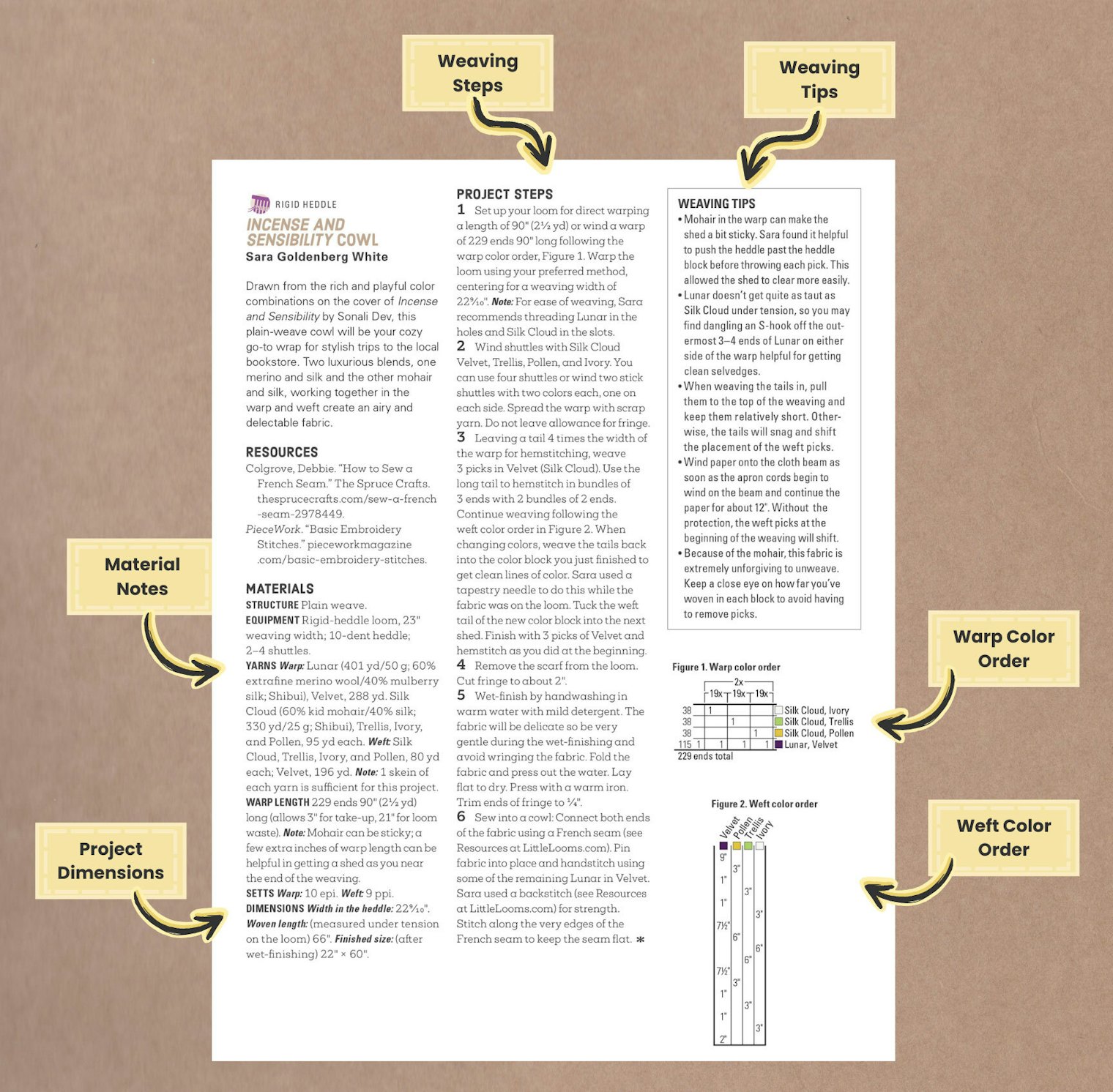
The first time you see a warp color order or weft color order, figuring out how to read it can be confusing. However, once you learn how to interpret these figures, reading patterns is a cinch! So let's walk through the basics of how translate the most common weaving charts and figures.
The warp color order tells you in what order you need to thread your heddle and is read from right to left. Each row in the warp color order represents a different color, and the numbers represent the number of ends to thread of each color before you move to the next. At the end of each row, you'll see the total number of ends needed for each color. To save space, wherever a section of the draft is repeated, a bracket is placed above it with the number of times to do that section. Let’s look at the warp color order for the Incense and Sensibility Cowl by Sara Goldenberg White as an example.
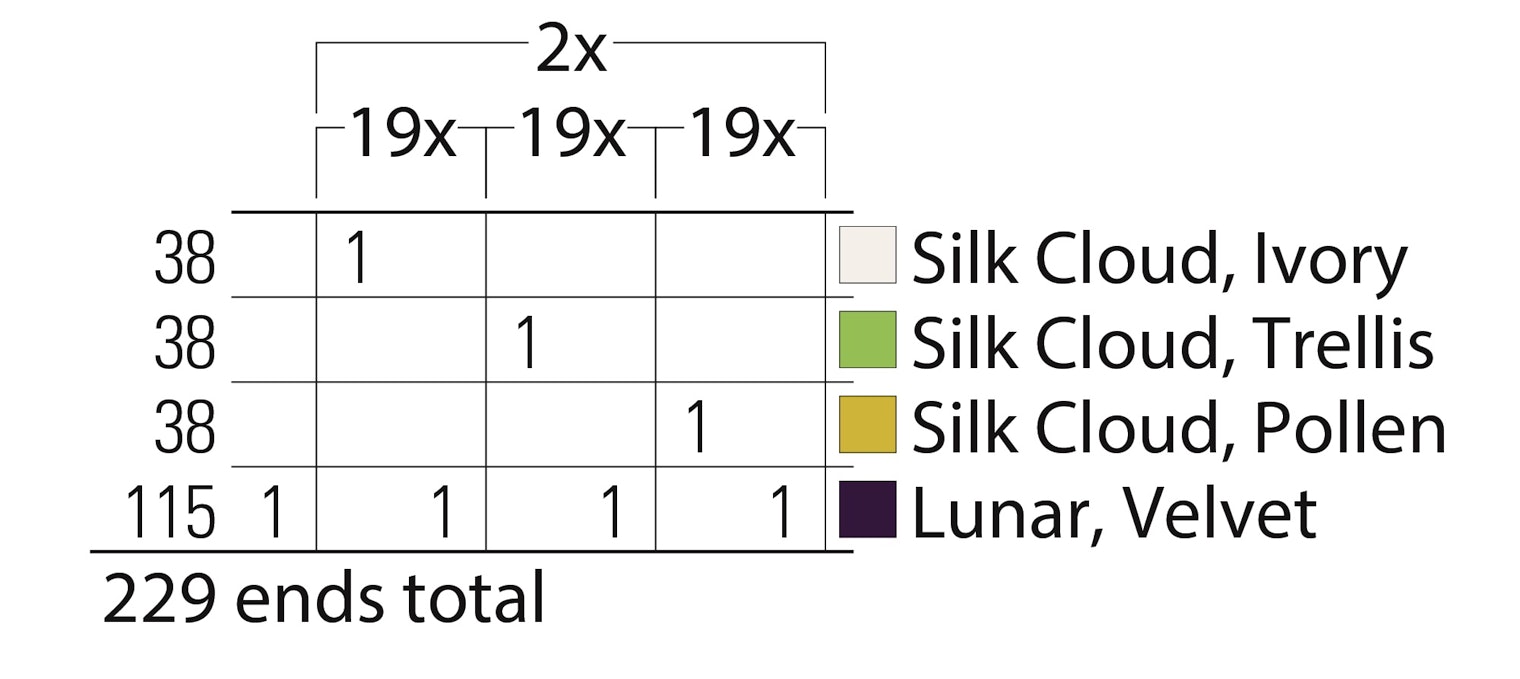
Reading the warp color order from right to left, there are two tiers of brackets: three lower brackets labeled as 19x (meaning you repeat the threading in those areas 19 times) and a higher bracket that encompasses all three of the lower brackets labeled 2x (meaning you’ll repeat those lower brackets in order twice.)
You would thread this project as follows:
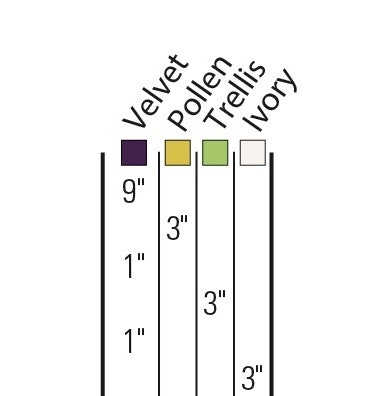
Some projects might also have a weft color order. These are read from top to bottom (opposite the direction of weaving). The numbers in the weft color order chart represent either the number of picks or the total length to weave of a specific weft color before changing to a new one. Below is a section of the weft color order for the Incense and Sensibility Cowl.
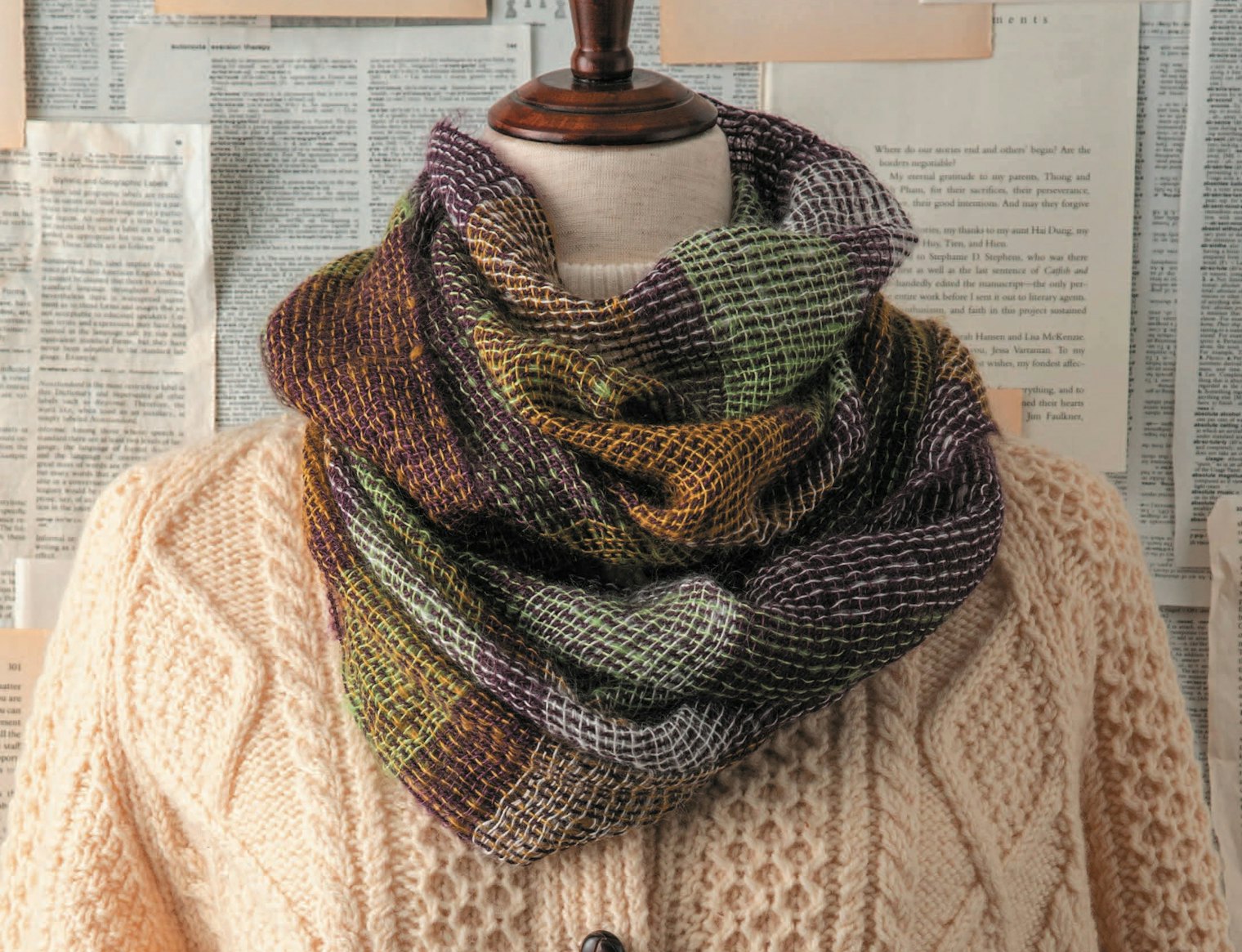
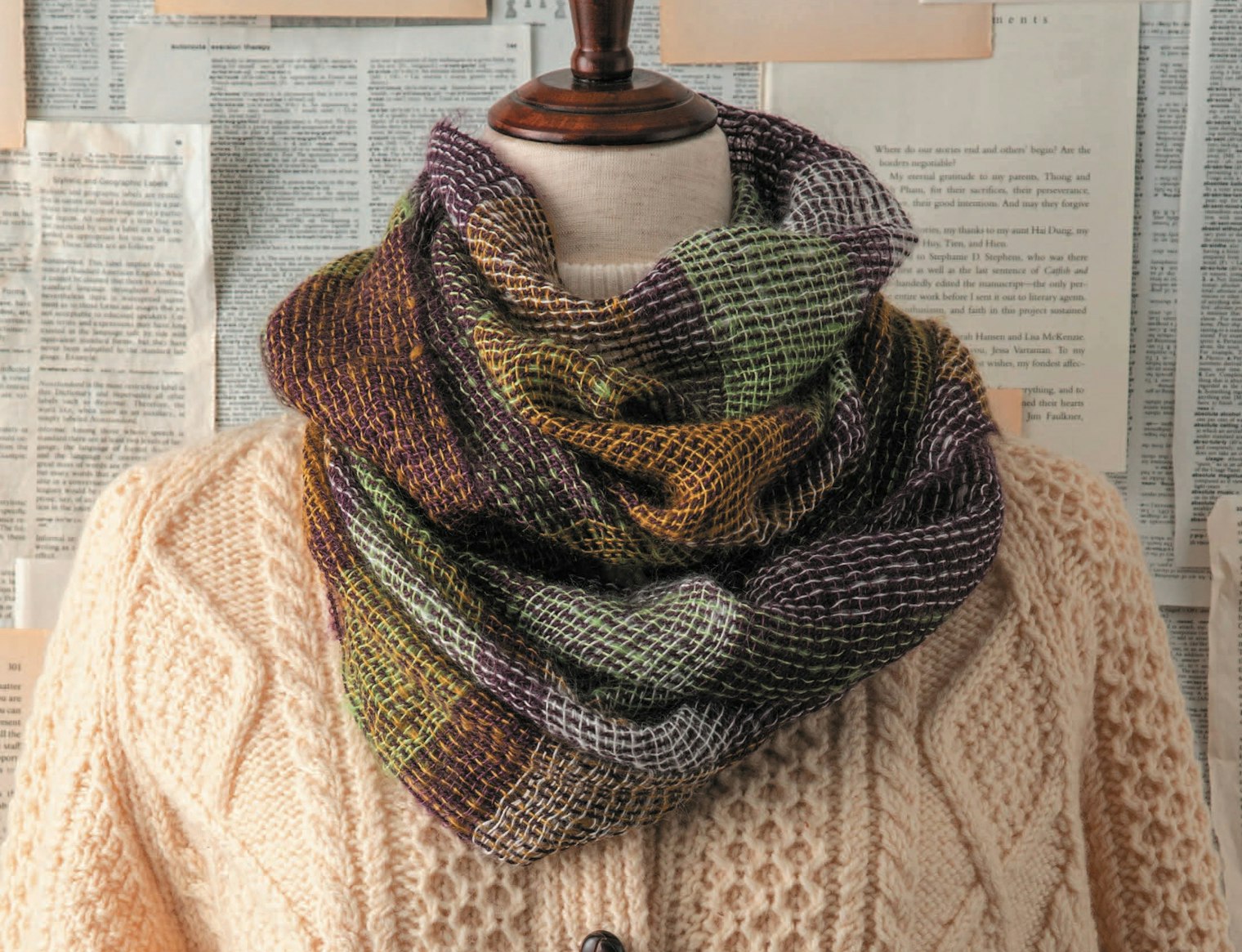
Sara Goldenberg White's Incense and Sensibility Cowl from the Winter 2022 issue.
It uses woven length instead of a specific number of picks to indicate how much you need to weave before changing wefts. This particular weft color order does not have brackets, so you would not repeat any sections. You would weave the cowl as follows:
If a weft color chart has brackets, you’ll treat them the same as you would the brackets in the warp color chart.
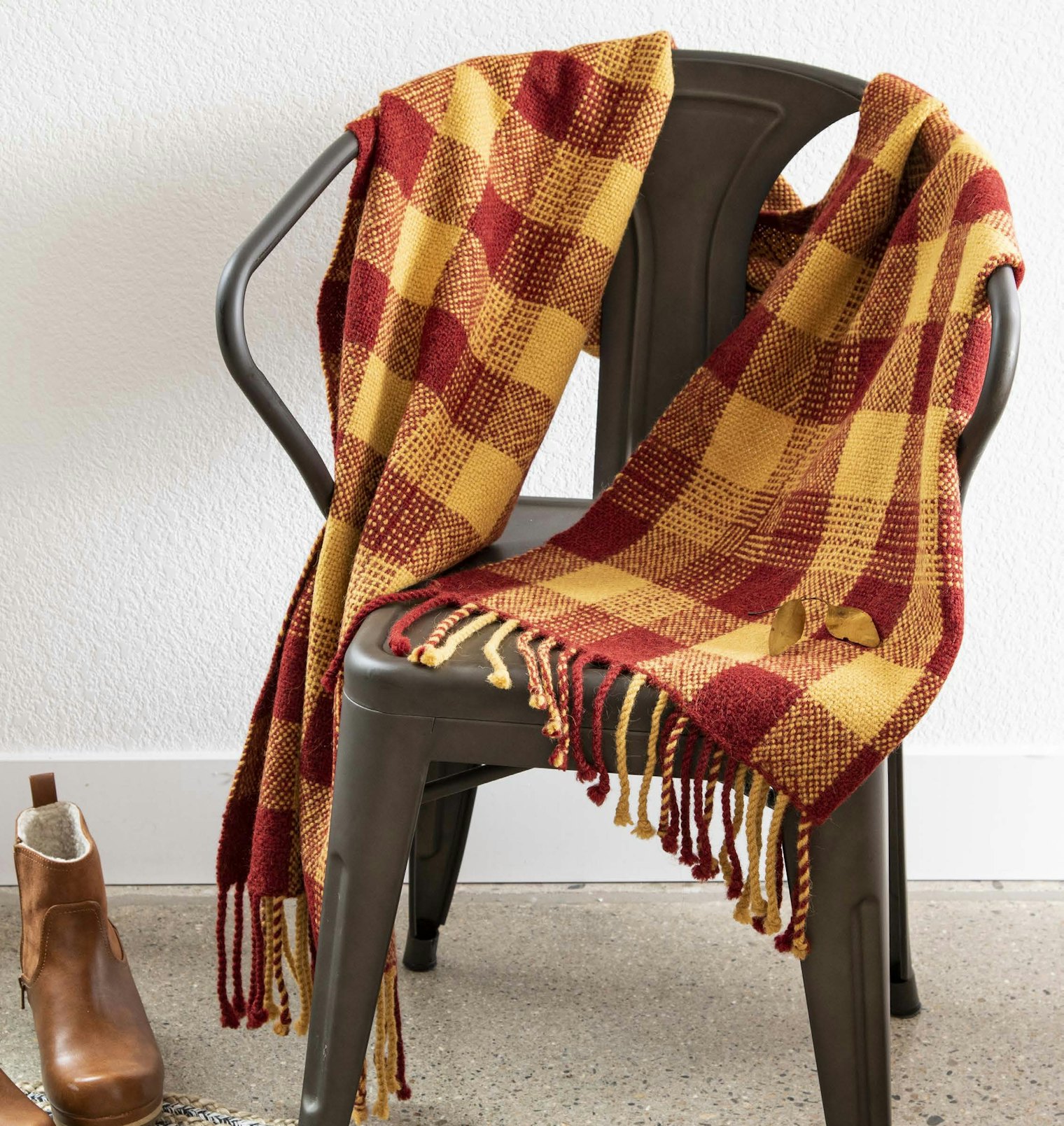
The Casual Comfort wrap by Tammy Bast from the Fall 2022 issue.
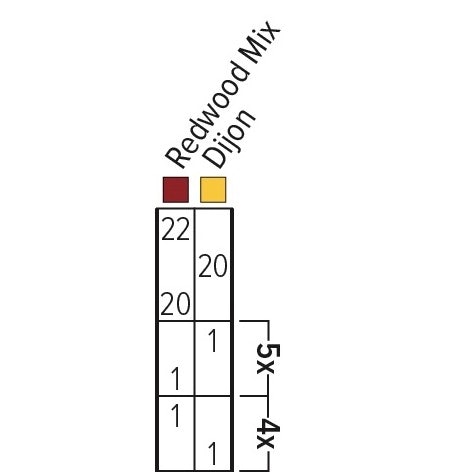
Above is a short section of the weft color order for the Casual Comfort wrap by Tammy Bast. You’d weave your weft colors in the following amounts and orders:
When weaving projects with a complicated weft order, keep a copy of it near your loom and use a sticky note to cover the portions you’ve already woven so you always know where you are in your weaving.
MORE ABOUT READING PATTERNS: For a more indepth look at patterns, including how to read a sley chart, check out our full guide How to Read a Rigid-Heddle Weaving Pattern.
While they might seem confusing if you don’t know what these figures are or how to read them, once you understand warp color orders and weft color orders, you can read a lot of information about a project in a short time.
Happy Weaving!
Christina
New to rigid-heddle weaving or need a refresher? Here are a few more rigid-hddle weaving resources to help you get started on your weaving journey.
Common Rigid-Heddle Weaving Terms. Get the definitions of common rigid-heddle weaving terms in this handy glossary.
Rigid-Heddle Basics: Parts of a Rigid Heddle Loom. Learn what the different parts of a rigid-heddle loom are called, where they are located on the loom, and how they’re used during the weaving process.
More from Little Looms
 Skill Guide: A Weaver’s Guide to FiberNo matter what loom(s) you love to weave on, understanding the different characteristics of a fiber can help you make better choices when picking yarns for projects.Christina Garton · July 31, 2026
 From WIF to Woven ClothLearn how to use WIFs and weaving software to create and edit patterns—before you put a single thread on the loom. Christina Garton · July 23, 2026
 Give Yourself the Gift of a Weaving GetawayWhat’s better than learning to master a new weaving? Doing it among friends, new and old! Little Looms Editors · July 21, 2026
 6 Easy Ways to Elevate Your Selvedges with TrimsAdd extra flair to your selvedges and hems with these terrific trims. Christina Garton · July 16, 2026
 Twill for the Rigid-Heddle Loom: It’s Easier Than You Think!Learn why weavers love twill—and what makes it a great weave for the rigid-heddle loom.Christina Garton · July 14, 2026
 A Celebration of Stripes: Call for Submissions Fall 2027We're looking for striped projects of all kinds for our Fall 2027 issue—and that includes plaids and checks, too!Christina Garton · July 9, 2026
 Make Your Own Cardboard Mini-ShuttlesButterflies are beautiful, but they’re not always the best choice when you’re weaving. Try winding small bits of weft on these simple, DIY cardboard shuttles instead!Christina Garton · July 7, 2026
 A Trio of Table ToppersGo beyond rectangular runners with table toppers. Christina Garton · June 30, 2026
 Crochet for Your Selvedges? Your Edges Will Thank YouFind out why Sara Bixler finishes some of her woven pieces with crochet. Watch her free video clip, and then dive into several stitch options to try on your next project. Little Looms Editors · June 25, 2026
 Compose a Masterpiece on Your LoomAfter all, a loom is just another type of stringed instrument. Christina Garton · June 23, 2026
From the Library




Comments
No comments yet — be the first to share your thoughts.
Sign in to join the conversation — commenting is for signed-in members.