
Loading the latest stories…

Think plain weave is boring? Think again! Adding interesting textured yarns, color-and-weave patterns, and the like help ensure your plain weave will be anything but plain.
Little Looms Editors2 min read

"Plain weave" can sound so drab and unexciting, but there’s plenty you can do with this most basic of weave structures; whether it’s color, texture, or both. If you this post, you've already explored color-and-weave. Now, that post only scratched the surface of ways to take plain weave to new heights, so here are even more ideas for designing plain weave that’s out of the ordinary.
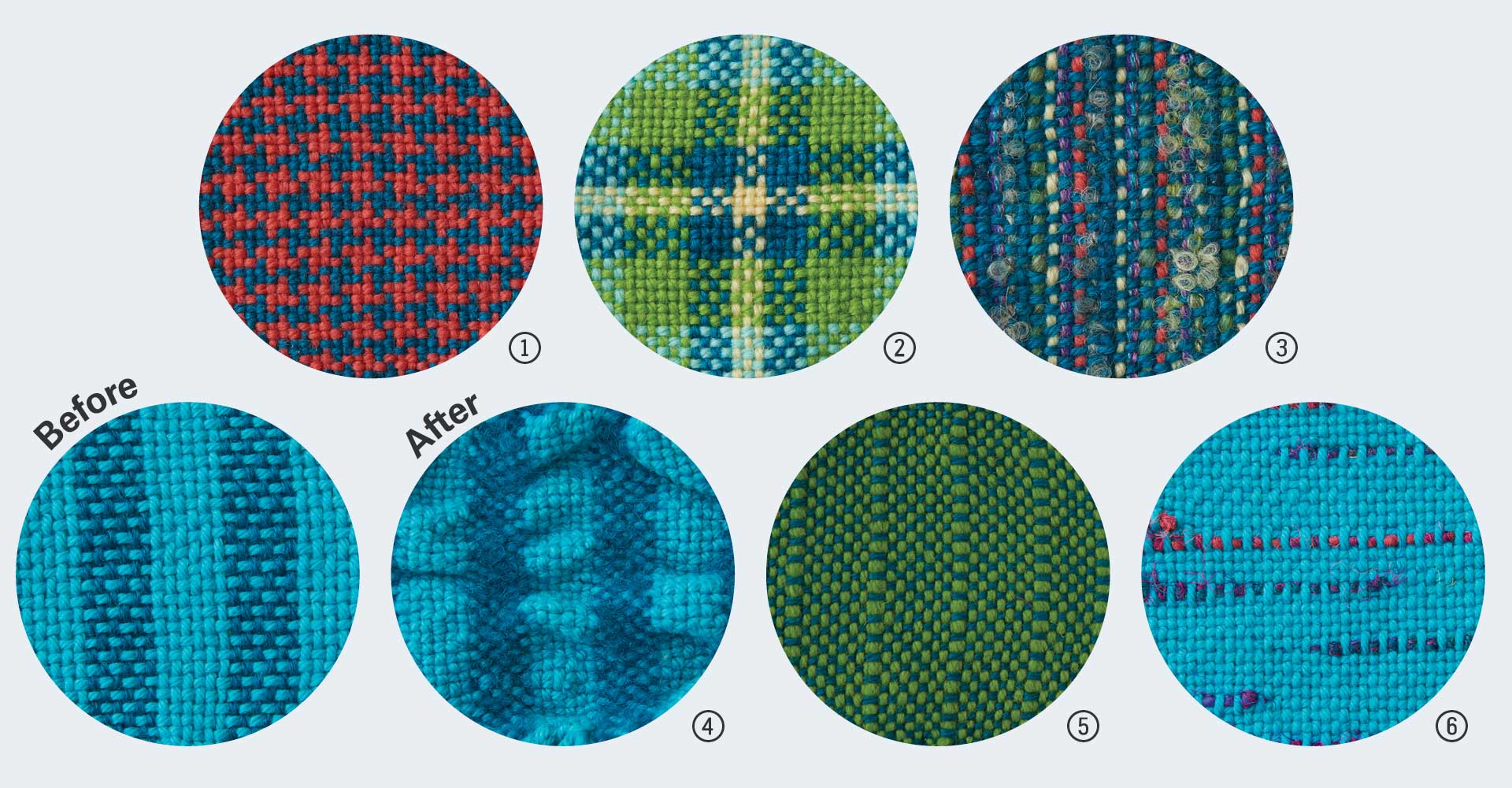
The most basic pattern of a class called color-and-weave, houndstooth alternates two colors in warp and weft. The classic square/star motif is thanks to the way the warp and weft threads cover and reveal each other. Tip: Start one color weft on each side, and catch the unused weft whenever possible.
A plaid is a color pattern that’s mirrored in both warp and weft to create grids and blocks of different colors. It requires some advanced planning (and creates a lot of ends to be woven in), but the effect is spectacular. Search the web for your favorite plaid or use tartan pattern generator.
There’s no rule that you have to use all the same yarn in the warp; changing colors and textures can give striking effects (and it’s a great way to use up leftover yarns). Weaving teacher Judy Steinkoenig suggests staying within one fiber family—using either all animal protein or all plant fiber—to keep the tension even. Keep any rough-textured yarns near the center of the warp to avoid abrading them on the heddles.
This is a fancy way to describe using two different yarns, one that shrinks and one that doesn’t, and deliberately washing the fabric in a way that will make one shrink. The resulting puckering adds a three-dimensional element to the fabric. You can mix the yarns in the warp (seen here), weft, or both.
Putting more ends than usual in some of the slots or holes creates a ridge in the warp, giving a bit of texture with no extra effort. Just pass another loop or pair of ends (or more) along with the regular warp thread and tie on as usual. Similarly, put fewer ends than usual in some of the other slots to create areas of lace.
This is cheating a little bit, because it involves doing something with your weft besides simple back-and-forth passes, but adding an extra section of yarn in the weft can create both color and texture. Choose a yarn in a color and yarn diameter that will pop, cut random lengths, and tuck it inside the shed in random places, aiming for a balanced effect overall. After washing, trim the ends of the inlay close to the fabric.
Enjoy even more inspiration and colorful projects from the 2016 issue of Little Looms.
Yarns shown above: Houndstooth, plaid, crammed warp: Brown Sheep NatureSpun Sport. Differential shrinkage: Brown Sheep NatureSpun Sport, Cascade Yarns Sunseeker Shade. Mixed warp: Brown Sheep NatureSpun Sport, JaggerSpun Zephyr Lace, Plymouth Mushishi, Tahki Yarns Tara Tweed, Lana Grossa Bombolino. Simple inlay: Cascade Yarns Sunseeker Shade, Treenway Silks Recycled Silk.
Originally published 2/15/22; updated 8/13/2024
More from Little Looms
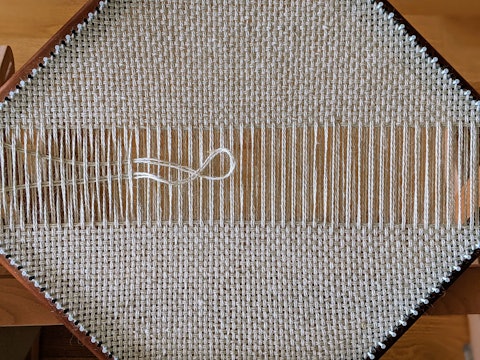 Tutorial: Continuous-Strand WeavingLearn the basics of using the continuous strand–weaving method on a pin loom.Jennifer Chapman · July 30, 2026
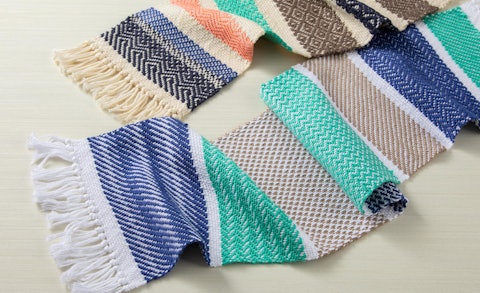 Twill for the Rigid-Heddle Loom: It’s Easier Than You Think!Learn why weavers love twill—and what makes it a great weave for the rigid-heddle loom.Christina Garton · July 14, 2026
 Dealing with Selvedges that Go BumpLace weaves are notorious for creating uneven, scalloped, and overall lumpy-bumpy selvedges. Learn two different methods for handling these selvedges in the first installment of our Summer Selvedge Series. Christina Garton · June 4, 2026
 My New Obsession: Three-Color Pick-up on the Inke LoomFind out how this niche Lithuanian technique found its way to America, and why it’s Christina’s new favorite way to create patterns on her inkle loom.Christina Garton · May 5, 2026
 Long Thread Podcast: Angela Tong, Multidisciplinary MakerSeason 14, Episode 7: A jeweler, knitter, crocheter, weaver, and potter sit down for a chat—and it turns out she's the same person. Angela Tong talks about a creative life built on detail, technique, and staying true to her own voice.Anne Merrow · May 2, 2026
 Get Started: Read a Basic Rigid-Heddle PatternHere's what you'll see in a rigid-heddle pattern in Little Looms—and how to translate that information to the loom!Christina Garton · April 23, 2026
 Up Your Design Game with the Fibonacci SequenceLearn how easy it is to design beautiful, asymmetric patterns using a simple bit of math. Christine Jablonski · April 21, 2026
 Perfectly Portable Looms for Weaving on the GoInterested in weaving on small looms? Learn how easy it is to build your own tiny weaving studio and sampler looms using simple household items. Elizabeth Jensen · March 26, 2026
 Join the Band: A New Retreat Just for BandweaversJoin us this fall for four days of bandweaving fun at Band Camp for Weavers!Christina Garton · March 24, 2026
 Long Thread Podcast: Heather Torgenrud, Pick-Up BandweavingSeason 14, Episode 4: Although her weaving interests vary from Anne Merrow · March 21, 2026
From the Library


Comments
No comments yet — be the first to share your thoughts.
Sign in to join the conversation — commenting is for signed-in members.