
Loading the latest stories…

Christina talks about some of the myths surrounding rigid-heddle looms and explains why these simple looms aren't just for beginners.
Christina Garton3 min read
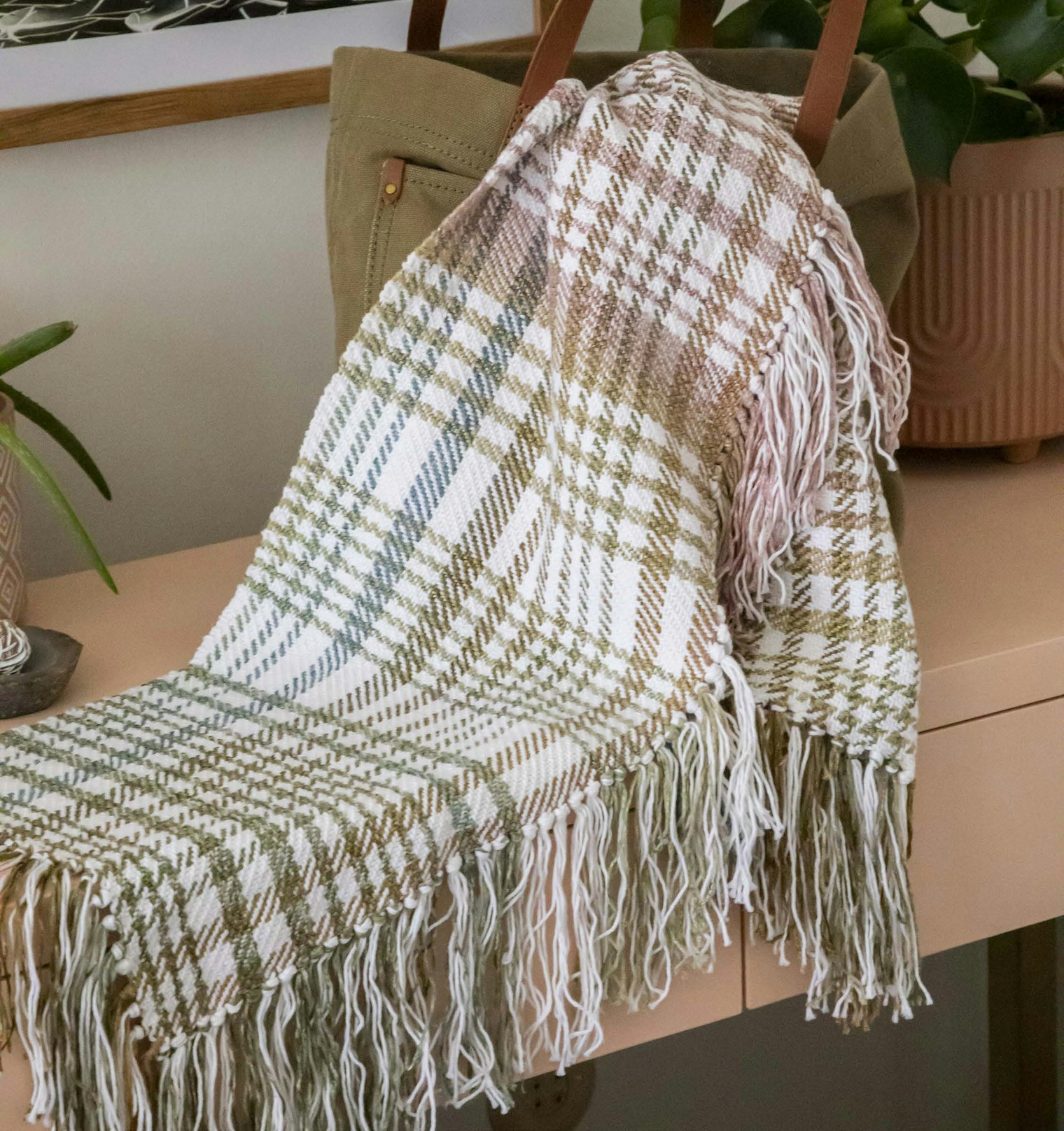
Whenever I hear a rigid-heddle loom referred to as a “beginner’s loom,” I can’t help but shake my head in disappointment, for while the loom itself might be simple, it is capable of producing complex cloth. If anything, the rigid-heddle loom is an everybody sort of loom—so I’m here to dispel some rigid-heddle weaving myths.
Let’s start with the thing I hear the most, that the rigid-heddle loom is a gateway loom to “real weaving.” Just typing that makes me cringe. It’s true, the rigid-heddle loom is perfect for people new to weaving. It is significantly less expensive than a multishaft loom, takes up far less space, and isn’t complicated or intimidating to those just learning the difference between warp and weft. Saying something is good for beginners, though, doesn’t mean it’s automatically useless for more advanced weavers. Sometimes you want to weave a project but don’t want to spend the hours needed to wind and warp a floor loom. Sometimes you want to just play with color and texture. Sometimes you want to weave outside. For all those times, there’s the rigid-heddle loom.
This one always makes me roll my eyes. The rigid-heddle loom is a very simple loom that’s set up to weave plain weave, but a simple loom does not mean simple cloth. Backstrap looms are very simple looms, and yet they are used to produce some of the most intricate weaving out there. Rigid-heddle looms make hand manipulation of threads much easier, and with the aid of a simple pick-up stick or two, you can create anything from basic twill patterns to structures and designs that would take dozens of shafts. You can also use hand-manipulation and pick-up techniques to create warp or weft floats, Danish medallions, rya, Brooks bouquet, and other wonderful designs.
 Shilpa Nagarkar's Sunshine on Your Shoulders Scarf combines a subtly asymmetric design with plain weave to create cloth you just want to reach out and touch.
Okay, so this is less a rigid-heddle myth and more of an all-of-weaving myth. For some reason, plain weave has become synonymous with boring, similar to vanilla, and I’m sorry, but I love both plain weave and vanilla. Plain weave is a great structure for playing with color—you can weave stripes, plaids, or seemingly complex color-and-weave designs in plain weave. Use plain weave to showcase yarns with fun textures or color variegation. If you think plain weave is boring, then you’re doing it wrong.
First off, I just want to say that a real weaving yarn is whatever yarn you choose to weave with, whether it’s a run-of-the-mill 8/2 cotton or a highly textured handspun art yarn. If you can weave with a yarn, it’s a weaving yarn. That said, you can use yarns such as 8/2 cotton on your rigid-heddle loom to weave towels and napkins and whatever else you like. You can even use silks on the rigid-heddle loom. It’s true that “knitting” yarns and fashion yarns work beautifully on rigid-heddle looms, but there is no reason you can’t use other yarns on the rigid-heddle loom, too!
So there you have it, the rigid-heddle loom is a loom for every level of weaver, whether you want to weave nothing but beautiful plain weave or experiment with complex pick-up designs. It’s the kind of loom that you can enjoy and explore for years to come.
You can check out Sara's Fashion Plaid wrap in the library and Shilpa's Sunshine on Your Shoulders Scarf here.
Happy Weaving!
Christina
Originally published 11/21/2018; updated 6/11/2024
More from Little Looms
 Tutorial: Continuous-Strand WeavingLearn the basics of using the continuous strand–weaving method on a pin loom.Jennifer Chapman · July 30, 2026
 Twill for the Rigid-Heddle Loom: It’s Easier Than You Think!Learn why weavers love twill—and what makes it a great weave for the rigid-heddle loom.Christina Garton · July 14, 2026
 Dealing with Selvedges that Go BumpLace weaves are notorious for creating uneven, scalloped, and overall lumpy-bumpy selvedges. Learn two different methods for handling these selvedges in the first installment of our Summer Selvedge Series. Christina Garton · June 4, 2026
 My New Obsession: Three-Color Pick-up on the Inke LoomFind out how this niche Lithuanian technique found its way to America, and why it’s Christina’s new favorite way to create patterns on her inkle loom.Christina Garton · May 5, 2026
 Long Thread Podcast: Angela Tong, Multidisciplinary MakerSeason 14, Episode 7: A jeweler, knitter, crocheter, weaver, and potter sit down for a chat—and it turns out she's the same person. Angela Tong talks about a creative life built on detail, technique, and staying true to her own voice.Anne Merrow · May 2, 2026
 Get Started: Read a Basic Rigid-Heddle PatternHere's what you'll see in a rigid-heddle pattern in Little Looms—and how to translate that information to the loom!Christina Garton · April 23, 2026
 Up Your Design Game with the Fibonacci SequenceLearn how easy it is to design beautiful, asymmetric patterns using a simple bit of math. Christine Jablonski · April 21, 2026
 Perfectly Portable Looms for Weaving on the GoInterested in weaving on small looms? Learn how easy it is to build your own tiny weaving studio and sampler looms using simple household items. Elizabeth Jensen · March 26, 2026
 Join the Band: A New Retreat Just for BandweaversJoin us this fall for four days of bandweaving fun at Band Camp for Weavers!Christina Garton · March 24, 2026
 Long Thread Podcast: Heather Torgenrud, Pick-Up BandweavingSeason 14, Episode 4: Although her weaving interests vary from Anne Merrow · March 21, 2026
From the Library


Comments
No comments yet — be the first to share your thoughts.
Sign in to join the conversation — commenting is for signed-in members.