
Loading the latest stories…


AA
Find out why Sara Bixler finishes some of her woven pieces with crochet. Watch her free video clip, and then dive into several stitch options to try on your next project.
Little Looms Editors6 min read
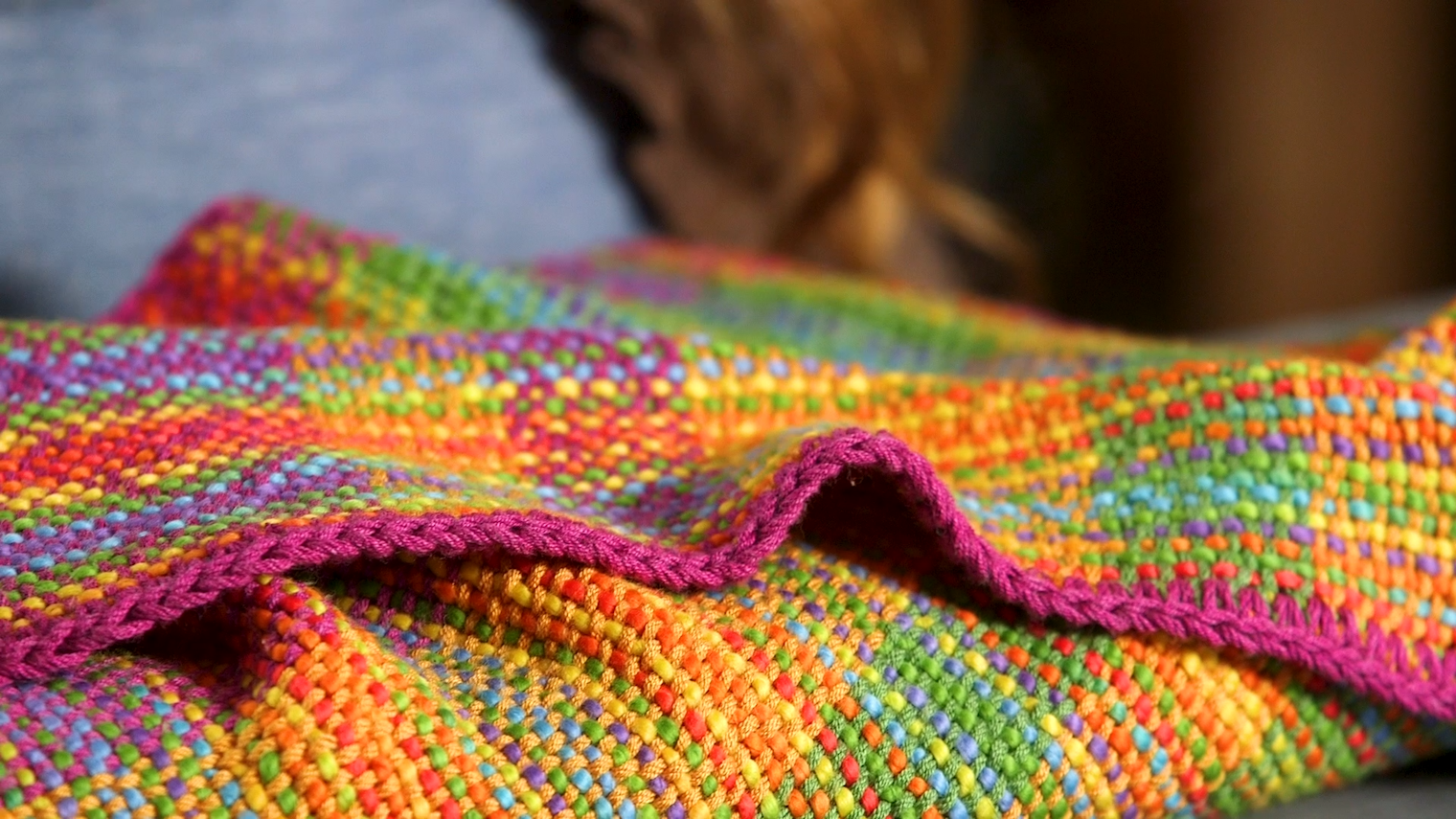
In Part 2 of her Spice Up Your Selvedges series, popular weaving teacher Sara Bixler suggests that you consider crochet when you’re finishing your piece. Along with this article, LTM All Access subscribers can enjoy browsing Handwoven’s project ideas for crochet borders. If you missed Part 1, which covered ways to deal with lace and weft floats, you can find it here.
—Little Looms editors
Getting neat and tidy selvedges is a constant struggle for pretty much all weavers—but what if I told you there was a way to get spectacular selvedges without fiddling with each pick? No—I’m not talking about using a temple, either. Instead of fussing with your selvedges during weaving, you can trim them after weaving with some simple crochet. In this second part of our Summer Selvedge Series, we’re going to show you just how easy it is to spiff up your selvedges with some extra stitching. Even better? This technique works equally well on rigid-heddle and pin-loom projects!
When you add crochet trim after weaving, you can add it to every edge—not just the selvedges. Giving your piece a crochet border literally frames your weaving. Just like the right frame can enhance your favorite painting, picking the right trim (color and style) for your cloth can enhance the texture and patterns. Simple trims, such as a single crochet border, will make your weaving stand out even more. More elaborate designs, such as a shell stitch, can help elevate already spectacular cloth to a new level.
Beyond aesthetics, a border can also be a practical choice. If you’re weaving a baby blanket or another project where fringe isn’t desirable, and maybe hemming isn’t a good option for whatever reason, adding a border lets you achieve a beautiful finish without the fringe.
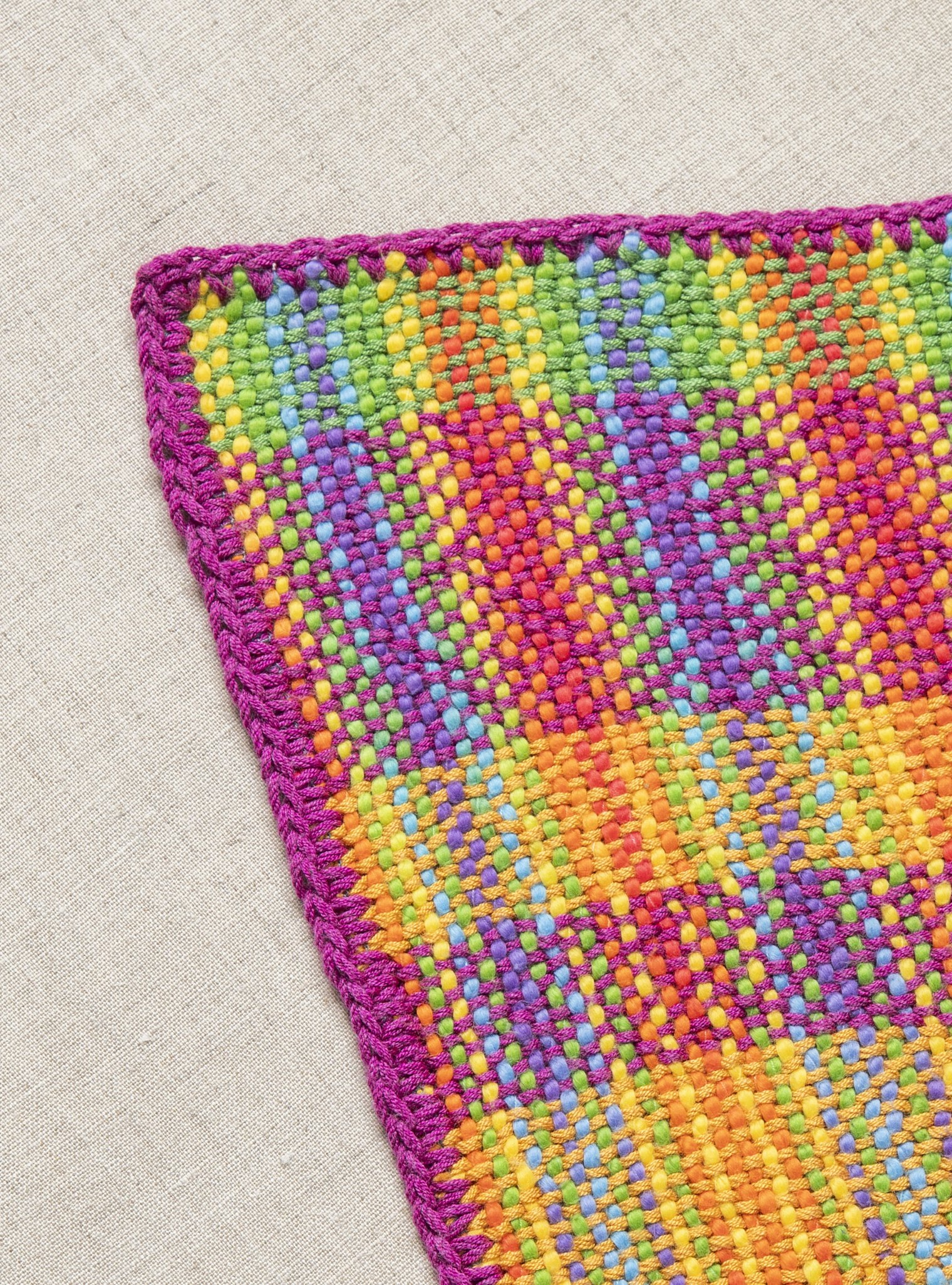
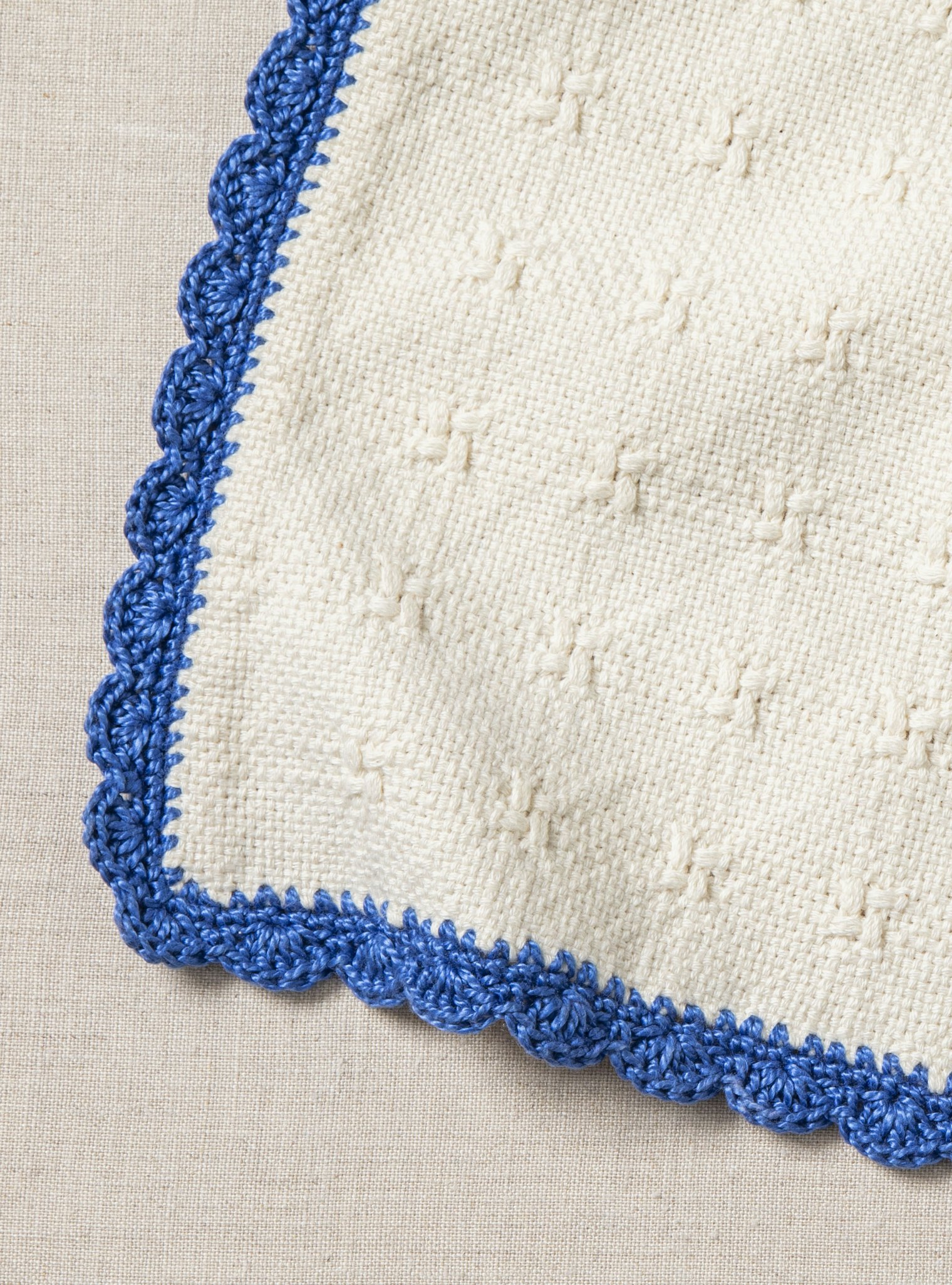
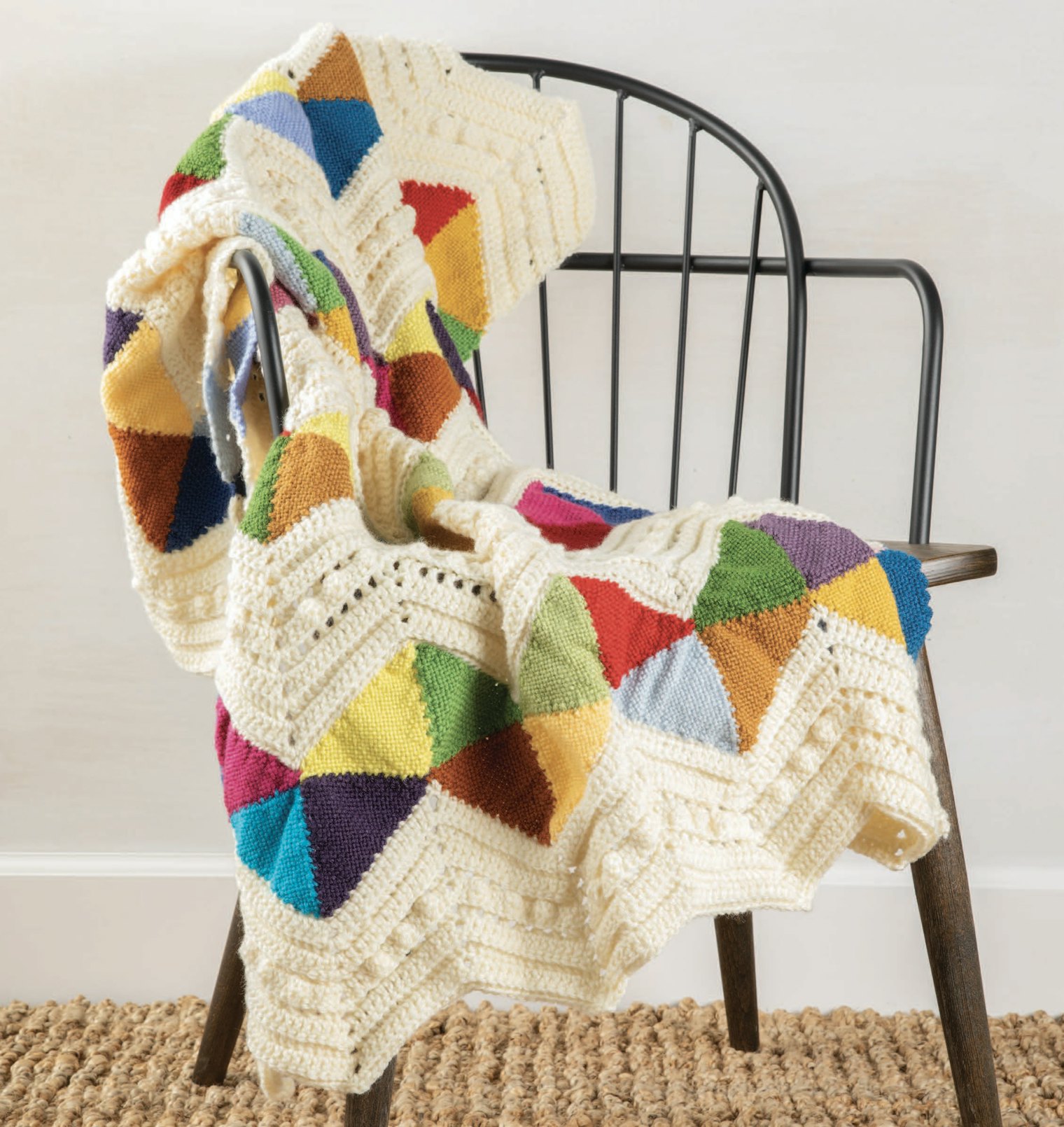
Not sure how to crochet directly onto handwoven fabric? Don’t worry—we’ve got you covered! We’ve got step-by-step instructions that will walk you through several ways to give your cloth a beautiful border.
Adapted from this free article by Heather Winslow
Start with these preparatory steps before adding in or attaching crochet trims to your flat handwoven fabrics.
Secure the raw edges. Serge or machine stitch 2 rows of straight stitching ¼" apart and ¼" from the raw edge of the fabric. If the yarns in the fabric are particularly heavy or very slick and prone to raveling, encase the edges with Seam Finish from Farmhouse Fabrics or a similar bias edging.
Crochet a sample swatch. Experiment with different yarns, hook sizes, and stitches to get the look that you want. To achieve a firmer edging, use a hook at least one size smaller than the one recommended on the yarn label. In your woven piece, count the number of stitches per inch to determine the gauge and the number of stitches you will need to work. If you have a woven sample of the fabric, you can even add trim to the sample before wet-finishing it to get even more information about how the yarn will work.
Mark the edge of the cloth in inches. Use small safety pins to mark the length of the fabric in inches. Use these marks as a guide to crochet the exact number of stitches per inch as determined by your test swatch.
Next, you can choose to add a foundation slip-stitch row, or go straight to single crochet (or another stitch of your choice).
More from Little Looms
 Skill Guide: A Weaver’s Guide to FiberNo matter what loom(s) you love to weave on, understanding the different characteristics of a fiber can help you make better choices when picking yarns for projects.Christina Garton · July 31, 2026
 From WIF to Woven ClothLearn how to use WIFs and weaving software to create and edit patterns—before you put a single thread on the loom. Christina Garton · July 23, 2026
 Give Yourself the Gift of a Weaving GetawayWhat’s better than learning to master a new weaving? Doing it among friends, new and old! Little Looms Editors · July 21, 2026
 6 Easy Ways to Elevate Your Selvedges with TrimsAdd extra flair to your selvedges and hems with these terrific trims. Christina Garton · July 16, 2026
 Twill for the Rigid-Heddle Loom: It’s Easier Than You Think!Learn why weavers love twill—and what makes it a great weave for the rigid-heddle loom.Christina Garton · July 14, 2026
 A Celebration of Stripes: Call for Submissions Fall 2027We're looking for striped projects of all kinds for our Fall 2027 issue—and that includes plaids and checks, too!Christina Garton · July 9, 2026
 Make Your Own Cardboard Mini-ShuttlesButterflies are beautiful, but they’re not always the best choice when you’re weaving. Try winding small bits of weft on these simple, DIY cardboard shuttles instead!Christina Garton · July 7, 2026
 A Trio of Table ToppersGo beyond rectangular runners with table toppers. Christina Garton · June 30, 2026
 Compose a Masterpiece on Your LoomAfter all, a loom is just another type of stringed instrument. Christina Garton · June 23, 2026
 Two Ways to Make Terrific TasselsTurn loom waste or small bits of extra-special yarns into beautiful, custom-made tassels perfect for trimming handwoven projects and so much more!Christina Garton · June 18, 2026
From the Library


Comments
No comments yet — be the first to share your thoughts.
Sign in to join the conversation — commenting is for signed-in members.