
Loading the latest stories…

Designs made with hexagons don’t have to be flat. You can fold, sew, and ruffle hexagons to create 3D designs.
Gabi van Tassell3 min read
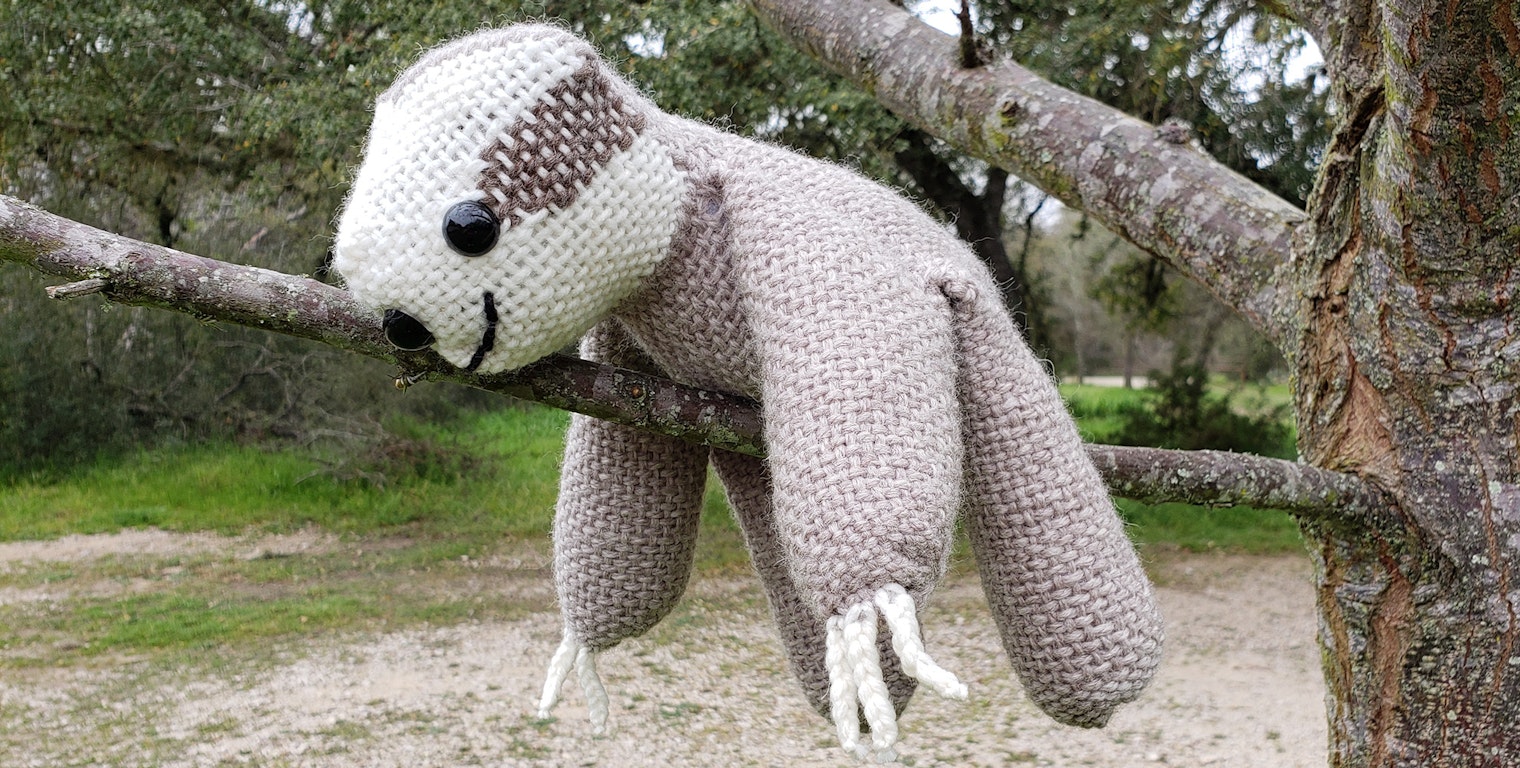
In this second post about designing with hexagons, Gabi van Tassell starts at the beginning with making 1 hexagon into a three-dimensional shape and continues on through joining 4 hexagons. Read on for the surprising number of ways you can manipulate pin-loom woven hexagons.
In her next post, Gabi continues with 3D hexagon designs giving tips for sharing hexagons to create garments and bags, doubling designs to make them 3D, and more. —Susan
The world isn’t flat, and hexagon projects don’t have to be flat, either! In this post I’ll start with the basic methods for changing hexagons from flat to three dimensions and then show how you can go from there to designing three-dimensional projects. For this post, I’m focusing on regular hexagons, with six equal sides and angles.
Let’s start with looking at how to make a single hexagon “not flat” by pulling threads or folding it.
Pulling Threads
If you’re using the patented hexagon weaving method and pull the start tail (make sure to hold the opposite tip tightly so that the pull stops there), you will get an instant decorative bow. If you pull the end tail, you’ll get a ruffled half circle shape that you can use for a flower petal, or perhaps a kitten’s ear?

Folding Hexagons
There are two ways to fold a hexagon: along the longest point-to-point diameter or half way in the middle of a hexagon side. As I mentioned in my first post about designing with hexagons, depending on whether you fold along the bias or not, those half hexagons will stretch at different rates, in different directions. Fold a hexagon twice for a triangle shape (turtle tail), or fold it free form (motorbike seat). Folded hexagons make great building blocks for stuffed animal or doll arms and legs, ornaments, or toy mice (particularly enticing when filled with catnip).

Joining 2 hexagons is probably the most intuitive way to add dimension. If you sew both layers along 4 sides, you will have a pocket shape, which can be used as the beginning of a coin purse or amulet pouch.
Two hexagons sewn together on all 6 sides and stuffed create a hexipuff shape. A hexipuff on its own can be a toss-game piece or hand warmer. Sewing multiple hexipuffs together can turn into anything from a cozy seat cushion to a cute pet bed.

Joining 3 hexagons with their tips facing each other creates a perfectly flat “bottom,” and you can fold up the remaining sides to shape walls for an instant basket or the beginnings of a pouch. The bottom will have a tendency to take on a triangle shape, but if you make a basket or pouch, that effect will go away and settle into a round shape when used.
Close up the top like the bottom and you will have a sphere-like shape, great for ornaments or small balls.

You can join 4 hexagons, tips touching much as you did for 3 hexagons above. Mathematically, there is more fabric than fits into a circle when you join 4, causing the center of the piece to bulge out. That might just be what you want for a nicely rounded bottom and a wider diameter that work great for bags or pillows.
Folded in half, a 4-hexagon setup is also a great starting point for making dolls and plush toys with arms that are integrated into the body as shown below.

Now it’s up to you! Start pulling threads, folding, and joining hexagons and see where it takes you. Check here for Part 2!
Originally published 6/30/22; updated 2/25/25
More from Little Looms
 Skill Guide: A Weaver’s Guide to FiberNo matter what loom(s) you love to weave on, understanding the different characteristics of a fiber can help you make better choices when picking yarns for projects.Christina Garton · July 31, 2026
 Tutorial: Continuous-Strand WeavingLearn the basics of using the continuous strand–weaving method on a pin loom.Jennifer Chapman · July 30, 2026
 Twill for the Rigid-Heddle Loom: It’s Easier Than You Think!Learn why weavers love twill—and what makes it a great weave for the rigid-heddle loom.Christina Garton · July 14, 2026
 Long Thread Podcast: Angela Tong, Multidisciplinary MakerSeason 14, Episode 7: A jeweler, knitter, crocheter, weaver, and potter sit down for a chat—and it turns out she's the same person. Angela Tong talks about a creative life built on detail, technique, and staying true to her own voice.Anne Merrow · May 2, 2026
 Long Thread Podcast: Heather Torgenrud, Pick-Up BandweavingSeason 14, Episode 4: Although her weaving interests vary from Anne Merrow · March 21, 2026
 Long Thread Podcast: Christina Garton, Little LoomsSeason 14, Episode 2: Ten years since the first issue of Easy Weaving with Little Looms, editor Christina Garton is still finding delightful new ideas in small-loom weaving.Anne Merrow · February 21, 2026
 Weave a Pin-Loom Pet for National Love Your Pet DayWeave a pet—all it takes is a pin loom, a few put-ups of yarn, and a copy of Zoo Crew. Christina Garton · February 12, 2026
 Long Thread Podcast: Laverne Waddington (classic)Season 13, Episode 8: Using her hands, fine threads, and simple tools, Laverne Waddington uses backstrap looms to explore a world of weaving techniques and traditions.Anne Merrow · December 27, 2025
 Skill Builder: Explore Two Takes on Textured WeavesCraving more visual interest in your projects? Try these simple pick-up patterns to add texture to your weaving.Christina Garton · December 18, 2025
 Skill Builder: How to Thread Weaving TabletsLearn how to go from draft to a perfectly threaded set of tablets.Little Looms Authors · November 13, 2025
From the Library




Comments
No comments yet — be the first to share your thoughts.
Sign in to join the conversation — commenting is for signed-in members.