
Loading the latest stories…




Debbie Held3 min read
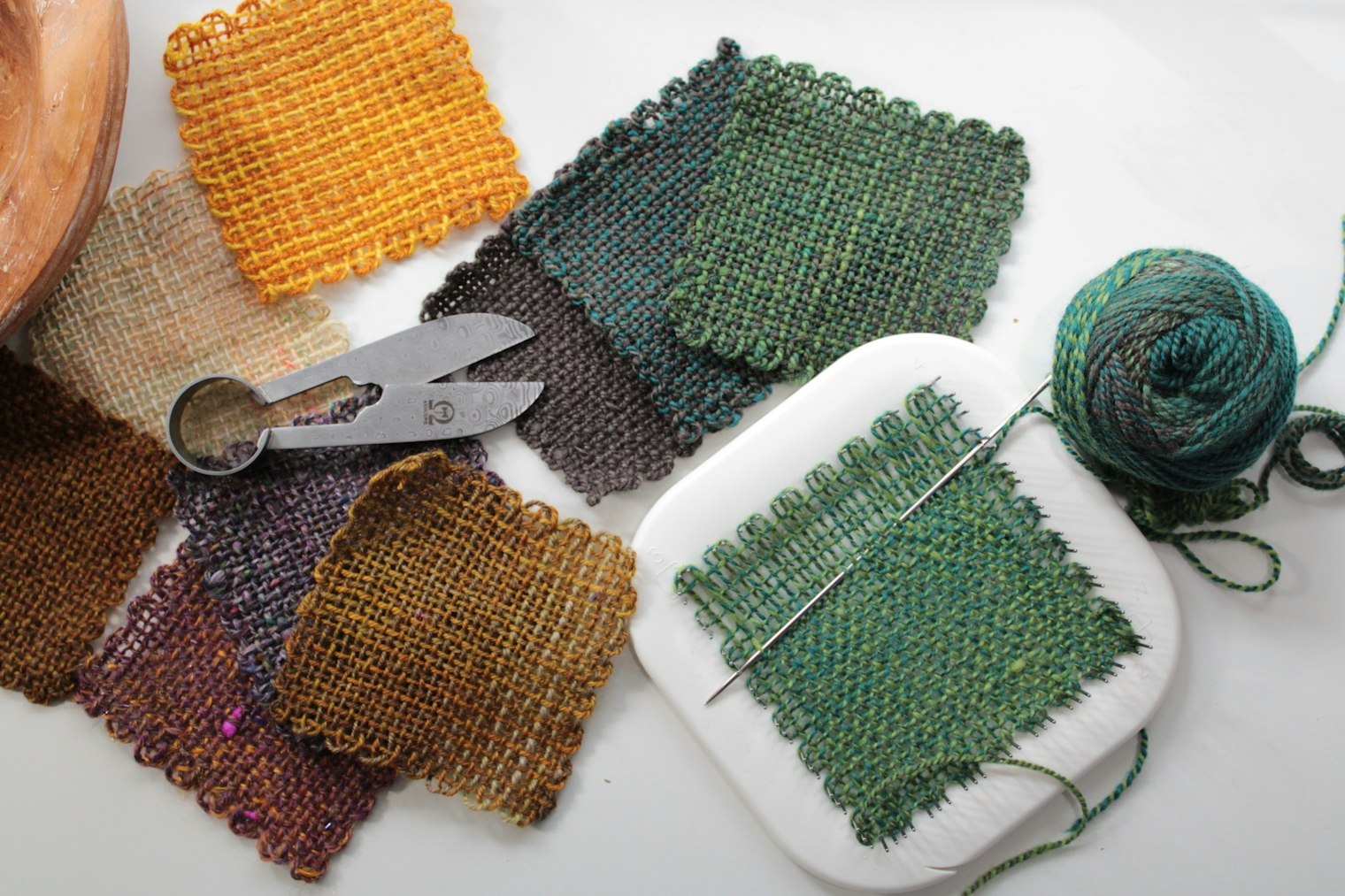
For our Fall 2024 issue all about blending fibers I knew I had to get somebody to write about spinning and weaving. That somebody ended up being spinner-weaver extraordinaire Debbie Held. Her article was so good it inspired me to pick up a spindle and start spinning. Below is an excerpt of her article. To read the whole thing, icnluding more tips, check out the Fall 2024 issue today! —Christina
When it comes to yarn-related activities, I identify as a handspinner above all else. However, I am a spinner who also weaves, and it was my love of spinning that spurred me toward learning to weave, much to my own surprise. In fact, I now believe that spinning is the best skill that anyone interested in weaving—particularly with small looms such as inkle or rigid heddle—can learn for better, more nuanced, and more productive weaving.
Now, before you talk yourself out of reading further or start muttering, “I don’t need another hobby,” please let me convince you. We all have our limitations, be they related to space, time, or money. When I learned to spin and then weave, I was deep in the throes of all three limitations. Fortunately, you can start spinning for less than $50, about the cost of a 1-ounce basic spindle and some quality spinning fiber. Together, these supplies take up very little space and can provide hours of enjoyment—a bargain, really. Or, if you’re as fortunate as I was, you might have a zealous friend eager to share her hobby with you who will gladly loan you a spindle.
For what it’s worth, I fought this friend tooth and nail. I told her, “I already have all the yarn a person could ever knit. Why would I want to make even more?” At the time, I just didn’t get the point, but now I am a person who can admit when she’s wrong.
 Debbie made this shawl on a rigid-heddle loom using her handspun yarn.Photo by Debbie Held*
Like weaving, spinning is logical and empirical. The more hands-on time you put into them, the more sense they make. Both require learning by doing and time spent practicing, but there’s also room for those of us who like to color outside the lines, so to speak. For me, exploring yarn from the ground (or animal) up turned out to be a way to appreciate textiles that I’d never anticipated. I noticed measurable changes in my own knitting abilities, which improved exponentially with my spinning knowledge. I also gained a practical and instinctive understanding of gauge and yards per pound and how to make appropriate yarn substitutions (first commercial, then handspun) based on my desired results.
I began to feel braver, smarter, and generally more adept. The only problem? I couldn’t knit fast enough to keep up with my growing collection of handspun yarns. Weaving, touted as a faster use of any yarn, was my next logical step. (Spoiler alert: it is.)
I found my niche with a 15-inch Cricket rigid-heddle loom, gifted by a long-distance spinning friend. Years later, this is still my go-to loom, despite eventually securing both a four-shaft table loom and a sturdy jack floor loom on my own. For me, there’s just something magical about the pairing of the rigid-heddle loom with handspun. Each elevates the other. The handspun makes for one-of-a-kind cloth and does all the hard work for you, making even plain weave sparkle.
Need more reasons why the combination of spinning and small-loom weaving is ideal?
• Small looms (including pin looms and handheld frame and tapestry looms) are ideal for weaving short lengths and scraps of handspun. You can explore the hand and interplay of almost any yarn composition or ply structure on these low-tension, low-yardage, “quick” looms. • Small looms are low waste. We spinners put a lot of care and effort into making our yarns. Small looms allow for minimal waste of our precious handspun. • Save money. Just kidding! But you can claim more value for every dollar spent on fiber, since you’ll both spin and weave with it—it’s a twofer.
I got the point, too, even if I borrowed that first spindle on faith alone. Spinning with intention leads to creating most any yarn you can envision, which leads to effortless weaving with your small looms. I hope you’ll try spinning—and if you do, allow yourself time to grow into your new craft. Skill doesn’t happen overnight. I promise that you won’t regret the effort, though you may ask yourself why you didn’t learn to spin sooner.
More from Little Looms
 Tutorial: Continuous-Strand WeavingLearn the basics of using the continuous strand–weaving method on a pin loom.Jennifer Chapman · July 30, 2026
 Twill for the Rigid-Heddle Loom: It’s Easier Than You Think!Learn why weavers love twill—and what makes it a great weave for the rigid-heddle loom.Christina Garton · July 14, 2026
 Dealing with Selvedges that Go BumpLace weaves are notorious for creating uneven, scalloped, and overall lumpy-bumpy selvedges. Learn two different methods for handling these selvedges in the first installment of our Summer Selvedge Series. Christina Garton · June 4, 2026
 My New Obsession: Three-Color Pick-up on the Inke LoomFind out how this niche Lithuanian technique found its way to America, and why it’s Christina’s new favorite way to create patterns on her inkle loom.Christina Garton · May 5, 2026
 Long Thread Podcast: Angela Tong, Multidisciplinary MakerSeason 14, Episode 7: A jeweler, knitter, crocheter, weaver, and potter sit down for a chat—and it turns out she's the same person. Angela Tong talks about a creative life built on detail, technique, and staying true to her own voice.Anne Merrow · May 2, 2026
 Get Started: Read a Basic Rigid-Heddle PatternHere's what you'll see in a rigid-heddle pattern in Little Looms—and how to translate that information to the loom!Christina Garton · April 23, 2026
 Up Your Design Game with the Fibonacci SequenceLearn how easy it is to design beautiful, asymmetric patterns using a simple bit of math. Christine Jablonski · April 21, 2026
 Perfectly Portable Looms for Weaving on the GoInterested in weaving on small looms? Learn how easy it is to build your own tiny weaving studio and sampler looms using simple household items. Elizabeth Jensen · March 26, 2026
 Join the Band: A New Retreat Just for BandweaversJoin us this fall for four days of bandweaving fun at Band Camp for Weavers!Christina Garton · March 24, 2026
 Long Thread Podcast: Heather Torgenrud, Pick-Up BandweavingSeason 14, Episode 4: Although her weaving interests vary from Anne Merrow · March 21, 2026
From the Library


Comments
No comments yet — be the first to share your thoughts.
Sign in to join the conversation — commenting is for signed-in members.