
Loading the latest stories…

I have decided to add pin looms to my list of unanswerable questions: Why didn’t I discover them sooner? They are a simple and ingenious way to teach weaving concepts.
Susan E. Horton2 min read
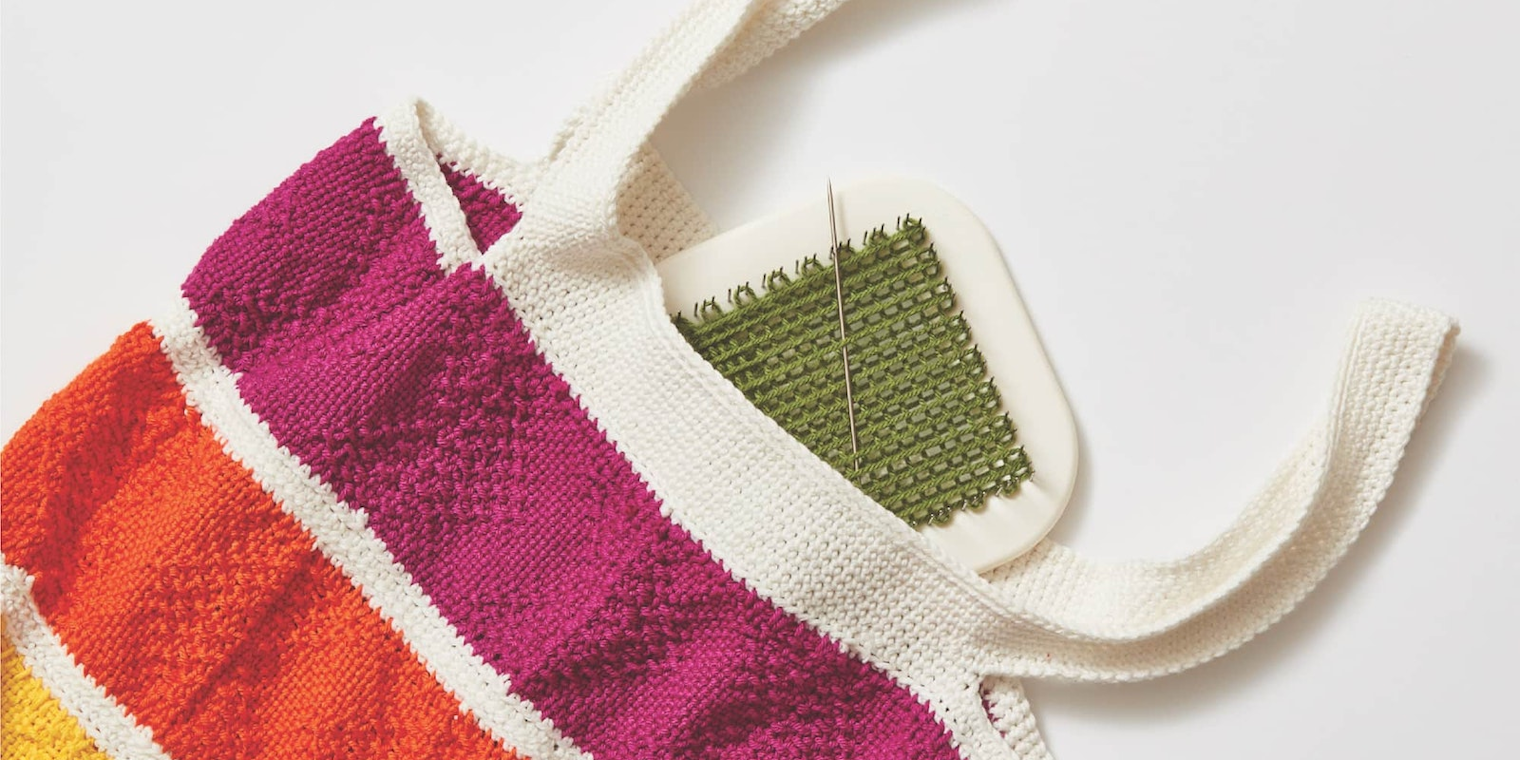
You know those conversations you have with your friends sometimes about why and how some things came to be? I.e., “Who decided it was a good idea to eat an artichoke, and did they have mayonnaise?” or “I understand knitting but who figured out purling?” or “Why would someone think you could fold squares of paper into origami animals?” I have decided to add pin looms to that list of unanswerables: Why didn’t I discover them sooner? They are a simple and ingenious way to teach weaving concepts.
At a yarn fest years ago, Anne Merrow, then editor of Spin Off, asked me to help her teach a couple of short classes on pin-loom weaving for beginning weavers. I accepted readily, but I then I had to be honest and admit I had never actually woven on one before. For those of you in the same boat, pin looms are (surprisingly!) nothing at all like the potholder looms we used at summer camp.
Pin-loom weaving has 4 rounds or steps. Rounds 1–3 involve wrapping yarn around the pins—forming the warp and half the weft—and it isn’t until round 4 that you actually start weaving with a long weaving needle. Pin looms use lengths of yarn rather than the loopers of potholder looms.
 Pin Loom Weaving at Interweave Yarn Fest 2017. Photo by George Boe.
The wrapping rounds can be a little confusing. (Luckily for me, we were pin looms that were clearly marked with numbers and arrows to help with the wrapping.) I had woven a few squares before the classes, but to my embarrassment, I still had to consult the manufaturer booklet a couple of times to keep us all on the right track. Before long, however, everyone was going in the right direction, and the first 3 rounds were done.
Then actual weaving started and I saw people fall in love with weaving. There is something about any kind of weaving that is compelling. Maybe it’s the little bit of magic of seeing a length of thread miraculously turn into a piece of fabric. I would guess that of the 15 or so people who took these beginner classes, about 13 were on their way to the marketplace after class to buy their own pin loom.
Whatever kind of weaver you are, I encourage you to look at weaving on different looms from what you're used to, whether that means rigid-heddle, inkle, pin-loom, tapestry, multishaft weaving, or even card weaving. They all have their compelling points and often exploring one helps you better understand another. And would someone please tell me: why would anyone think that mixing eggs and oil would create mayonnaise? And, was it before or after the artichoke?
Weave well,
Susan
More from Little Looms
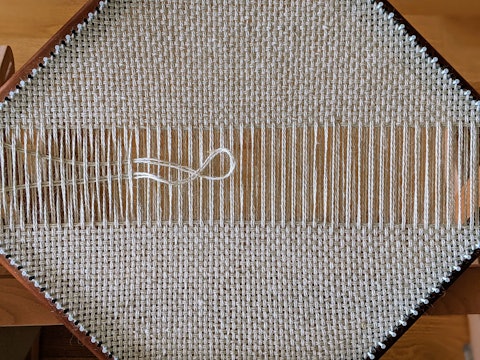 Tutorial: Continuous-Strand WeavingLearn the basics of using the continuous strand–weaving method on a pin loom.Jennifer Chapman · July 30, 2026
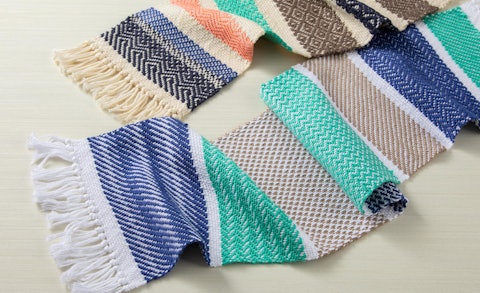 Twill for the Rigid-Heddle Loom: It’s Easier Than You Think!Learn why weavers love twill—and what makes it a great weave for the rigid-heddle loom.Christina Garton · July 14, 2026
 Dealing with Selvedges that Go BumpLace weaves are notorious for creating uneven, scalloped, and overall lumpy-bumpy selvedges. Learn two different methods for handling these selvedges in the first installment of our Summer Selvedge Series. Christina Garton · June 4, 2026
 My New Obsession: Three-Color Pick-up on the Inke LoomFind out how this niche Lithuanian technique found its way to America, and why it’s Christina’s new favorite way to create patterns on her inkle loom.Christina Garton · May 5, 2026
 Long Thread Podcast: Angela Tong, Multidisciplinary MakerSeason 14, Episode 7: A jeweler, knitter, crocheter, weaver, and potter sit down for a chat—and it turns out she's the same person. Angela Tong talks about a creative life built on detail, technique, and staying true to her own voice.Anne Merrow · May 2, 2026
 Get Started: Read a Basic Rigid-Heddle PatternHere's what you'll see in a rigid-heddle pattern in Little Looms—and how to translate that information to the loom!Christina Garton · April 23, 2026
 Up Your Design Game with the Fibonacci SequenceLearn how easy it is to design beautiful, asymmetric patterns using a simple bit of math. Christine Jablonski · April 21, 2026
 Perfectly Portable Looms for Weaving on the GoInterested in weaving on small looms? Learn how easy it is to build your own tiny weaving studio and sampler looms using simple household items. Elizabeth Jensen · March 26, 2026
 Join the Band: A New Retreat Just for BandweaversJoin us this fall for four days of bandweaving fun at Band Camp for Weavers!Christina Garton · March 24, 2026
 Long Thread Podcast: Heather Torgenrud, Pick-Up BandweavingSeason 14, Episode 4: Although her weaving interests vary from Anne Merrow · March 21, 2026
From the Library


Comments
No comments yet — be the first to share your thoughts.
Sign in to join the conversation — commenting is for signed-in members.