
Loading the latest stories…


Getting an even beat and the right sett for your project affects both the hand and appearance of your weaving. Learn Elisabeth Hill's tips and tricks for getting the best sett for your weaving.
Elisabeth Hill4 min read
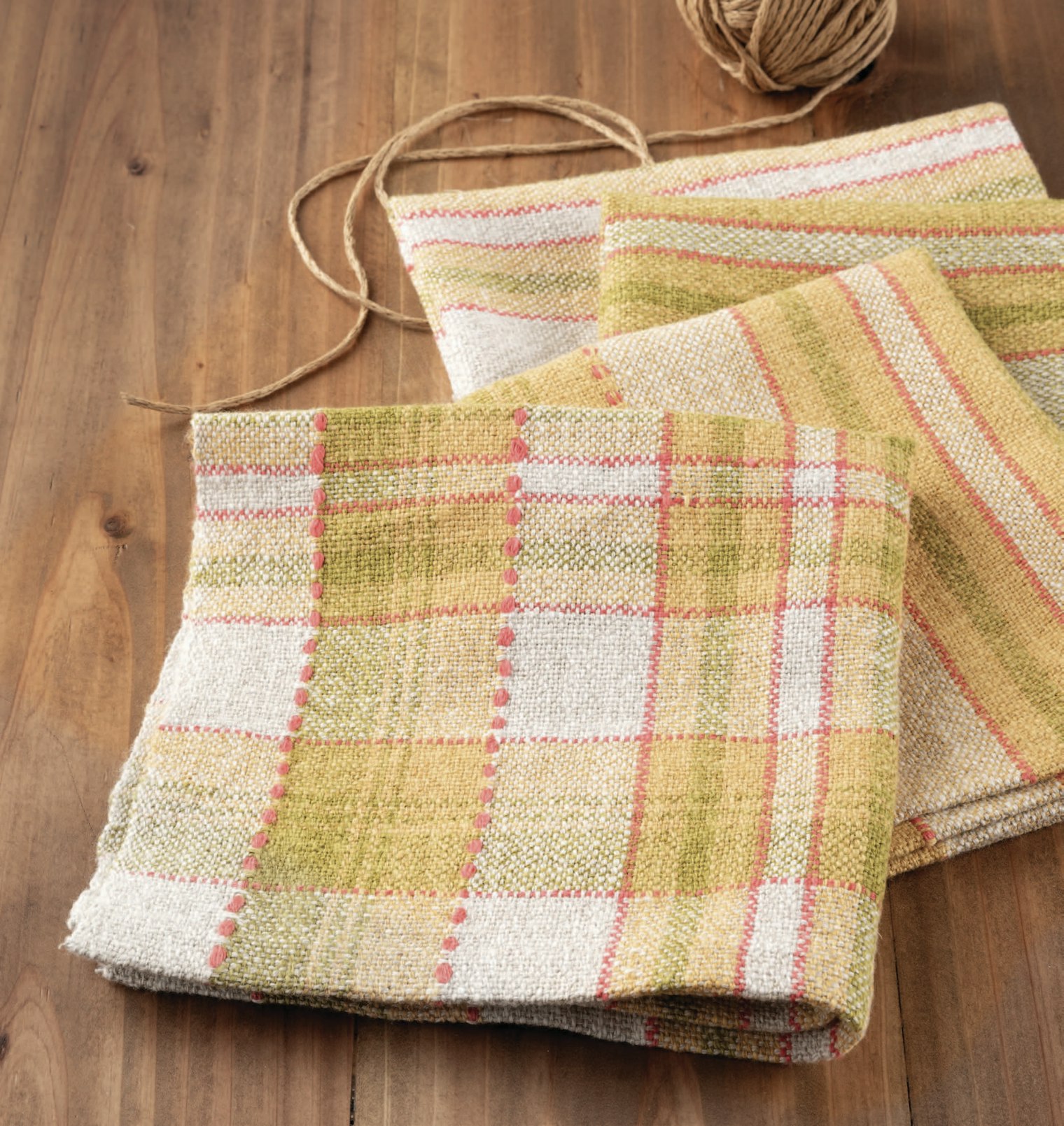
Many weavers struggle at getting their beat just right, whether it’s maintaining a consistent beat throughout a project, hitting the picks per inch (ppi) recommended by a pattern, or beating motifs square. In her years of weaving, Elisabeth Hill has developed some strategies to help her get “sett” up for success. In this article from Elisabeth, you’ll learn:
—Christina
Maintaining a consistent beat is a challenge for most weavers early in their weaving lives, but I can attest as a 30-year veteran that the beat (struggle) goes on.
It is very difficult to get a square beat if your warp sett is either too loose (resulting in too many weft picks per inch) or too tight (making it impossible to beat square). Getting just the right sett for your fiber and structure can make beating square a delight. I think of it as the “natural” beat for the cloth I am looking for.
When you think of beat as closely connected to resistance, you will understand that both the amount of draw-in and how often you are advancing your warp will have a lot of impact on the consistency of your beat. Look at the angle of the selvedges from the fell to the rigid heddle. The greater the angle, the greater the resistance. When you advance your warp, you are beating with less resistance than when you are weaving closer to the heddle. Additionally, the closer you weave to the heddle, the more acute the angle of your weft, which can lead to more draw-in and, thus, more uneven resistance.
The relationship of your project’s size to the size of your loom can make a difference in getting a consistent beat. If you are weaving a narrow piece on a wide loom, you may find that you are naturally getting too many picks per inch and have to ease up—that big beater is encountering very little resistance. If you are weaving to the maximum width of your loom, you may need to exert a little more energy to get the beat square because the rigid heddle is encountering a lot of resistance.
The way tension affects your beat is a bit counterintuitive. High tension on your warp can help the weft pack in, while low tension can prevent it. In the case of firm tension, you may need to beat your weft in twice. Weaving in the “sweet spot” and advancing frequently can help tame the variation in resistance and keep your weft angle more consistent.
 Keep track of the length of stripes, plaids, and other motifs using simpel twill tape. It's also a great way to keep track of your beat! Photo by Elisabeth Hill.
For most of the projects I weave, I make a template out of ¾-inch twill tape. I was introduced to this idea by Becky Ashenden at Vävstuga Weaving School, who uses grosgrain ribbons for her templates. I can write on it with a Sharpie marker to mark hems, etc. But more importantly, if I am weaving as drawn in—whether a stripe sequence, a block threading, or a motif I want to square—I arrange the twill tape horizontally, right up against the heddle in the neutral position, and mark the color or block changes as they appear in the warp. I then pin the tape to my cloth so that it is oriented vertically and use it as a template for squaring my beat.
For the first stripe or block, I will check my ppi against the tape to see how close (or far) I am from matching my ppi and epi and adjust accordingly. As I wind my cloth onto the cloth beam, I move the straight pin up the tape and repin it, taking care not to let the tape wind onto the cloth beam. I can then use the same tape for subsequent towels, napkins, etc., to ensure that they are all the same length.
Another trick I learned from Becky is the “triangle trick.” If you are working to keep your twill line at 45 degrees, you can cut a square of heavy paper diagonally to form a right triangle. You can then place this guide along a pick of weaving so the angle matches your twill direction and see if your twill line is too flat, too steep, or right on without having to count picks.
 Elisabeth uses a band knife to get a tight, even beat when weaving on her inkle loom. Photo by George Boe
I love weaving inkle bands, and I make them as hanging tabs using the weft left on my bobbins after weaving a towel project. I weave them in plain weave for the most part, so my beat objective is to be even and firm so that the weft doesn’t show in the band. I was introduced to the Vävstuga band knife by Becky Ashenden, and I have never looked back. You can also find band knives by other makers in wood, metal, and bone.
At this point in my weaving, I must admit that I am skeptical of blindly following rules particularly rules that impede the creative freedom that weaving offers (making one’s own cloth, folks!). Consequently, I have been late to join the “square dance,” but I hope this guide will help you understand and improve your cloth.
Just don’t beat yourself up!
Like Elisabeth's tips? Get more information on maintaining an en even sett and beating to square in her article The Beat Goes On from the Spring 2024 issue.
More from Little Looms
 Skill Guide: A Weaver’s Guide to FiberNo matter what loom(s) you love to weave on, understanding the different characteristics of a fiber can help you make better choices when picking yarns for projects.Christina Garton · July 31, 2026
 From WIF to Woven ClothLearn how to use WIFs and weaving software to create and edit patterns—before you put a single thread on the loom. Christina Garton · July 23, 2026
 Give Yourself the Gift of a Weaving GetawayWhat’s better than learning to master a new weaving? Doing it among friends, new and old! Little Looms Editors · July 21, 2026
 6 Easy Ways to Elevate Your Selvedges with TrimsAdd extra flair to your selvedges and hems with these terrific trims. Christina Garton · July 16, 2026
 Twill for the Rigid-Heddle Loom: It’s Easier Than You Think!Learn why weavers love twill—and what makes it a great weave for the rigid-heddle loom.Christina Garton · July 14, 2026
 A Celebration of Stripes: Call for Submissions Fall 2027We're looking for striped projects of all kinds for our Fall 2027 issue—and that includes plaids and checks, too!Christina Garton · July 9, 2026
 Make Your Own Cardboard Mini-ShuttlesButterflies are beautiful, but they’re not always the best choice when you’re weaving. Try winding small bits of weft on these simple, DIY cardboard shuttles instead!Christina Garton · July 7, 2026
 A Trio of Table ToppersGo beyond rectangular runners with table toppers. Christina Garton · June 30, 2026
 Crochet for Your Selvedges? Your Edges Will Thank YouFind out why Sara Bixler finishes some of her woven pieces with crochet. Watch her free video clip, and then dive into several stitch options to try on your next project. Little Looms Editors · June 25, 2026
 Compose a Masterpiece on Your LoomAfter all, a loom is just another type of stringed instrument. Christina Garton · June 23, 2026
From the Library


Comments
No comments yet — be the first to share your thoughts.
Sign in to join the conversation — commenting is for signed-in members.