
Loading the latest stories…



AAinlay
Learn multiple techniques for adding inlay to your weaving, then find out how to read and weave charted inlay patterns.
Christina Garton6 min read
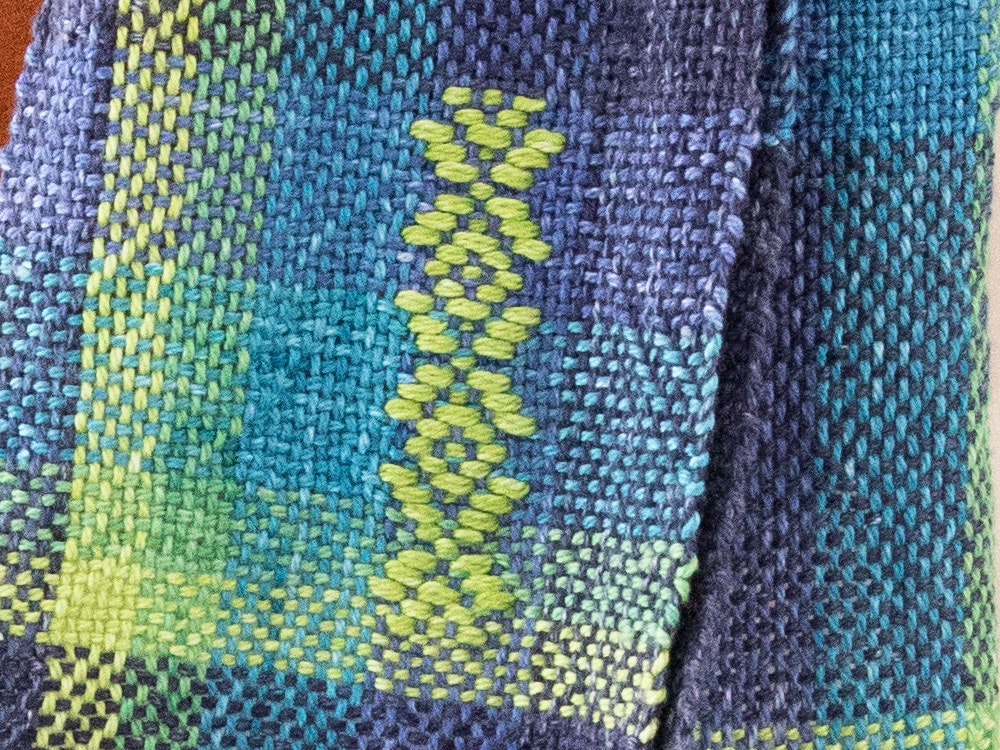

Inlay is a technique in which a second weft, called a pattern or supplemental weft, is laid in the warp between alternating picks of your primary weft (sometimes this is called a tabby or ground weft). It’s also one of my favorite techniques for adding visual interest to cloth—texture, pattern, color—without too much in the way of hand-manipulation.
In its most basic form, inlay is as easy as weaving plain weave, and even the more complicated versions aren’t that difficult. With inlay, you can add texture, shapes, and even areas of complex patterning pretty much anywhere in your cloth. Even better, it can be done on rigid-heddle, tapestry, and pin looms.
Today’s skill builder will give you a solid foundation. As you read, you’ll learn about:
Every item we’ve selected for this guide is part of your All Access program and will help you get the most out of your subscription. Check out the Little Looms Library and our video course website for more learning opportunities.
Happy Weaving,
Christina
Inlay as a design tool has so many benefits—here are just a few:
More from Little Looms
 Discover a New World of Design with InlayAdd shapes, pops of color or texture, or areas of complex patterning just about anywhere in your weaving using inlay. Christina Garton · March 6, 2026
 Ultimate Guide to Inkle Loom Weaving with Free ProjectsInkle loom weaving is easier than you think and is a great way to start weaving for beginners especially with this FREE guide and 5 free weaving projects.Long Thread Editorial Staff · May 2, 2022
 Pretty in Pink Handspun ScarfIn addition to smooth yarns, this handspun scarf includes inlaid textures such as silk roving, wool roving, Angelina fibers, sari silk, and recycled yarn. Let your eye guide you, and put texture in as much or little as you like.Sally Papin · April 9, 2018
 Twill for the Rigid-Heddle Loom: It’s Easier Than You Think!Learn why weavers love twill—and what makes it a great weave for the rigid-heddle loom.Christina Garton · July 14, 2026
 A Celebration of Stripes: Call for Submissions Fall 2027We're looking for striped projects of all kinds for our Fall 2027 issue—and that includes plaids and checks, too!Christina Garton · July 9, 2026
 Make Your Own Cardboard Mini-ShuttlesButterflies are beautiful, but they’re not always the best choice when you’re weaving. Try winding small bits of weft on these simple, DIY cardboard shuttles instead!Christina Garton · July 7, 2026
 Designing Borders for Pick-Up BandsLearn tips and tricks for designing borders for your pick-up bands, from simple stripes to more complex color-and-weave designs. Christina Garton · July 2, 2026
 A Trio of Table ToppersGo beyond rectangular runners with table toppers. Christina Garton · June 30, 2026
 Crochet for Your Selvedges? Your Edges Will Thank YouFind out why Sara Bixler finishes some of her woven pieces with crochet. Watch her free video clip, and then dive into several stitch options to try on your next project. Little Looms Editors · June 25, 2026
 Compose a Masterpiece on Your LoomAfter all, a loom is just another type of stringed instrument. Christina Garton · June 23, 2026
From the Library


Comments
No comments yet — be the first to share your thoughts.
Sign in to join the conversation — commenting is for signed-in members.