
Loading the latest stories…


The Winter 2025 issue brings you projects that pair perfectly with skill-building videos, so you can create cloth you love.
Christina Garton4 min read
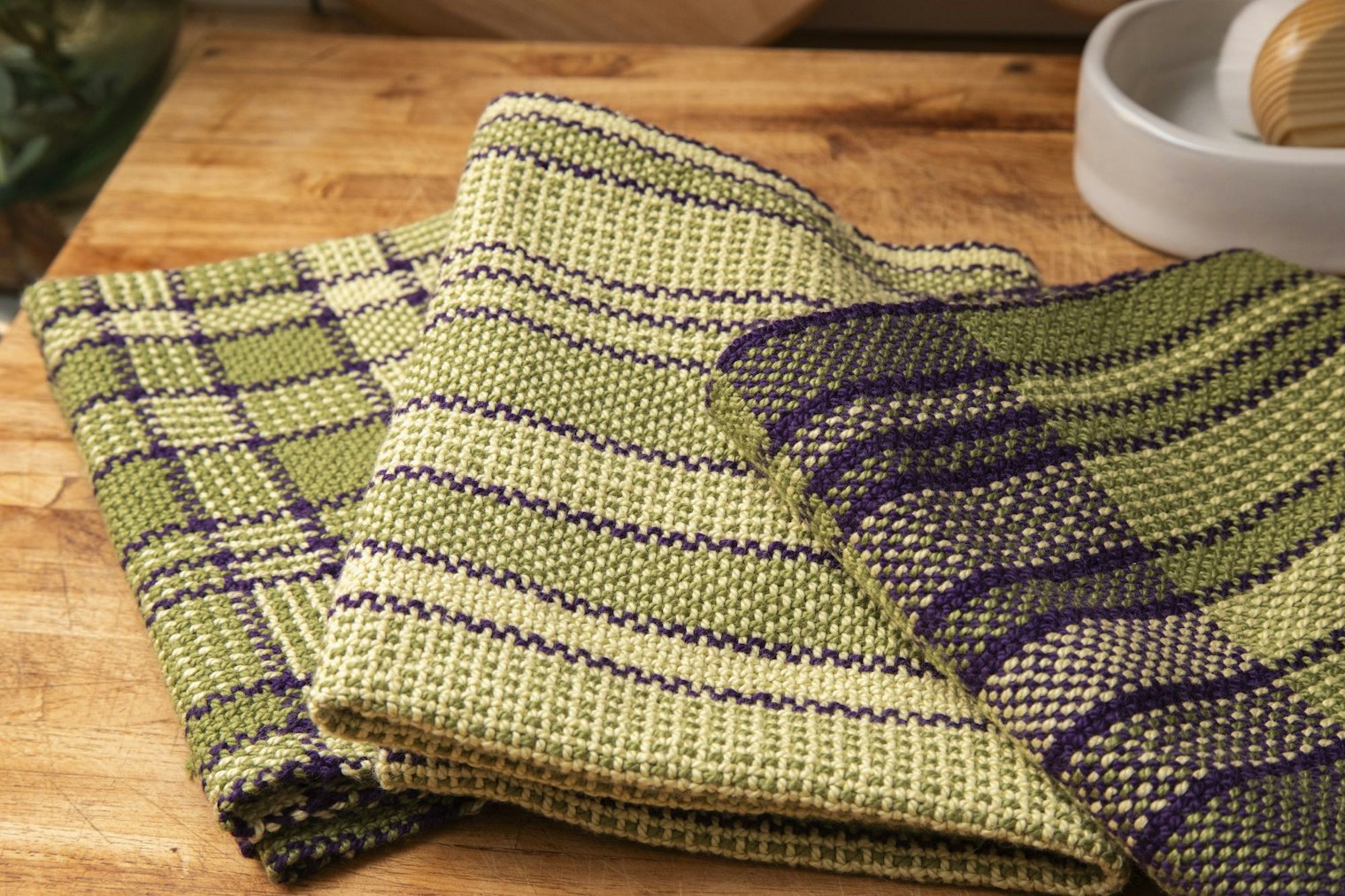
Have you ever looked at a project and thought to yourself, “Wow, twill is really cool, but I don’t feel confident using string heddles” or “I love how color-and-weave looks, but I’m not sure how to handle all the color changes”? Don’t let fear keep you from trying something new; instead, take a look at our incredible video course lineup and learn a new technique from one of many world-class weaving instructors. To get you started, I looked through the recent Winter 2025 issue and found a few projects that pair perfectly with some of our weaving courses.
Want to weave plain weave but have it look like a more complex weave structure? Try-color and-weave! Christine Jablonski’s fun Those 70s Towels (shown at the top) are a great example of the versatility of this structure as she uses it to weave three unique towels using one threading. Color-and-weave patterns require regular color changes in both the warp and weft—sometimes as often as every other end or pick. Switching back and forth between colors in the warp when direct warping can feel intimidating, as can juggling multiple shuttles during weaving. But don’t worry, Sara C. Bixler breaks it all down in her video course Color-and-Weave on the Rigid-Heddle Loom.
You’ll learn Sara’s approach to direct warping color-and-weave patterns on the rigid-heddle loom, as well as her method for managing shuttles. Any time you work with multiple shuttles, selvedges can be an issue, but Sara’s got plenty of tips for keeping things neat and tidy as you weave. And in the conclusion chapter, she explains how you can further explore and experiment with color-and-weave—so as you weave her towels, you might find yourself deviating from the instructions to create your own unique patterning.
 Berna Lowenstein’s Betty’s Baltic Pick-Up Belt is a great first project for anyone wanting to learn this fun inkle technique.
I’m currently obsessed with weaving Baltic pick-up patterns on my inkle loom, and I know I’m not alone. I’ve woven probably a dozen patterns and have yet to get tired of it. I especially love when weavers play with color and pattern, the way Berna Lowenstein does in her Betty’s Baltic Pick-Up Belt. Traditionally, Baltic pick-up has a single background color with maybe a second color in the border. Berna uses five different background colors for her belt, and the effect is incredible. If she just wove with these colors in plain weave, the band would be beautiful—but adding a simple pick-up design on top really takes the piece to another level.
Of course, if you don’t know how to read a pick-up pattern or how to pick up the threads when weaving, this kind of project can feel daunting. Fortunately, Angela K. Schneider created her video course Baltic Pick-Up on the Inkle Loom. Not only will Angela teach you how to read a pick-up chart, but she also shows you pick-by-pick how she weaves each row using the information on the pick-up chart. Just be warned: Once you start weaving Baltic pick-up, you might not want to stop.
In Berna’s project instructions, she writes about a specific technique for picking up warp ends more efficiently—a technique you can watch Angela demonstrate in the chapter “Picking Up More Efficiently and Tucking in Tails.”
 Sara Goldenberg White’s Friendship Scarf is a great example of just how beautiful twill can look when woven on the rigid-heddle loom.
Weavers adore twill, for good reason! Twill has amazing drape, the patterns are beautiful, and you can create multiple patterns—without rewarping your loom. Sara Goldenberg White’s Friendship Scarf is a great example of just how gorgeous rigid-heddle twill can be. Looking at it, there’s no way to tell whether it was woven on a rigid-heddle or a multi-shaft loom.
Weaving twill on a rigid-heddle loom requires extra tools and equipment: two heddles, a pick-up stick or two, and often a heddle rod with string heddles. The equipment list might seem intimidating, but as Sara shows in her video course Twill on the Rigid-Heddle Loom, getting your loom set up to weave twill isn’t all that difficult. In her video, Sara demonstrates each step, explains exactly what she’s doing, spells out why she’s doing it, and offers tricks and tips she’s learned to make the process even easier. So don’t be afraid of or intimidated by twill—let Sara teach you just how much fun it is on the rigid-heddle loom.
In Sara’s video, she breaks each step of warping the loom into pieces. If you’re already comfortable warping two heddles, you can skip to the “Converting the Loom” chapter, which focuses entirely on pick-up sticks, heddle rods, and string heddles.
These are just a few of the possible project and course pairings from the Winter 2025 issue, but with them you’ll be able to do the following:
From there, I hope you feel you inspired to see what else is available and pick up a new technique (or two or three) or maybe even learn to weave a loom style that’s new to you!
If you’re an All Access subscriber, these courses are part of your subscription, so there’s no reason not to take advantage of all they have to offer! (Not an All Access subscriber yet? Learn more about the program and all its benefits here.)
Happy weaving! Christina
More from Little Looms
 Skill Guide: A Weaver’s Guide to FiberNo matter what loom(s) you love to weave on, understanding the different characteristics of a fiber can help you make better choices when picking yarns for projects.Christina Garton · July 31, 2026
 From WIF to Woven ClothLearn how to use WIFs and weaving software to create and edit patterns—before you put a single thread on the loom. Christina Garton · July 23, 2026
 Give Yourself the Gift of a Weaving GetawayWhat’s better than learning to master a new weaving? Doing it among friends, new and old! Little Looms Editors · July 21, 2026
 6 Easy Ways to Elevate Your Selvedges with TrimsAdd extra flair to your selvedges and hems with these terrific trims. Christina Garton · July 16, 2026
 Twill for the Rigid-Heddle Loom: It’s Easier Than You Think!Learn why weavers love twill—and what makes it a great weave for the rigid-heddle loom.Christina Garton · July 14, 2026
 A Celebration of Stripes: Call for Submissions Fall 2027We're looking for striped projects of all kinds for our Fall 2027 issue—and that includes plaids and checks, too!Christina Garton · July 9, 2026
 Make Your Own Cardboard Mini-ShuttlesButterflies are beautiful, but they’re not always the best choice when you’re weaving. Try winding small bits of weft on these simple, DIY cardboard shuttles instead!Christina Garton · July 7, 2026
 A Trio of Table ToppersGo beyond rectangular runners with table toppers. Christina Garton · June 30, 2026
 Crochet for Your Selvedges? Your Edges Will Thank YouFind out why Sara Bixler finishes some of her woven pieces with crochet. Watch her free video clip, and then dive into several stitch options to try on your next project. Little Looms Editors · June 25, 2026
 Compose a Masterpiece on Your LoomAfter all, a loom is just another type of stringed instrument. Christina Garton · June 23, 2026
From the Library


Comments
No comments yet — be the first to share your thoughts.
Sign in to join the conversation — commenting is for signed-in members.