
Loading the latest stories…

Threading hooks might seem like simple tools, but finding the right one for you can make a difference in the efficiency and ergonomics of warping a rigid-heddle loom.
Christina Garton2 min read
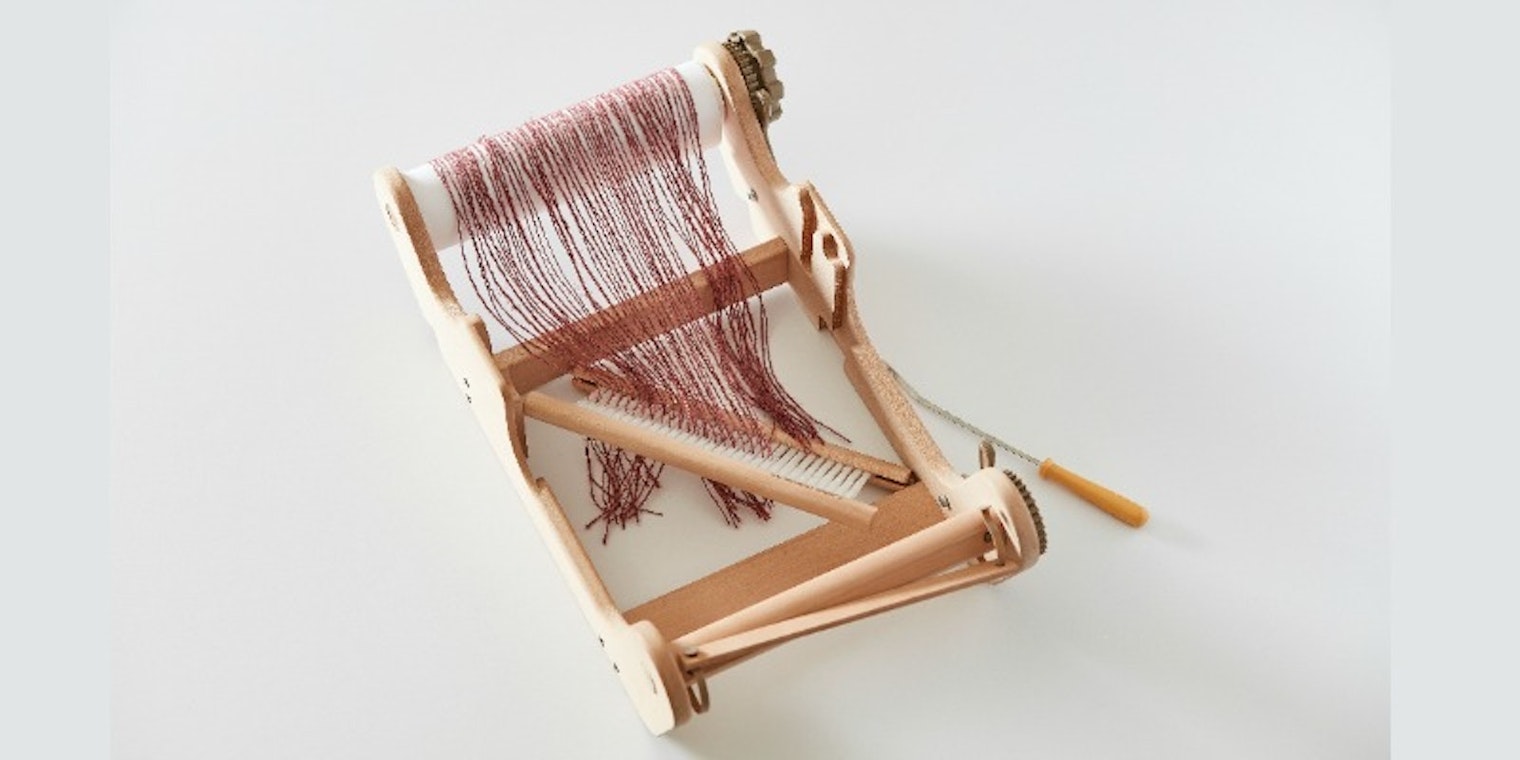
Whenever nonweavers ask me why it takes so long to set up a rigid-heddle loom, I explain to them the concept of threading: how every single warp end must be manually pulled through a slot and/or hole (sometimes two if you’re using double heddles), and how sometimes you might have well over 100 of these warp ends.
Threading is sometimes time-consuming, but it’s a vital part of weaving. Most looms come with a basic threading hook that has a hook on one end and an ergonomic handle on the other. Threading hooks have long necks and small hooks designed to fit into tiny heddles on floor looms and holes on rigid-heddle looms. These hooks work fine for many yarns, but, as with all aspects of weaving, sometimes having a specialized tool can make a difference in efficiency and comfort.
The first threading upgrade most rigid-heddle weavers make is to switch to a double-ended hook. Double-ended hooks feature a threading hook on one side and a sleying hook on the other. Sleying hooks are deeper, so you can easily grab multiple threads or larger threads in one go and have more control when threading heddle slots. These are also great for slippery yarns. Just be aware that double threading hooks not made for the rigid-heddle loom might not fit, depending on the sett of the heddle you’re using.
 From top to bottom: Ashford double-ended hook, Schacht threading hook, and Kromski double-ended rigid-heddle hook.
If you regularly weave with extra-large or highly textured yarns, you might have noticed standard hooks and even slot hooks are too small. For anyone regularly dealing with these kinds of yarns, I like to recommend a threader with a wire loop. You can find threaders that feature just a wire loop or a wire loop on one end and a more traditional hook on the other. The loops will transport more cumbersome yarns from put-up to heddle with ease. However, with these threaders, you do have to manually place the end through the loop for every end you thread, and you can’t use them for direct warping. That said, the time saved by not having to keep picking up dropped yarns or having to shove thick yarns through slots by hand makes the extra effort worth it.
Whether or not any or all of these different threading hooks will work better than the standard hook is really up to the individual weaver and their needs. While the double-ended hook is nice, if your hand feels more comfortable around a wooden handle, feel free to stick with the standard hook or even to use a wire-ended hook for everyday threading. The most important consideration when choosing a new tool is the weaver who will be using it.
Happy Weaving!
Christina
More from Little Looms
 Skill Guide: A Weaver’s Guide to FiberNo matter what loom(s) you love to weave on, understanding the different characteristics of a fiber can help you make better choices when picking yarns for projects.Christina Garton · July 31, 2026
 From WIF to Woven ClothLearn how to use WIFs and weaving software to create and edit patterns—before you put a single thread on the loom. Christina Garton · July 23, 2026
 Give Yourself the Gift of a Weaving GetawayWhat’s better than learning to master a new weaving? Doing it among friends, new and old! Little Looms Editors · July 21, 2026
 6 Easy Ways to Elevate Your Selvedges with TrimsAdd extra flair to your selvedges and hems with these terrific trims. Christina Garton · July 16, 2026
 Twill for the Rigid-Heddle Loom: It’s Easier Than You Think!Learn why weavers love twill—and what makes it a great weave for the rigid-heddle loom.Christina Garton · July 14, 2026
 A Celebration of Stripes: Call for Submissions Fall 2027We're looking for striped projects of all kinds for our Fall 2027 issue—and that includes plaids and checks, too!Christina Garton · July 9, 2026
 Make Your Own Cardboard Mini-ShuttlesButterflies are beautiful, but they’re not always the best choice when you’re weaving. Try winding small bits of weft on these simple, DIY cardboard shuttles instead!Christina Garton · July 7, 2026
 A Trio of Table ToppersGo beyond rectangular runners with table toppers. Christina Garton · June 30, 2026
 Crochet for Your Selvedges? Your Edges Will Thank YouFind out why Sara Bixler finishes some of her woven pieces with crochet. Watch her free video clip, and then dive into several stitch options to try on your next project. Little Looms Editors · June 25, 2026
 Compose a Masterpiece on Your LoomAfter all, a loom is just another type of stringed instrument. Christina Garton · June 23, 2026
From the Library


Comments
No comments yet — be the first to share your thoughts.
Sign in to join the conversation — commenting is for signed-in members.