
Loading the latest stories…

Rigid-heddle looms are portable, versatile, and great for weavers of all levels.
Christina Garton4 min read
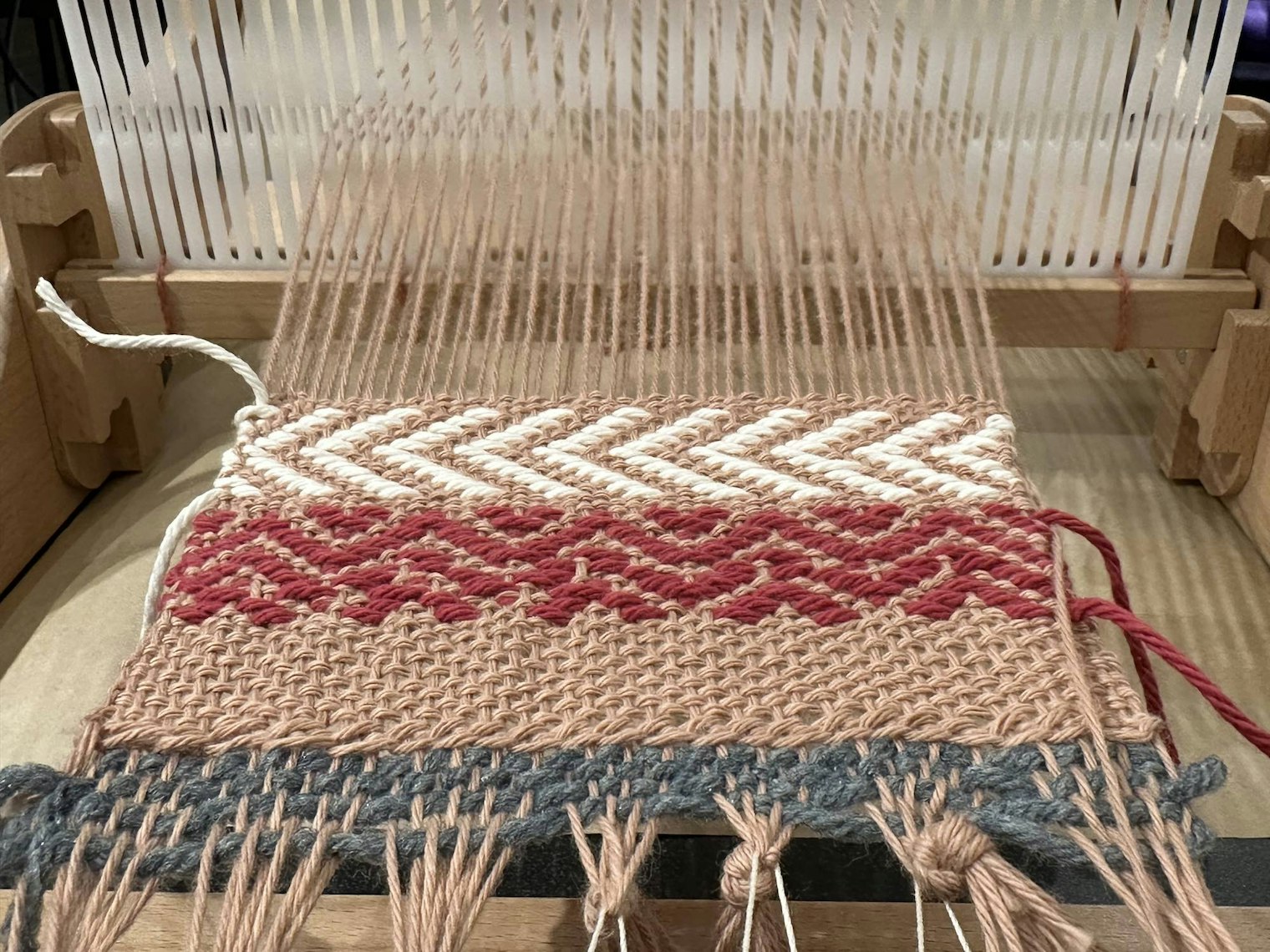
I first wrote this article back in 2014, two years before the first issue of Easy Weaving with Little Looms. Since then my love of the rigid-heddle loom has only grown, so I figured it was time for an update!—Christina
I'm writing this post now from my new, box-filled home office which is just down the hall from my equally new, and equally box-filled, weaving studio. Fortunately for me, even though I cannot find my collection of bobbins, much less the bobbin winder, I can still weave. Even though I have guests arriving next week for Thanksgiving and I have to unpack several other rooms before I can even think about unpacking my studio, I can still weave.
While much of my weaving supplies are currently located in around 900 boxes all labeled simply with "weaving," my rigid-heddle loom and associated supplies were in a box labeled "rigid-heddle loom and supplies." Huzzah! Even better, though I do not know where my yarn stash is (probably in a box labeled "weaving") I can go to any yarn shop in town and pick up a suitable yarn this weekend. Thanks to my handy-dandy warping peg I can then be ready to weave in around 20 minutes. How great is that?
In honor of my lovely little rigid-heddle loom I have composed this list of the top ten reasons I love rigid-heddle looms.
 Christina's rigid-heddle loom is small enough to fit on the dining room table and light enough for her to move around the house or even outside. Photo by Christina Garton
They are usually small enough where you can take them just about anywhere. They fit easily into the car, you can carry them on an air plane, and they are easy to just plain carry for that matter. If you don't have a lot of room in your home this also means they are easy to store; I used to hang mine up on the wall when I wasn't using it.
Rigid-heddle looms play nice with a wide variety of yarns, including yarns thought of as knitting or even novelty yarns. This means you can get yarns perfect for rigid-heddle weaving at any local yarn shop, big box craft stores, and even (often) thrift stores!
If you use the direct warping method you don't have to spend an hour or more winding your warp and threading the heddles before you can weave; instead you just pull the yarn through the slots and around the warping peg and you can be up and weaving in no time.
Another benefit of direct warping is that it offers the perfect opportunity to design your warp at the loom in real time. You can try out different colors and textures and see how they'll look in the warp right away and make changes easily as you go.
While rigid-heddle looms are perfect for plain weave, you can also use two heddles, heddle rods, and/or pick-up sticks to create multi-shaft patterns on your rigid-heddle loom. Twill, overshot, krockbragd, waffle weave, and even deflected doubleweave can be woven on the rigid-heddle loom!
 Believe it of not, Elisabeth Hill wove her deflected doubleweave Taconic Tonic Scarf on a rigid-heddle loom. On a multi-shaft loom, it would take at least eight shafts to weave the same pattern! Find the pattern here. Photo by Caleb Young (Good Folk Photography)
Finger controlled weaves are so much easier on a rigid-heddle loom. The large weaving area makes weaving leno, danish medallions, clasped-weft and other techniques a cinch.
When you're tired of weaving in your box-filled house you can take your rigid-heddle loom out on the patio to weave in front of the fire pit, to a park and weave on a picnic table, or to a coffee shop and weave on a regular table.
There are so many cool accessories available for the rigid-heddle loom. Wavy beaters anad variable dent heddles are just a few of the tools that will open up new worlds of design in your rigid-heddle weaving.
 Variable-dent heddles, like the one shown here, let you use multiple setts throughout the width of your weaving. Photo by George Boe
Next-to-no loom waste means you can use all those luxury knitting yarns you thought were off limits to weavers. (Although I've found that if you can just figure out the right use for it, there's no yarn that is actually off limits to weavers.)
They're perfect for teaching friends and family of any age who want to learn how to weave. I know I can't wait for my neice to visit in December. I'll have the rigid-heddle loom warped up with her favorite color yarn so she can join me in the studio as we drink hot cider and weave up something fun.
Happy Weaving!
Christina
Originally published 11/1/2014; updated 7/10/2025
More from Little Looms
 Skill Guide: A Weaver’s Guide to FiberNo matter what loom(s) you love to weave on, understanding the different characteristics of a fiber can help you make better choices when picking yarns for projects.Christina Garton · July 31, 2026
 From WIF to Woven ClothLearn how to use WIFs and weaving software to create and edit patterns—before you put a single thread on the loom. Christina Garton · July 23, 2026
 Give Yourself the Gift of a Weaving GetawayWhat’s better than learning to master a new weaving? Doing it among friends, new and old! Little Looms Editors · July 21, 2026
 6 Easy Ways to Elevate Your Selvedges with TrimsAdd extra flair to your selvedges and hems with these terrific trims. Christina Garton · July 16, 2026
 Twill for the Rigid-Heddle Loom: It’s Easier Than You Think!Learn why weavers love twill—and what makes it a great weave for the rigid-heddle loom.Christina Garton · July 14, 2026
 A Celebration of Stripes: Call for Submissions Fall 2027We're looking for striped projects of all kinds for our Fall 2027 issue—and that includes plaids and checks, too!Christina Garton · July 9, 2026
 Make Your Own Cardboard Mini-ShuttlesButterflies are beautiful, but they’re not always the best choice when you’re weaving. Try winding small bits of weft on these simple, DIY cardboard shuttles instead!Christina Garton · July 7, 2026
 A Trio of Table ToppersGo beyond rectangular runners with table toppers. Christina Garton · June 30, 2026
 Crochet for Your Selvedges? Your Edges Will Thank YouFind out why Sara Bixler finishes some of her woven pieces with crochet. Watch her free video clip, and then dive into several stitch options to try on your next project. Little Looms Editors · June 25, 2026
 Compose a Masterpiece on Your LoomAfter all, a loom is just another type of stringed instrument. Christina Garton · June 23, 2026
From the Library




Comments
No comments yet — be the first to share your thoughts.
Sign in to join the conversation — commenting is for signed-in members.