
Loading the latest stories…

AA
Get the details behind the design possibilities of the slit-weft technique, and All Access subscribers can download an exclusive scarf pattern to try out what they’ve learned.
Christina Garton2 min read
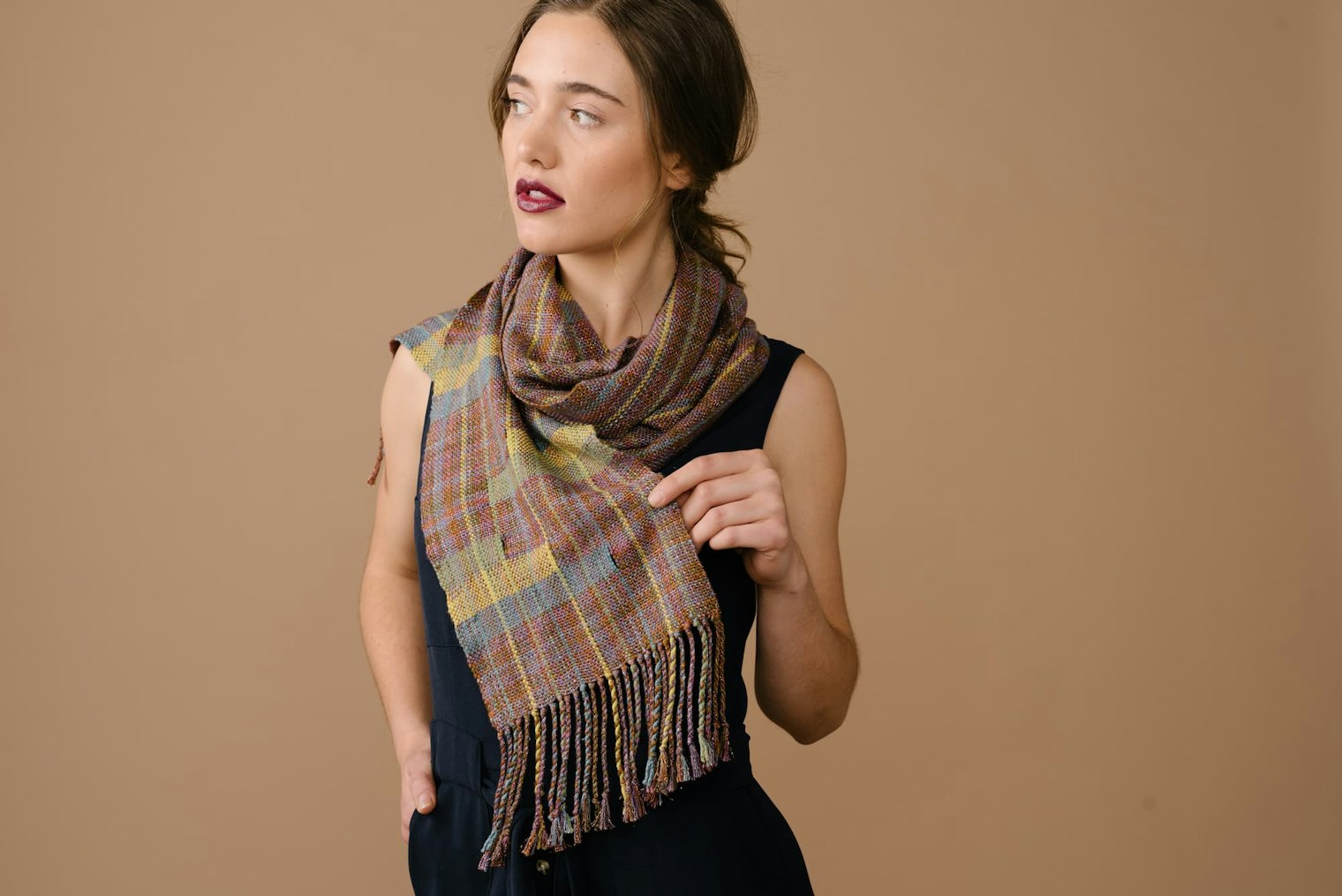
So, you’re weaving a scarf (or runner or towel or anything really), and you want to have a color change mid-weft for whatever reason. What are your options? Often people choose to use the clasped-weft technique, which can be done so you have either 1 or 2 picks in a single shed but always have an area of overlap where the two wefts embrace. There’s another option, however: the slit-weft technique.
What is slit weft, anyway? It starts the same as clasped weft in that 2 weft picks go into the same shed from opposite ends of a warp before they meet somewhere along the way. What happens when the wefts meet is the key difference. With slit weft, before the 2 weft picks can even touch, they get pulled out of the shed. Then that first pick is beaten, and the shed is changed. Wefts then go down into the shed and head back to their original selvedge. If the clasped-weft technique is a hug, the slit-weft technique is a quick air kiss.
You don’t see the slit-weft technique as often in non-tapestry weaving because slit weft leaves a hole in the fabric. If you have more than a couple of picks, you’ll end up with a slit in your fabric (hence the name). This can be a problem in some cases, but it can also be made into a design feature.
 Susan and Melissa opted to use slit weft instead of clasped weft for their mid-weft color changes to better preserve the overall hand of the fabric.
For example, for their Stepping Out scarf, designers Susan Bateman and Melissa Parsons considered using clasped weft for their mid-weft color changes but ultimately decided that slit weft was better. Even though you can absolutely weave clasped weft in a way that gives you a single pick in each shed, you still have an area of bulk where the two yarns clasp. It might be subtle, but it’s there.
Susan and Melissa wanted a step design on one side of their scarf, and using clasped weft would have meant distinct ridges that might affect the hand of the fabric negatively in those areas. Slit weft keeps the fabric hand the same. Yes, there are small slits in the fabric, but they’re very small—less than an inch each after wet finishing. Beyond helping to keep the hand of the fabric, I can imagine the slit weft being used in other ways. For example, it’s a clever method for creating buttonholes.
Want to give slit weft a try by weaving Susan and Melissa’s scarf? Currently, this pattern is available in the store and library only as part of the 2019 Loom Theory collection, but All Access subscribers can download an exclusive individual PDF here!
For All Access members
This article is part of All Access. Everything in your subscription, plus streaming video workshops and bonus eBooks.
You're not signed in.
More from Little Looms
 Skill Guide: A Weaver’s Guide to FiberNo matter what loom(s) you love to weave on, understanding the different characteristics of a fiber can help you make better choices when picking yarns for projects.Christina Garton · July 31, 2026
 From WIF to Woven ClothLearn how to use WIFs and weaving software to create and edit patterns—before you put a single thread on the loom. Christina Garton · July 23, 2026
 Give Yourself the Gift of a Weaving GetawayWhat’s better than learning to master a new weaving? Doing it among friends, new and old! Little Looms Editors · July 21, 2026
 6 Easy Ways to Elevate Your Selvedges with TrimsAdd extra flair to your selvedges and hems with these terrific trims. Christina Garton · July 16, 2026
 Twill for the Rigid-Heddle Loom: It’s Easier Than You Think!Learn why weavers love twill—and what makes it a great weave for the rigid-heddle loom.Christina Garton · July 14, 2026
 A Celebration of Stripes: Call for Submissions Fall 2027We're looking for striped projects of all kinds for our Fall 2027 issue—and that includes plaids and checks, too!Christina Garton · July 9, 2026
 Make Your Own Cardboard Mini-ShuttlesButterflies are beautiful, but they’re not always the best choice when you’re weaving. Try winding small bits of weft on these simple, DIY cardboard shuttles instead!Christina Garton · July 7, 2026
 A Trio of Table ToppersGo beyond rectangular runners with table toppers. Christina Garton · June 30, 2026
 Crochet for Your Selvedges? Your Edges Will Thank YouFind out why Sara Bixler finishes some of her woven pieces with crochet. Watch her free video clip, and then dive into several stitch options to try on your next project. Little Looms Editors · June 25, 2026
 Compose a Masterpiece on Your LoomAfter all, a loom is just another type of stringed instrument. Christina Garton · June 23, 2026
From the Library


Comments
No comments yet — be the first to share your thoughts.
Sign in to join the conversation — commenting is for signed-in members.