
Loading the latest stories…

Here are just a few ways to impress weavers of all levels when weaving plain weave on a rigid-heddle loom.
Christina Garton3 min read
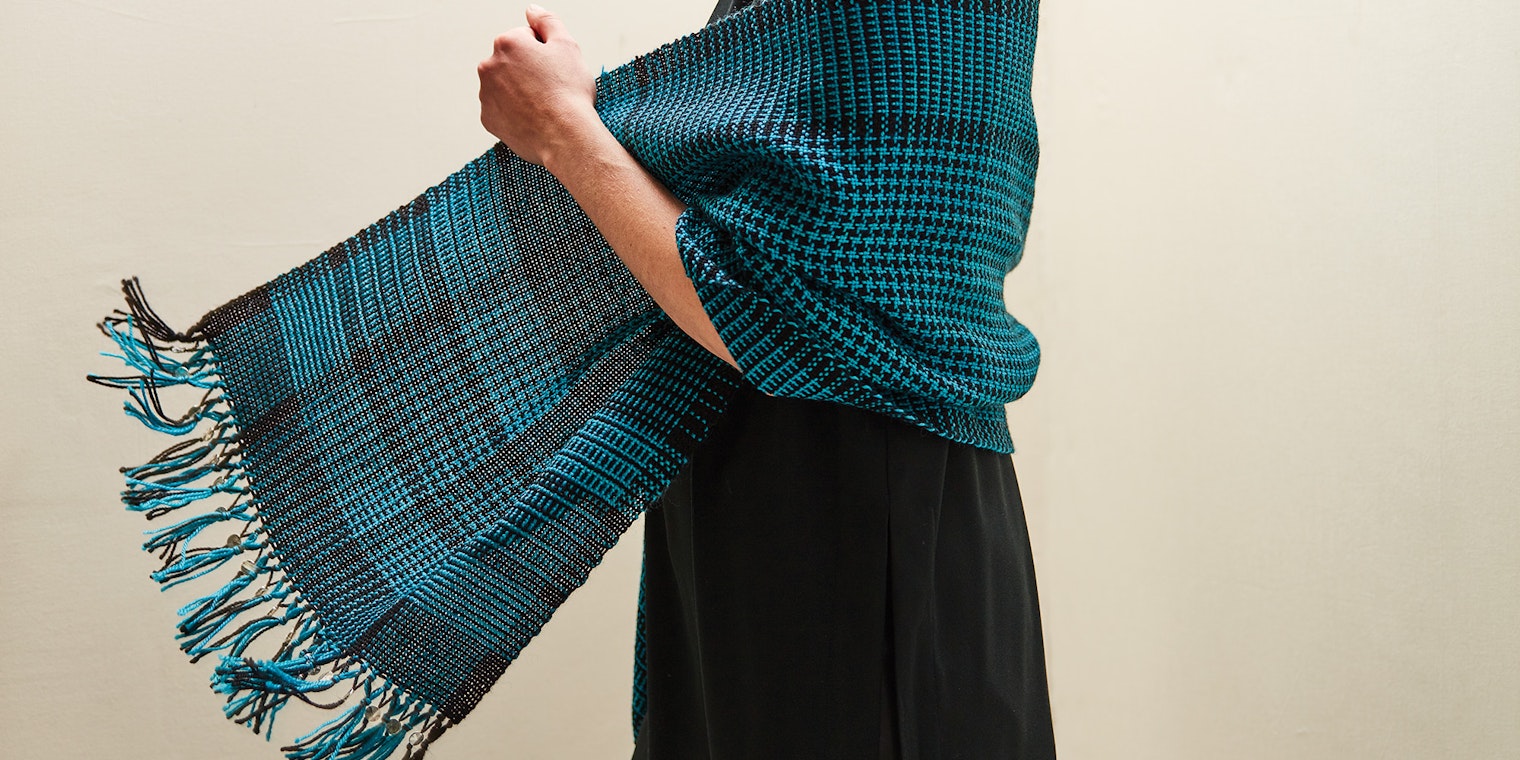
As much as we all enjoy weaving for fun and to fill our homes and wardrobes with beautiful items, I think most weavers can admit that we also sometimes weave to impress. Maybe we’re impressing friends and relatives with the fact that we can create beautiful cloth on even the simplest of looms, or maybe we’re heading out to a weaving conference and want to show off a bit to our fellow weavers. If you’re reading this and thinking, “I’m too new as a weaver to impress anyone,” allow me to dissuade you of that belief and tell you how you can impress a wide variety of folks using only plain weave on a rigid-heddle loom.
The quickest way to impress non-weavers is with color-and-weave, especially log cabin. You don’t need to get fancy with it by weaving blocks of different sizes (although it doesn’t hurt!). The optical illusions created in this super-simple structure make the cloth look far more complex than it is. Non-weavers will look upon your cloth with awe and will not believe you when you tell them how easy it was to weave. What’s not to love?
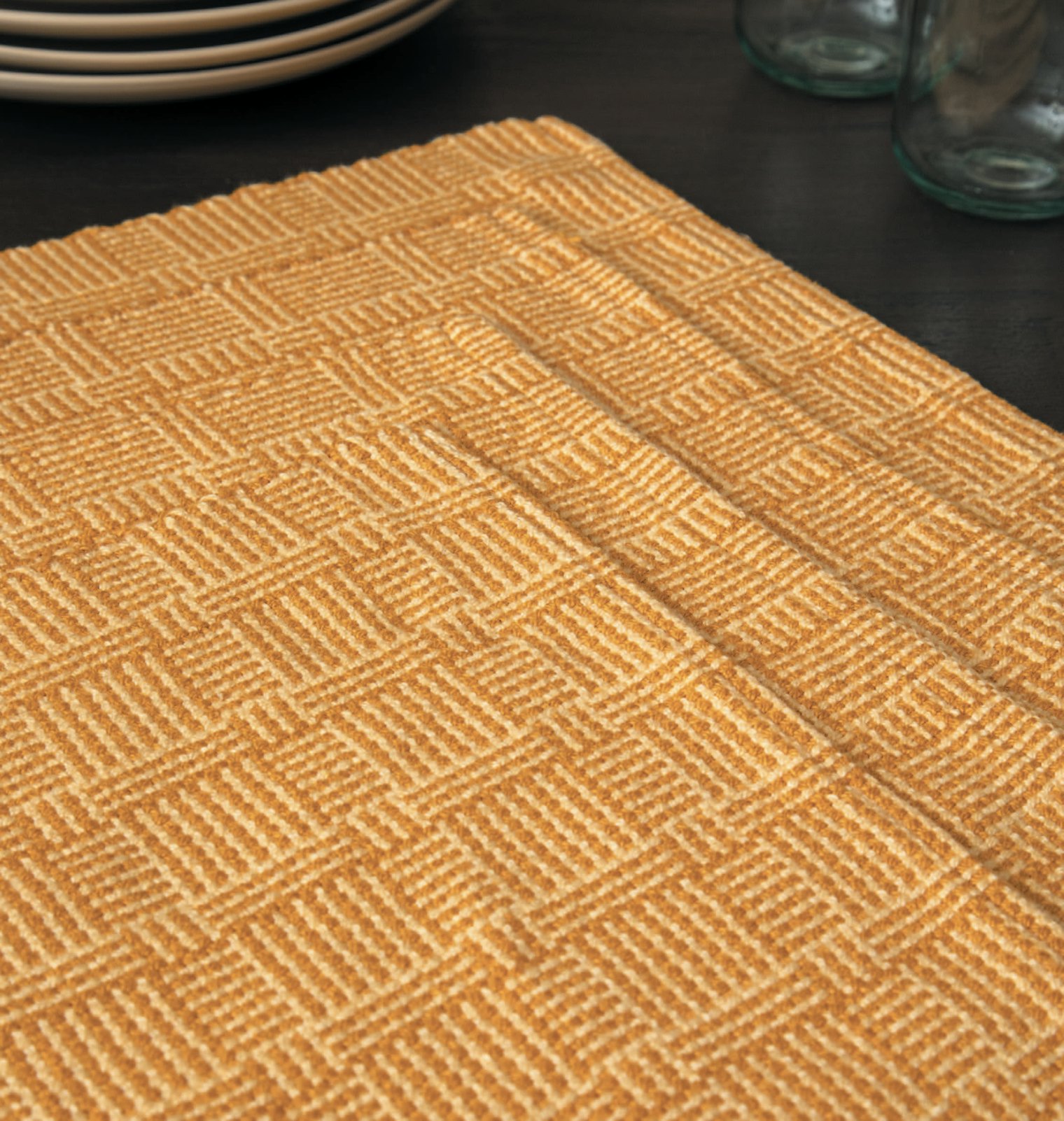
Simple log cabin, such as what’s shown here in Jodi Ybarra's Intersecting Light's Placemat from the Winter 2024 issue is sure to impress non-weavers. Photo by Matt Graves
If you’re looking to impress your fellow beginning weavers using only plain weave on a rigid-heddle loom, try weaving a color-and-weave gamp. For this type of cloth, as you warp the loom, every few inches you’ll switch things up to create different patterning in the warp. Then, as you weave, you’ll do the same with the weft. The result is a cloth filled with interesting designs that serves both as a functional item—scarf, runner, etc.—and as sampler to help you choose designs for future projects. To make the different-design squares stand out even more, make sure to build in a contrasting border in both warp and weft.

Tammy Bast’s Sugarplum Towels from Little Looms Holidays 2020 are a great example of a color-and-weave gamp. Photo by Matt Graves
To impress intermediate weavers, once again weave a gamp, but this time change both the color and the pattern as you move across both the warp and weft. Now, not only do you have a design sampler, but you also have a sampler that showcases different color interactions. Bonus points are also given for clever use of color. Rainbows that blend beautifully are always impressive, as are gamps that use non-traditional gamp colors.

Sara Bixler’s Penny Candy Scarf from the upcoming Summer 2022 issue of Easy Weaving with Little Looms is a beautiful, non-traditional example of a color-and-weave gamp. Photo by Matt Graves
If you want to impress even the most advanced, technically skilled, has-been-weaving-for-decades weaver, it’s simple: Take your time and pay attention to all the details. As you weave, watch carefully for any unintentional floats and go back and fix any mistakes. Join your wefts carefully so it’s impossible to see them without really getting close to the cloth. (For advice on how to do this in your color-and-weave project, check out this amazing tip from Sara Bixler!) Beat your cloth consistently so that if you have different blocks of design in the weft, they’re beaten to square and the same height throughout. Hemstitch your ends, and if you’re planning to hem your project, do so by hand. If you’re leaving fringe, finish it in some way beyond just a single overhand knot—twist, braid, or decorative knotting—and make sure to trim it so every bundle is exactly the same length. Attention to detail with even the simplest of plain-weave fabrics is the best way to impress somebody who truly understands weaving.
For more information about weaving color-and-weave projects on your rigid-heddle loom, check out Sara Bixler’s new video, which is full of design ideas and tips and tricks to help you weave fabric that is sure to impress.
Happy Weaving!
Christina
Originally published 06/30/2022; updated 9/24/2024
More from Little Looms
 Skill Guide: A Weaver’s Guide to FiberNo matter what loom(s) you love to weave on, understanding the different characteristics of a fiber can help you make better choices when picking yarns for projects.Christina Garton · July 31, 2026
 Tutorial: Continuous-Strand WeavingLearn the basics of using the continuous strand–weaving method on a pin loom.Jennifer Chapman · July 30, 2026
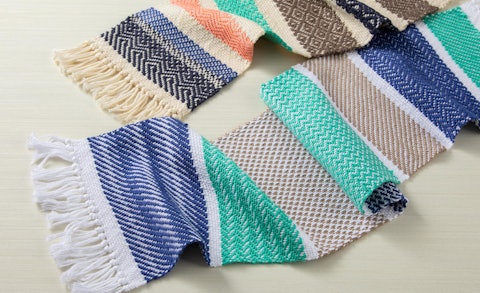 Twill for the Rigid-Heddle Loom: It’s Easier Than You Think!Learn why weavers love twill—and what makes it a great weave for the rigid-heddle loom.Christina Garton · July 14, 2026
 Long Thread Podcast: Angela Tong, Multidisciplinary MakerSeason 14, Episode 7: A jeweler, knitter, crocheter, weaver, and potter sit down for a chat—and it turns out she's the same person. Angela Tong talks about a creative life built on detail, technique, and staying true to her own voice.Anne Merrow · May 2, 2026
 Long Thread Podcast: Heather Torgenrud, Pick-Up BandweavingSeason 14, Episode 4: Although her weaving interests vary from Anne Merrow · March 21, 2026
 Long Thread Podcast: Christina Garton, Little LoomsSeason 14, Episode 2: Ten years since the first issue of Easy Weaving with Little Looms, editor Christina Garton is still finding delightful new ideas in small-loom weaving.Anne Merrow · February 21, 2026
 Weave a Pin-Loom Pet for National Love Your Pet DayWeave a pet—all it takes is a pin loom, a few put-ups of yarn, and a copy of Zoo Crew. Christina Garton · February 12, 2026
 Long Thread Podcast: Laverne Waddington (classic)Season 13, Episode 8: Using her hands, fine threads, and simple tools, Laverne Waddington uses backstrap looms to explore a world of weaving techniques and traditions.Anne Merrow · December 27, 2025
 Skill Builder: Explore Two Takes on Textured WeavesCraving more visual interest in your projects? Try these simple pick-up patterns to add texture to your weaving.Christina Garton · December 18, 2025
 Skill Builder: How to Thread Weaving TabletsLearn how to go from draft to a perfectly threaded set of tablets.Little Looms Authors · November 13, 2025
From the Library




Comments
No comments yet — be the first to share your thoughts.
Sign in to join the conversation — commenting is for signed-in members.