
Loading the latest stories…

When spinning for tapestry consider this: What kind of reflectance do I want in the finished yarn? And what yarn properties will best allow me to create the desired image?
Rebecca Mezoff2 min read
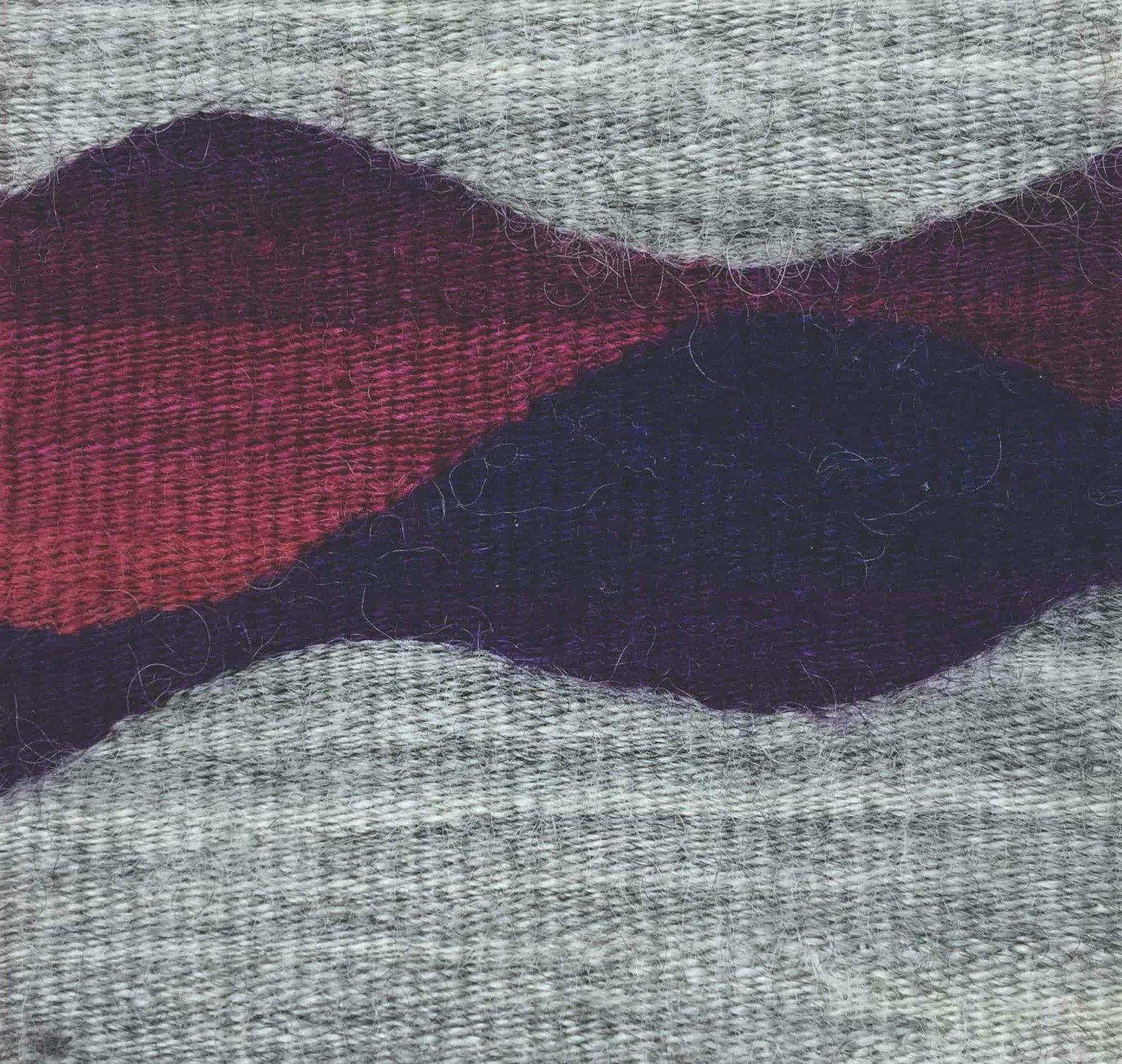
Little looms are all the rage! Have you tried weaving with your handspun? Yarn that is considered great for garments fails to meet the demands of tapestry weaving. In the article “Woven Art: Weaving Tapestry with Handspun Yarn” from the Spin Off Spring 2017 issue, Rebecca Mezoff explains what qualities make the best tapestry yarn.
There are two primary things I consider when spinning for tapestry: What kind of reflectance do I want in the finished yarn? And what yarn properties will best allow me to create the image I desire?
Let’s start with reflectance. To a spinner, this quality is probably best expressed by the word luster. Lustrous yarns reflect a lot of light, which makes them shiny and allows the colors to glow. In a textile where the fibers are all packed closely together, a yarn with high reflectance can create some stunning effects. There are very few commercial tapestry yarns with this lustrous quality, so being able to create yarn from a luster longwool is one advantage of spinning your own tapestry yarn.
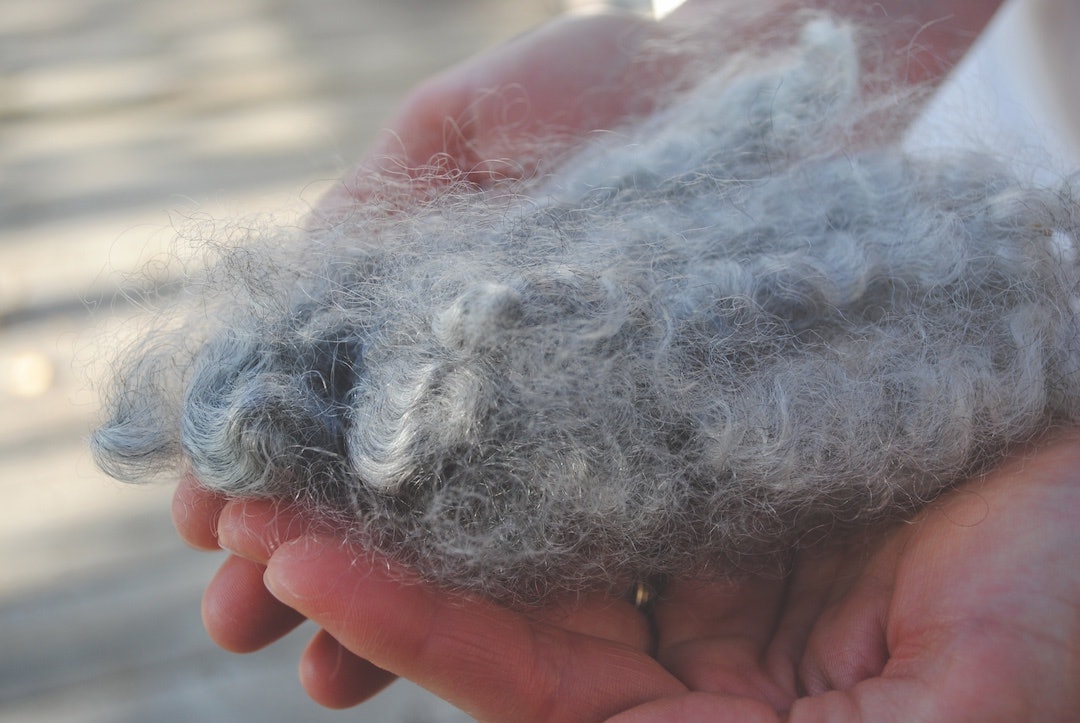
Luster longwool such as Lincoln creates a strong and reflective yarn. Fleeces: Sheep Feathers Farm, Lafayette, Colorado.
Of course, there are images for which your intent may not be to create this high luster or glow. In that case, as a handspinner, you can choose a fleece that is not lustrous. For example, if your image is a field of bright flowers on a deeply colored background, perhaps you’d make the yarn for the flowers out of a high-luster longwool such as Lincoln but the background, which you may not want to be so prominent in your image, out of a wool that has a lower degree of reflectance such as Merino.
 Some of Rebecca's handspun, hand-dyed wool
The second consideration for a tapestry yarn has to do with structure. How a yarn acts in a textile is important depending on the function of the fabric. When I’m spinning yarn for a sweater, I’m often making a plied yarn that is spun woolen so that it is airy and light.
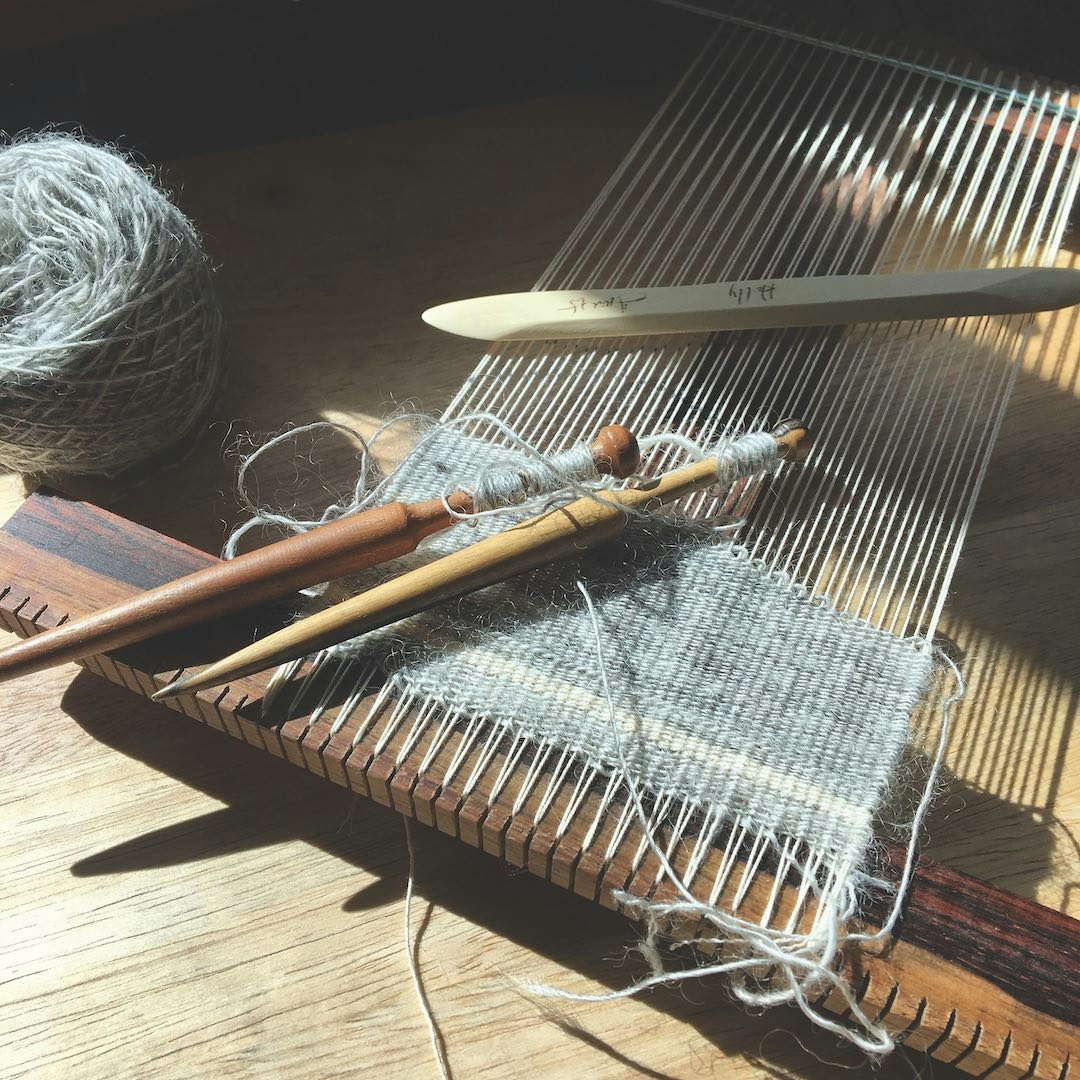
With just a few simple tools—a frame loom, bobbins, and a shed stick—you can transform hand spun yarn into your own magic carpet.
When weaving tapestry, we are putting many small bits of colored yarn together to form a picture. If those yarns are all different diameters, making them behave in the same way to create a textile that is flat and that expresses an image becomes difficult. So size matters. A yarn that is a consistent diameter is certainly easier to weave with. Some variation is acceptable, and thinner bits can be compensated for with extra passes in the weaving, but yarns of similar thickness are best.
If you’d like to weave tapestries, give it a try! Find or make a simple loom, spin yourself some weft and maybe even some warp, and start making those little scenes in the back of your head a reality in yarn.
—Rebecca
Rebecca Mezoff has been weaving magic carpets for well over a decade now. She lives somewhere in the American Southwest where she frequently has to dump the sand out of her shoes. She teaches tapestry weaving online at www.rebeccamezoff.com. She also offers free information on how to weave tapestries on her blog at www.rebeccamezoff.com/blog.
More from Little Looms
 Tutorial: Continuous-Strand WeavingLearn the basics of using the continuous strand–weaving method on a pin loom.Jennifer Chapman · July 30, 2026
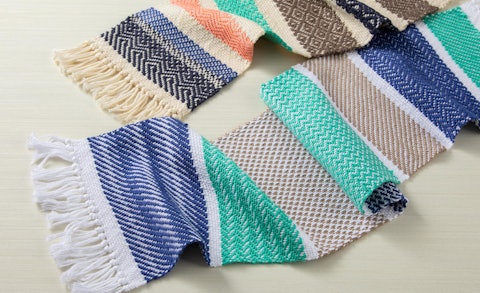 Twill for the Rigid-Heddle Loom: It’s Easier Than You Think!Learn why weavers love twill—and what makes it a great weave for the rigid-heddle loom.Christina Garton · July 14, 2026
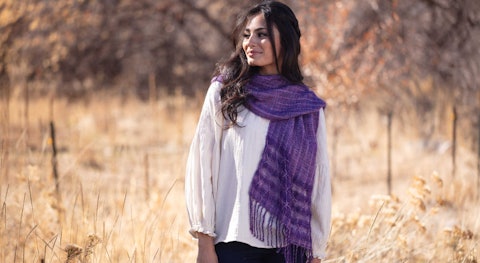 Dealing with Selvedges that Go BumpLace weaves are notorious for creating uneven, scalloped, and overall lumpy-bumpy selvedges. Learn two different methods for handling these selvedges in the first installment of our Summer Selvedge Series. Christina Garton · June 4, 2026
 My New Obsession: Three-Color Pick-up on the Inke LoomFind out how this niche Lithuanian technique found its way to America, and why it’s Christina’s new favorite way to create patterns on her inkle loom.Christina Garton · May 5, 2026
 Long Thread Podcast: Angela Tong, Multidisciplinary MakerSeason 14, Episode 7: A jeweler, knitter, crocheter, weaver, and potter sit down for a chat—and it turns out she's the same person. Angela Tong talks about a creative life built on detail, technique, and staying true to her own voice.Anne Merrow · May 2, 2026
 Get Started: Read a Basic Rigid-Heddle PatternHere's what you'll see in a rigid-heddle pattern in Little Looms—and how to translate that information to the loom!Christina Garton · April 23, 2026
 Up Your Design Game with the Fibonacci SequenceLearn how easy it is to design beautiful, asymmetric patterns using a simple bit of math. Christine Jablonski · April 21, 2026
 Perfectly Portable Looms for Weaving on the GoInterested in weaving on small looms? Learn how easy it is to build your own tiny weaving studio and sampler looms using simple household items. Elizabeth Jensen · March 26, 2026
 Join the Band: A New Retreat Just for BandweaversJoin us this fall for four days of bandweaving fun at Band Camp for Weavers!Christina Garton · March 24, 2026
 Long Thread Podcast: Heather Torgenrud, Pick-Up BandweavingSeason 14, Episode 4: Although her weaving interests vary from Anne Merrow · March 21, 2026
From the Library


Comments
No comments yet — be the first to share your thoughts.
Sign in to join the conversation — commenting is for signed-in members.