
Loading the latest stories…

Christina gives tips for weaving with an extra-fluffy yarn on the pin loom and her trick for weaving thick yarn through those last few rows. (Hint: It involves dental floss!)
Christina Garton3 min read
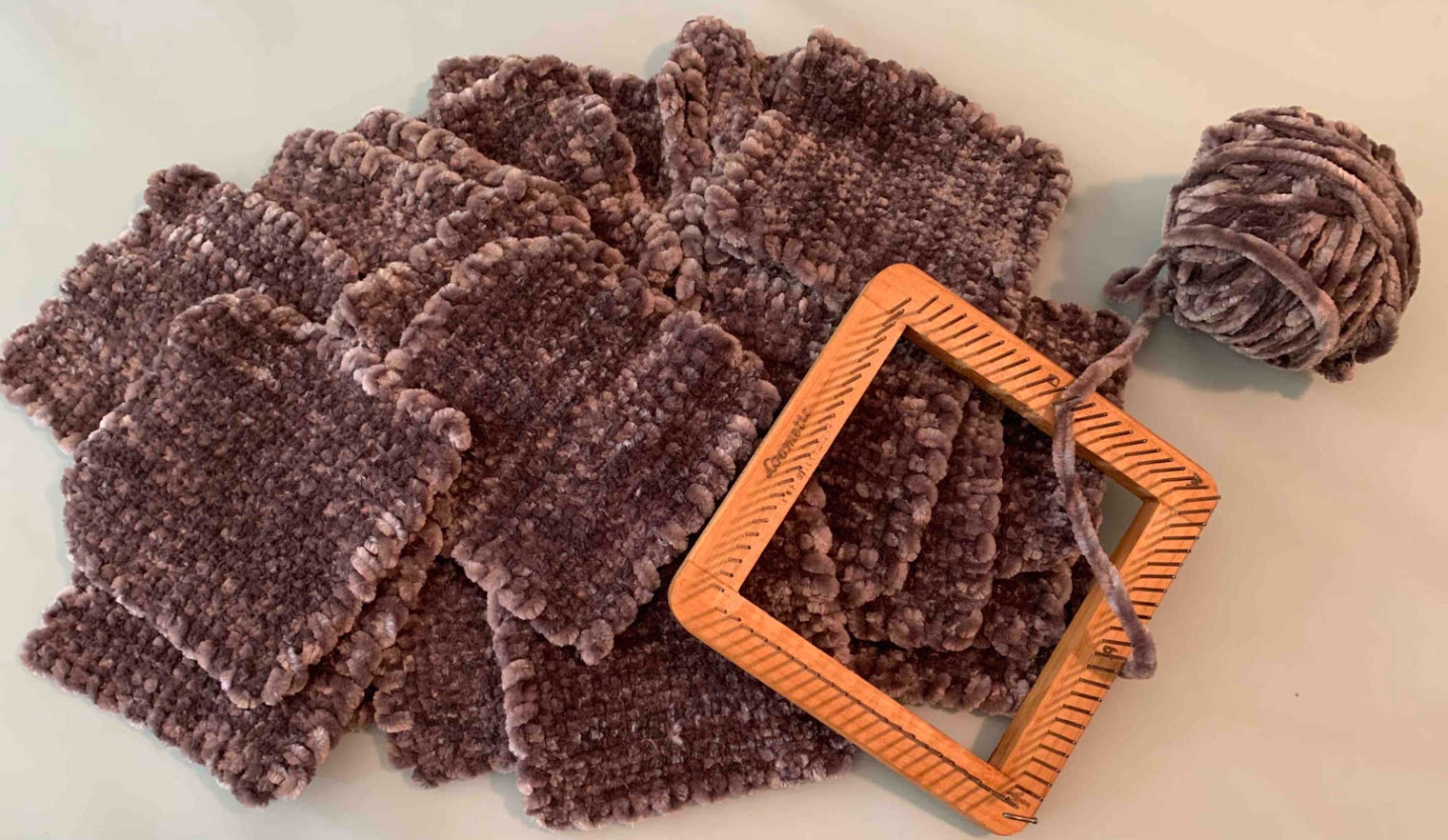
Recently, I began weaving squares on my pin loom to make a soft toy for a friend’s imminent baby. The project is based on one in the upcoming Little Looms Holiday 2021 issue, and the yarn required for the project is an extra-fluffy velvet yarn. The yarn is wonderfully soft (and washable!), but it’s a bit of a bear to weave with—at first. Through trial and error—and plenty of practice—I’ve figured out how to effectively weave fluffy yarns on my pin loom.
What exactly is it about this yarn that makes it so difficult on the loom? Well, this particular yarn has a fine core and a fur-like fluff that radiates out of it. This fluff makes my velvet yarn perfect for a soft stuffed animal and terrible for visibility of the bottom two layers wound onto the loom. I think it took at least 45 minutes to weave my first square because I just could not see where my needle was going. I had to keep pulling the needle out and starting rows over again. The last two rows were so tight that it was a struggle to get through, and I had floats galore when I was done. Instead of despairing and giving up or choosing a new, less cuddly yarn, I thought about what I went through and how I could improve the process.
First, I realized that with my first square, I was too gentle, treating the yarn as if it were as dense as it looked. While the velvet yarn looks thick, the core is very fine, making it easy to shove yarn not being actively woven out of the way to increase visibility. For my second square, I used my weaving needle to push the middle layer aside so I could actually see the bottom layer ends that my weaving needle needed to go under.
Second, I needed to solve the problem of the last 2 rows being too tight to weave accurately, even with my increased manhandling. My solution? Dental floss. I’d remembered seeing in a Facebook group about how a weaver used dental floss to guide her weft yarn when weaving got tight. I raided my bathroom and then got to weaving.

Weaving in the dental floss.
I wove my first 2 picks as normal with the velvet yarn. Then, turned my loom 180 degrees. I threaded the needle with enough dental floss to weave 2 picks with a bit of extra. I used the floss to weave what would normally be the last two picks, making sure to leave overhang on either side. Then I finished weaving with the velvet yarn until I got to the first pick of dental floss. I tied my velvet weft as tight as I could to the dental floss and then used the overhang on the opposite side to pull the weft through and repeated the process with the last pick. The weft yarn slid through easily with not a skip or float in sight.

Pulling the weft through with the dental floss.
Finally, I realized that while long weft floats were not advisable, having a skip here or there wouldn’t make or break the project so long as it wasn’t on an end. While the fluff makes weaving difficult, it also hides floats extraordinarily well. I just needed to accept that mistakes would probably happen despite my best efforts.
While I will not say that weaving with a fluffy yarn is as easy as using a more traditional yarn, I’d say it now takes me about 20 minutes to weave a square. While this is longer than it typically takes me with other yarns, I find I enjoy the slightly slower pace and handling this wonderful, soft yarn now that the weaving process is so much less stressful. As of writing this, I have about 4 more squares to weave, and I plan to savor each and every one.
Happy Weaving!
Christina
More from Little Looms
 Skill Guide: A Weaver’s Guide to FiberNo matter what loom(s) you love to weave on, understanding the different characteristics of a fiber can help you make better choices when picking yarns for projects.Christina Garton · July 31, 2026
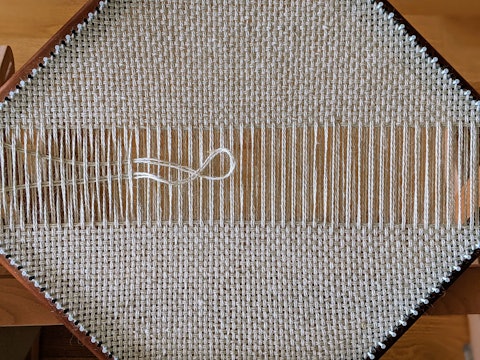 Tutorial: Continuous-Strand WeavingLearn the basics of using the continuous strand–weaving method on a pin loom.Jennifer Chapman · July 30, 2026
 Twill for the Rigid-Heddle Loom: It’s Easier Than You Think!Learn why weavers love twill—and what makes it a great weave for the rigid-heddle loom.Christina Garton · July 14, 2026
 Long Thread Podcast: Angela Tong, Multidisciplinary MakerSeason 14, Episode 7: A jeweler, knitter, crocheter, weaver, and potter sit down for a chat—and it turns out she's the same person. Angela Tong talks about a creative life built on detail, technique, and staying true to her own voice.Anne Merrow · May 2, 2026
 Long Thread Podcast: Heather Torgenrud, Pick-Up BandweavingSeason 14, Episode 4: Although her weaving interests vary from Anne Merrow · March 21, 2026
 Long Thread Podcast: Christina Garton, Little LoomsSeason 14, Episode 2: Ten years since the first issue of Easy Weaving with Little Looms, editor Christina Garton is still finding delightful new ideas in small-loom weaving.Anne Merrow · February 21, 2026
 Weave a Pin-Loom Pet for National Love Your Pet DayWeave a pet—all it takes is a pin loom, a few put-ups of yarn, and a copy of Zoo Crew. Christina Garton · February 12, 2026
 Long Thread Podcast: Laverne Waddington (classic)Season 13, Episode 8: Using her hands, fine threads, and simple tools, Laverne Waddington uses backstrap looms to explore a world of weaving techniques and traditions.Anne Merrow · December 27, 2025
 Skill Builder: Explore Two Takes on Textured WeavesCraving more visual interest in your projects? Try these simple pick-up patterns to add texture to your weaving.Christina Garton · December 18, 2025
 Skill Builder: How to Thread Weaving TabletsLearn how to go from draft to a perfectly threaded set of tablets.Little Looms Authors · November 13, 2025
From the Library


Comments
No comments yet — be the first to share your thoughts.
Sign in to join the conversation — commenting is for signed-in members.