
Loading the latest stories…

Have you ever wondered about the difference between woven and regular shibori or why you might choose one over the other? Learn the basics of what makes woven shibori!
Christina Garton2 min read
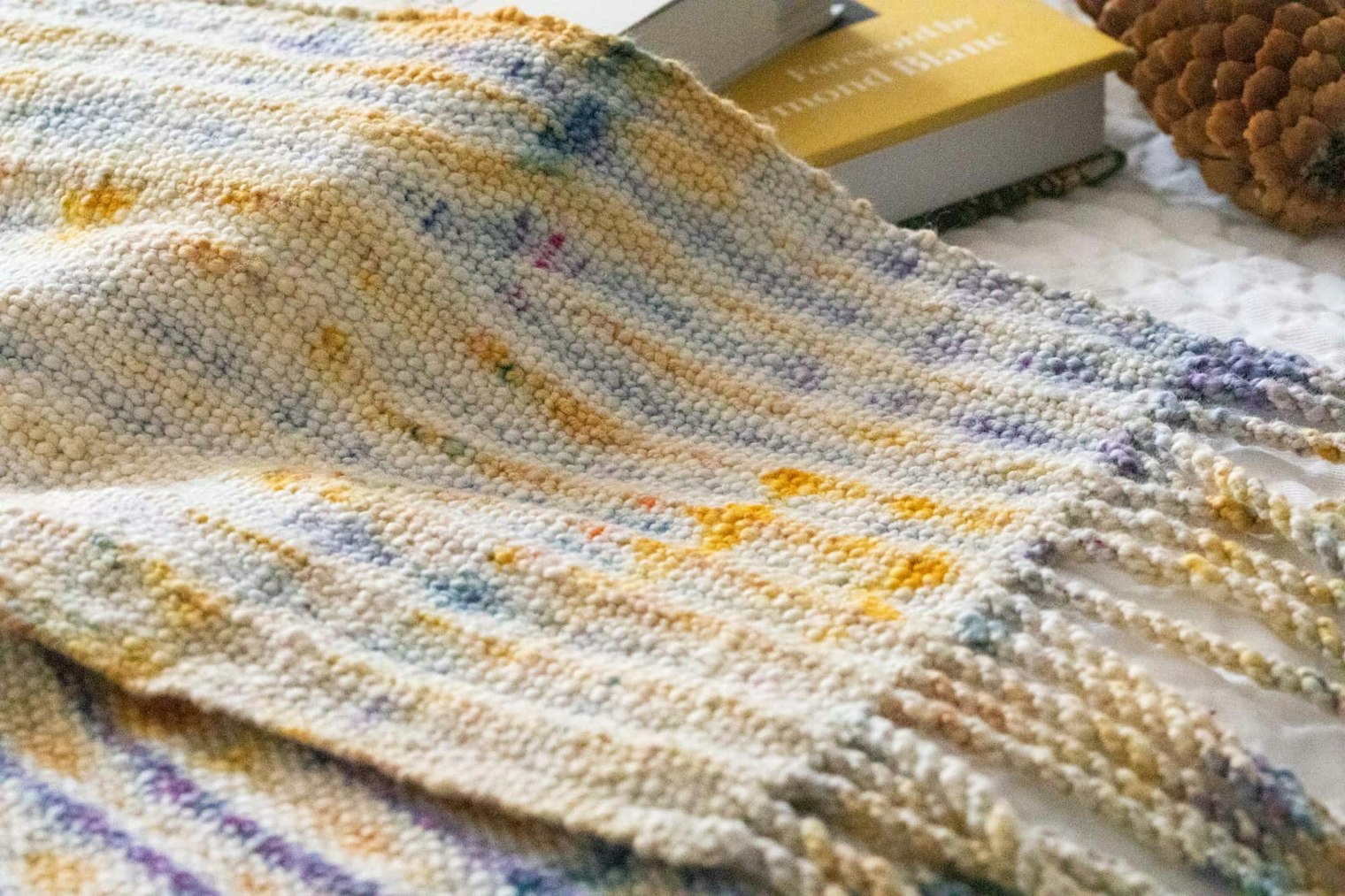
If you’re familiar with dyeing, you’ve probably heard the term “shibori” before. If not, shibori is a type of resist-dyeing technique developed in Japan. If you’ve seen the Fall 2023 issue of Easy Weaving with Little Looms, you might have noticed one of the projects is a woven-shibori scarf—but what is woven shibori compared to just regular shibori?
In traditional shibori, cloth is wrapped around objects, folded, pleated, and otherwise strategically tied up before dyeing to create patterning on the cloth. What makes something woven shibori is that the pull strings used to create pleats and tie up the cloth are woven into the fabric itself.
For her Frosty Ice-Dyed Scarves, Rebecca Fox wove one in regular plain weave and one with these drawstrings. Rather than weave them in along with the rest of the weft, Rebecca chose to use a pick-up stick and string heddles to strategically create 2 different shibori sheds. She also strategically created some of the weft loops of the shibori thread while weaving the fabric to aid in tying the threads after pulling them and pleating the fabric. Once the fabric was dyed, the shibori threads were carefully trimmed.
 Rebecca's woven-shibori scarf.
So why make the effort of creating new sheds and carefully weaving in shibori threads instead of just pleating and tying the fabric off the loom? I can think of a few reasons some weavers might prefer this technique. First, it allows you to better control the shibori. By weaving them into the fabric, you’re locking the pull threads in place, and they can’t slip and slide around. You can make your pleats and areas of resist as evenly spaced as you want.
Also, how you weave the pull threads into the fabric can control how the fabric will pleat. Rather than having to pleat by hand, you can pull a thread and have the hard work done for you. If you have trouble with hand mobility, this can make the act of shibori much easier—the only fine motor work required is tying knots.
There’s a whole world of woven shibori out there, and I encourage you to explore it! If you want a starting point, definitely check out our Fall 2023 issue with Rebecca’s project as well as her article about ice dyeing. (It’s much easier than you might think!)
Happy Weaving!
Christina
More from Little Looms
 Skill Guide: A Weaver’s Guide to FiberNo matter what loom(s) you love to weave on, understanding the different characteristics of a fiber can help you make better choices when picking yarns for projects.Christina Garton · July 31, 2026
 From WIF to Woven ClothLearn how to use WIFs and weaving software to create and edit patterns—before you put a single thread on the loom. Christina Garton · July 23, 2026
 Give Yourself the Gift of a Weaving GetawayWhat’s better than learning to master a new weaving? Doing it among friends, new and old! Little Looms Editors · July 21, 2026
 6 Easy Ways to Elevate Your Selvedges with TrimsAdd extra flair to your selvedges and hems with these terrific trims. Christina Garton · July 16, 2026
 Twill for the Rigid-Heddle Loom: It’s Easier Than You Think!Learn why weavers love twill—and what makes it a great weave for the rigid-heddle loom.Christina Garton · July 14, 2026
 A Celebration of Stripes: Call for Submissions Fall 2027We're looking for striped projects of all kinds for our Fall 2027 issue—and that includes plaids and checks, too!Christina Garton · July 9, 2026
 Make Your Own Cardboard Mini-ShuttlesButterflies are beautiful, but they’re not always the best choice when you’re weaving. Try winding small bits of weft on these simple, DIY cardboard shuttles instead!Christina Garton · July 7, 2026
 A Trio of Table ToppersGo beyond rectangular runners with table toppers. Christina Garton · June 30, 2026
 Crochet for Your Selvedges? Your Edges Will Thank YouFind out why Sara Bixler finishes some of her woven pieces with crochet. Watch her free video clip, and then dive into several stitch options to try on your next project. Little Looms Editors · June 25, 2026
 Compose a Masterpiece on Your LoomAfter all, a loom is just another type of stringed instrument. Christina Garton · June 23, 2026
From the Library


Comments
No comments yet — be the first to share your thoughts.
Sign in to join the conversation — commenting is for signed-in members.