
Loading the latest stories…


Don’t get overwhelmed—get confident in your color! With this clever technique, Jennifer makes designing attractive, colorful cloth easier than ever.
Jennifer E. Kwong3 min read
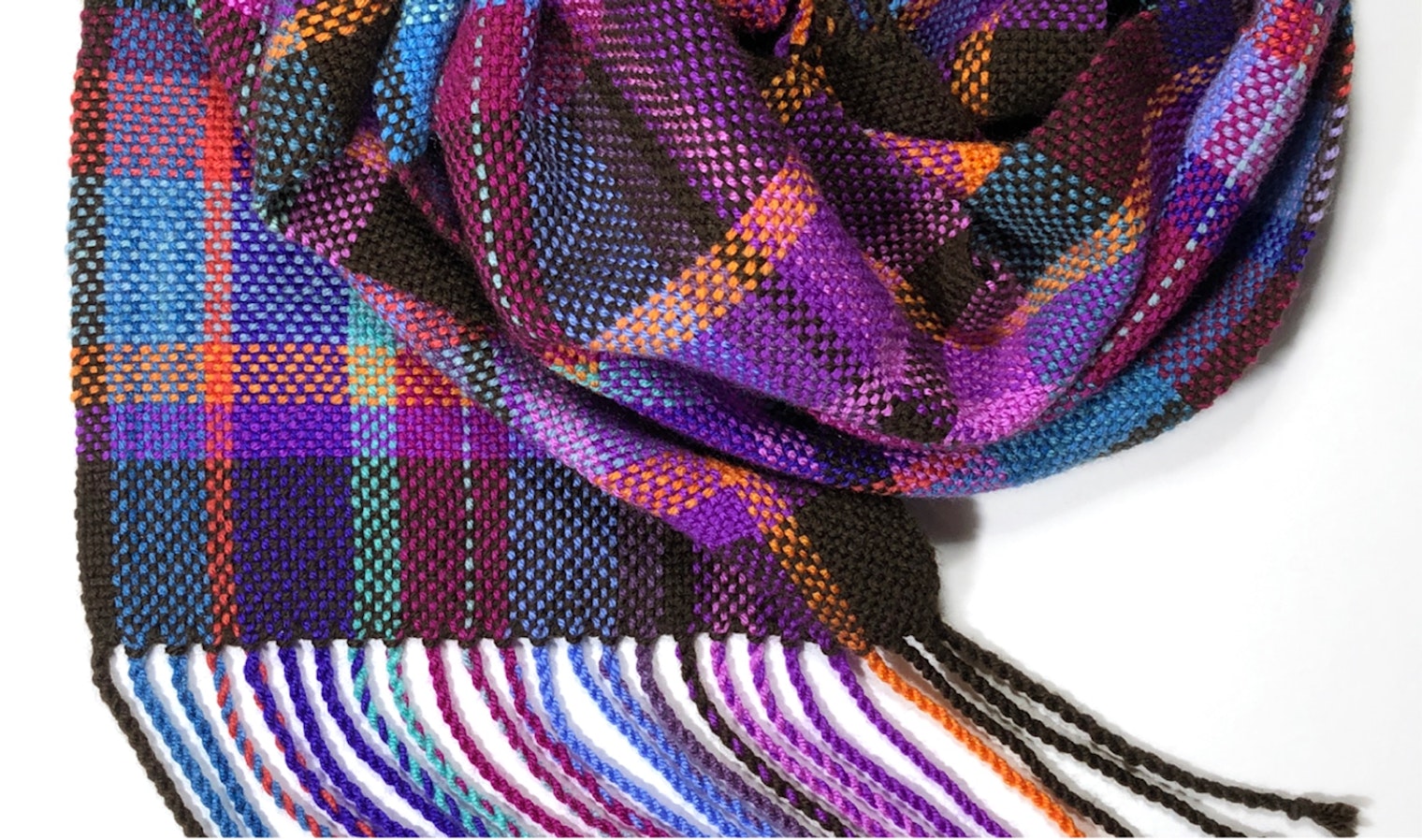
Since I started weaving, plain weave has been my “comfort food.” When life speeds up, plain weave’s steady rhythm does the opposite—it slows everything down, giving me space to breathe and sort through my thoughts.
But reaching that peaceful place isn’t always easy. More than once, I’ve been desperate to sit and weave, only to find the loom empty and a wall of decisions blocking the way. Choosing colors, committing to a warp design, convincing myself I needed to buy one more color to “complete” my yarn stash . . . my process would stall before it even began. I’m sure I’m not the only weaver who’s been there. Eventually, I found a shortcut through the decision-making barrier that makes getting to weaving a lot easier.
The next time you’re craving a quick, colorful project, try this design approach. It’s perfect for plain weave, works with both stripes and plaids, and (assuming you have a healthy stash) lets you get weaving right away!
LMD123 stands for Light, Medium, Dark in proportions of 1 part light, 2 parts medium, 3 parts dark. I try to think of it less as a rule and more as a guideline. To use a cooking analogy, light colors are like salt or seasoning, while the medium and dark colors are the main ingredients—you want your seasoning to enhance your dish without overwhelming it.
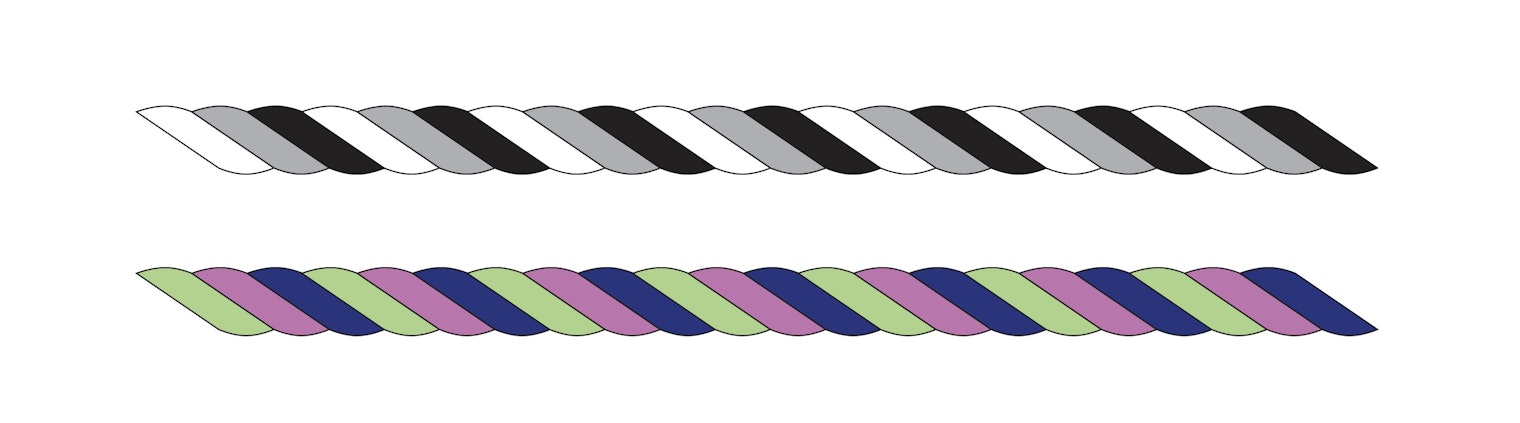
For her LMD123 method, Jennifer begins by choosing three colors with a clear step between values and twisting them together. Whether you’re using a neutral palette, like the twist at the top of the image, or a more colorful one, like the one at the bottom, the contrast in value should be obvious.
Pick three yarns—one light, one medium, one dark—and twist them together. Look for a clear step between the values. The most extreme examples of light, medium, and dark would be white, medium gray, and black. The contrast in your colors won’t be that extreme, but they should still be easily distinguishable, as in the image above.
As you choose your colors, be aware that some can be misleading. Lavender is a common example: It often feels “light,” but depending on the amount of gray in it, it can land in the medium range.
To make sure your eyes aren’t being fooled, here are two ways to objectively determine a color’s value (lightness or darkness):
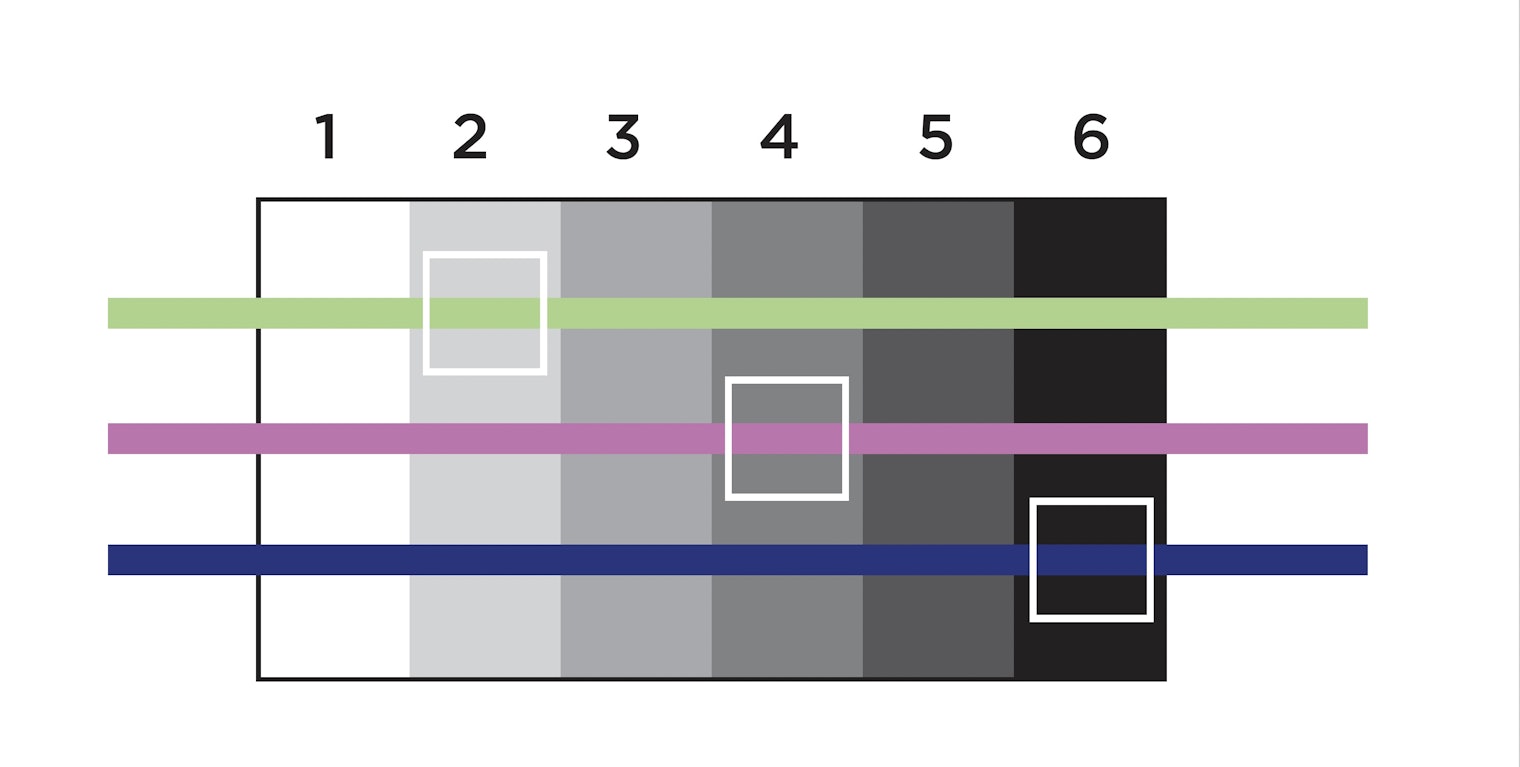
To find a color’s true value, you can compare it to a grayscale.
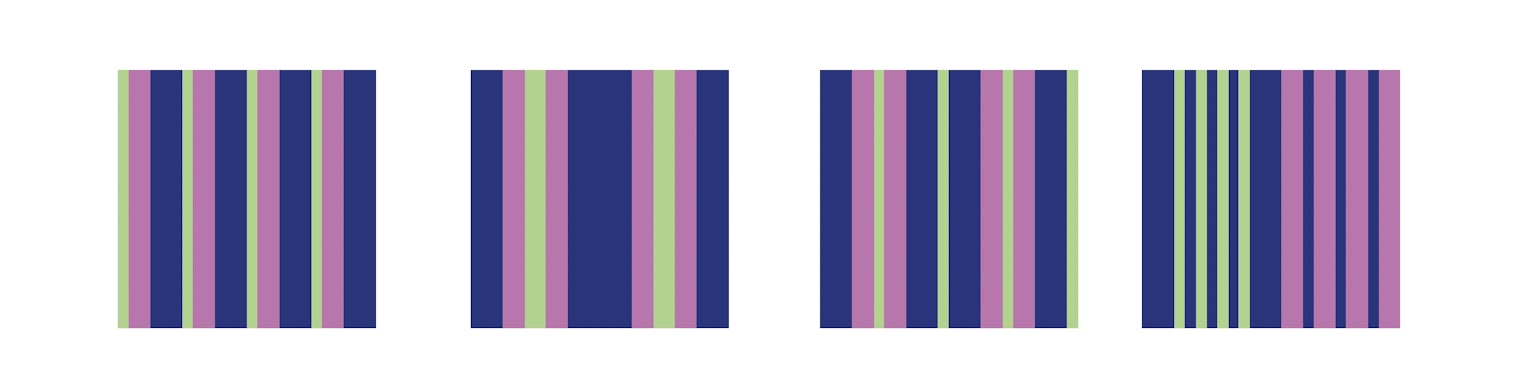
Once you’ve chosen your light, medium, and dark colors, how you lay them out is up to you.
Once you’ve chosen your trio of colors, build your warp stripes using the 1:2:3 proportions as a guide. Above are just a few examples—you can make the stripes regular or random. If you run out of a color, simply swap in any other color of the same value. In other words, if you run out of Light, use another Light color with the same true value as the original.
For weft, you have many options:
The examples illustrated here were created using the LMD123 approach. The colors were chosen only for their values and used in 1:2:3 proportions. None of the combinations are palettes that I would have instinctively chosen, but once woven, they all “work!”
Happy weaving!
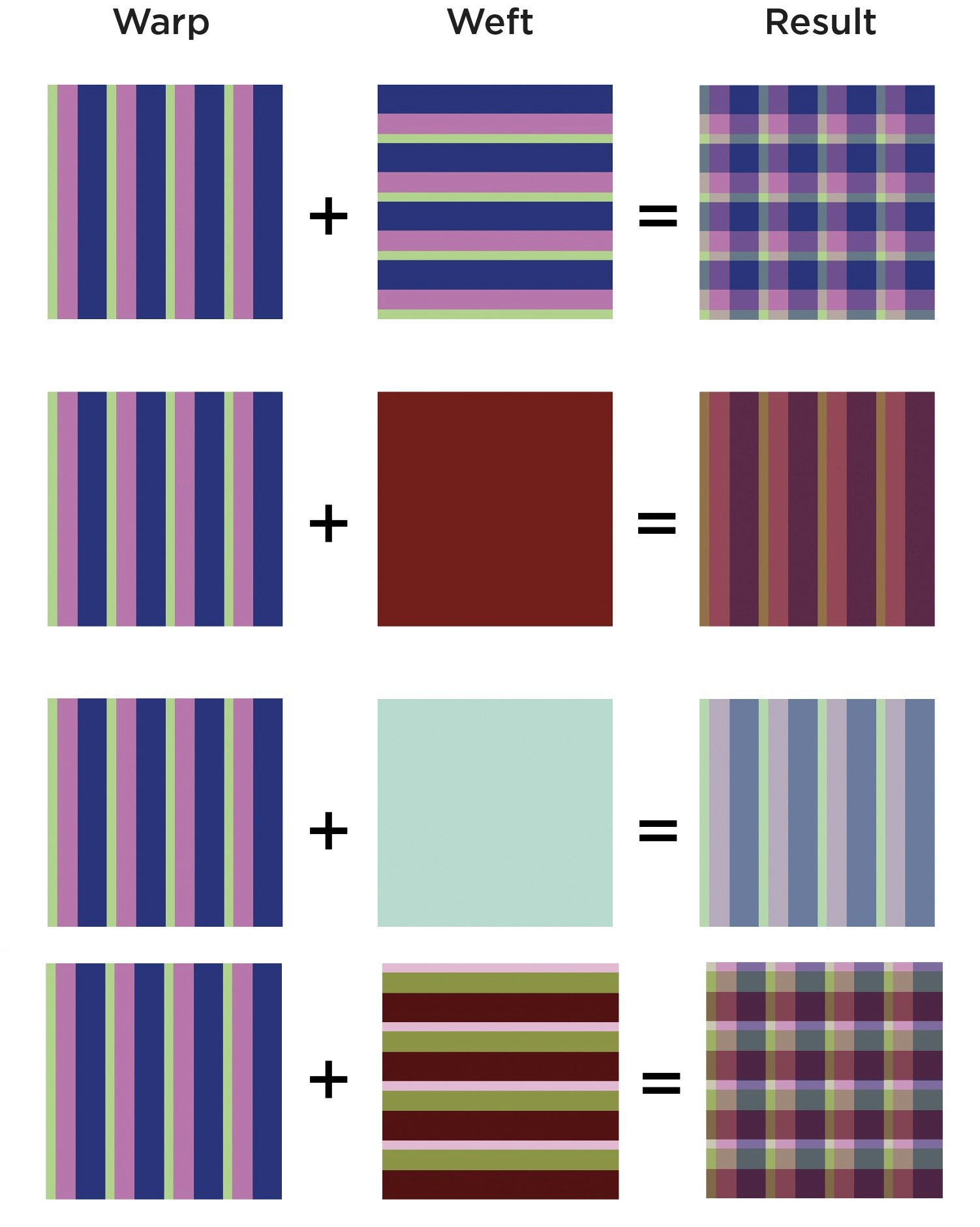
From left to right: warp stripes, weft color or colors, and final result.
More from Little Looms
 Dealing with Selvedges that Go BumpLace weaves are notorious for creating uneven, scalloped, and overall lumpy-bumpy selvedges. Learn two different methods for handling these selvedges in the first installment of our Summer Selvedge Series. Christina Garton · June 4, 2026
 Three Tips for Taming Linen WarpsThe key to weaving with linen is to find ways to manage the yarn to prevent problems. Here are Malynda's top tips and tricks. Christina Garton · May 21, 2026
 What Every Beginning Weaver Should Know about FringeDo you really need to hemstitch, and are fringe twisters worth the investment?Christina Garton · February 17, 2026
 Video Tip: How to Wind a Stick ShuttleStephanie Flynn shows you how to wind your shuttle for a more efficient—and enjoyable—weaving experience. Christina Garton · February 9, 2026
 Weaving While Neurodivergent: On FinishingSometimes ADHD, stress, or just a busy schedule can make finishing even a simple project seem insurmountable; however, following a few simple tips can help you jump these hurdles and get your project over the finish line.Christina Garton · January 1, 2026
 Improve Your Inkle Warping with Painter’s TapeWatch as Joan Sheridan shares her easy, low-tech solution for easier inkle warping.
Christina Garton · December 23, 2025
Improve Your Inkle Warping with Painter’s TapeWatch as Joan Sheridan shares her easy, low-tech solution for easier inkle warping.
Christina Garton · December 23, 2025 Give Old Sweaters New Life with NeedlefeltingLearn how you can use this simple, beginner-friendly technique to turn stained or worn-out sweaters into one-of-a-kind statement pieces. Christina Garton · December 2, 2025
 Video Tip: A Simple Technique for Perfect Tension on the Pin LoomExpert pin-loom weaver Angela Tong explains how easy it is to get perfect tension on your pin loom. Christina Garton · September 9, 2025
 Tips for Travel: Tools, TSA, and More!Take your weaving to go with these tips for travelling with your small looms and weaving supplies whether you’re going by plane or heading out on the road. Christina Garton · July 17, 2025
 Ready, Sett, Go! Getting an even beat and the right sett for your project affects both the hand and appearance of your weaving. Learn Elisabeth Hill's tips and tricks for getting the best sett for your weaving.
Elisabeth Hill · July 10, 2025
Ready, Sett, Go! Getting an even beat and the right sett for your project affects both the hand and appearance of your weaving. Learn Elisabeth Hill's tips and tricks for getting the best sett for your weaving.
Elisabeth Hill · July 10, 2025From the Library


Comments
No comments yet — be the first to share your thoughts.
Sign in to join the conversation — commenting is for signed-in members.