
Loading the latest stories…

If you want to jump into tapestry weaving and don't know where to start, this FREE guide to tapestry weaving—with 3 free projects!—is the perfect jumping off point.
Long Thread Editorial Staff3 min read
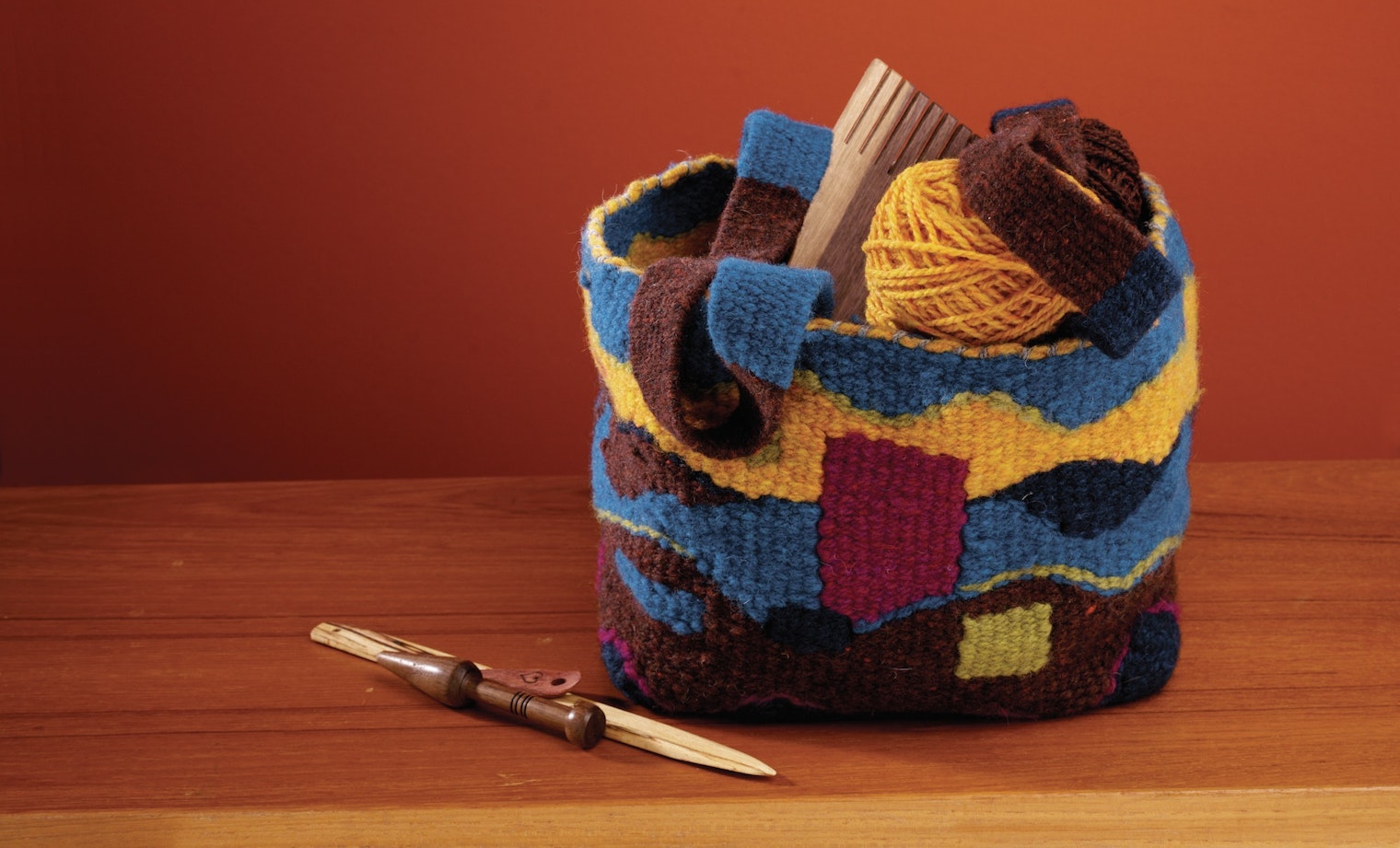
I love tapestry weaving for so many reasons. It allows you to paint with yarn, mixing colors as easily as a painter mixes oils on a palette. You can create depth and wonder in a flat surface, or add techniques such as soumak and pile that make your surface not-so-flat. Tapestry can be almost photo-realistic, or it can be deeply evocative with the simplest shapes. You can weave tapestry on a fancy tapestry loom, on a simple wooden, copper, or PVC frame, or on a piece of cardboard. Tapestry weaving is easily portable, if you're not making an epic piece, and it gives the slow-weaving, fingers-in-the-warp, tactile satisfaction that I love.
If you're interested in tapestry, but aren't sure whre to start, we've got a free eBook for you! In Easy Weaving with Little Looms: Free Tapestry Weaving Instructions, Projects, and Tips for Using a Tapestry Loom you'll learn so much including:

Want a sneak peek inside the eBook? Look below for more information on what you'll find in this incredible, free eBook. Download your copy here today!
 Photo credit: Joe Coca
Geometry Man Tapestry by Karen Donde Karen stumbled upon this design while designing a sample for her Certificate of Excellence. She was arranging random geometric shapes in her design software when "Geometry Man" appeared! Create your own "Geometry Man" or try out other geometric designs. Either way, this is an easy way to jump right into weaving your own wall hanging. You'll learn to use a cartoon as well as how to weave straight lines, curves, and diagonals, all with seamless weft joins.
 Photo credit: Sarah Swett
Weave a Tapestry Bag on a Box by Sarah Swett Weaving on a cardboard box is immensely satisfying. You can take your time and play with blocks of color without fancy equipment. Sarah usually recommends a small box for your first bag, but there’s no limit to the fun you can have playing with size, shape, and designs to fit the future life of the bag. Even better? There's no sewing required!
 Photo credit: Margaret Windeknecht
Wedge Weave in Miniature by Margaret Windeknecht All you need to weave your own wedge-weave tapestry is some cotton and linen fabric, an embroidery hoop, a tapestry needle, and some cotton, silk, or wool floss. This article is an introduction to a very unique adaptation of this old tapestry weaving technique with Margaret giving instructions on weaving and examples of some of her more elaborate art pieces. Create your own miniature wedge-weave tapestries framed on your wall, turn into small bits of jewelry, or even decorate a dollhouse.
 Photo credit: Nancy Taylor
Postcards from the Field by Nancy Taylor If you've ever wondered how to make your own tapestry in the traditional, photo-realistic style, this is the perfect place to start. This woven tapestry project allows you to try your hand at emulating a real-life scene on a small scale. These woven tapestries are each only the size of a postcard! This is a great travel or holiday tapestry project, since it's woven on a portable tapestry loom.
 Photo credit: Karen Piegorsch
Set Your Body (and Your Loom) Free by Karen Piegorsch Frame looms are popular among both tapestry weavers due to their portability, low cost, and ease of warping. Commonly, the frame loom is used in the lap, balanced against the edge of a table, but this isn't very ergonomic. Learn to use a painter's box easel to make a tapestry loom stand in this article.
More from Little Looms
 Skill Guide: A Weaver’s Guide to FiberNo matter what loom(s) you love to weave on, understanding the different characteristics of a fiber can help you make better choices when picking yarns for projects.Christina Garton · July 31, 2026
 A Celebration of Stripes: Call for Submissions Fall 2027We're looking for striped projects of all kinds for our Fall 2027 issue—and that includes plaids and checks, too!Christina Garton · July 9, 2026
 Two Ways to Make Terrific TasselsTurn loom waste or small bits of extra-special yarns into beautiful, custom-made tassels perfect for trimming handwoven projects and so much more!Christina Garton · June 18, 2026
 Roll the Dice on Your Next DesignFind out how easy it is to kick-start your creativity when you leave your design choices up to chance. Tommye McClure Scanlin · June 9, 2026
 Skill Builder: Easy Inlay TechniquesLearn multiple techniques for adding inlay to your weaving, then find out how to read and weave charted inlay patterns. Christina Garton · May 5, 2026
 Up Your Design Game with the Fibonacci SequenceLearn how easy it is to design beautiful, asymmetric patterns using a simple bit of math. Christine Jablonski · April 21, 2026
 Perfectly Portable Looms for Weaving on the GoInterested in weaving on small looms? Learn how easy it is to build your own tiny weaving studio and sampler looms using simple household items. Elizabeth Jensen · March 26, 2026
 Weave Tiny Masterpieces Anywhere with Sketch TapestriesFind out how tapestry weaver Rebecca Mezoff captures moments in small-form weavings she calls sketch tapestries. Learn her design technique as well as what she keeps in her to-go kit for weaving anytime, anywhere.Rebecca Mezoff · February 17, 2026
 Weaver’s Choice: Your Favorite Articles from 2025You picked them, the top 10 articles of 2025 featuring new techniques, fabulous projects, and interesting bits of textile history. Christina Garton · January 6, 2026
 Build a Picture Frame Tapestry Loom Learn how to build a travel-sized tapestry loom using items you probably already own.Christina Garton · December 17, 2025
From the Library


Comments
No comments yet — be the first to share your thoughts.
Sign in to join the conversation — commenting is for signed-in members.