
Loading the latest stories…

Love the look of woven iridescence but don't think it's possible on a rigid-heddle loom? Think again!
Bobbie Irwin3 min read
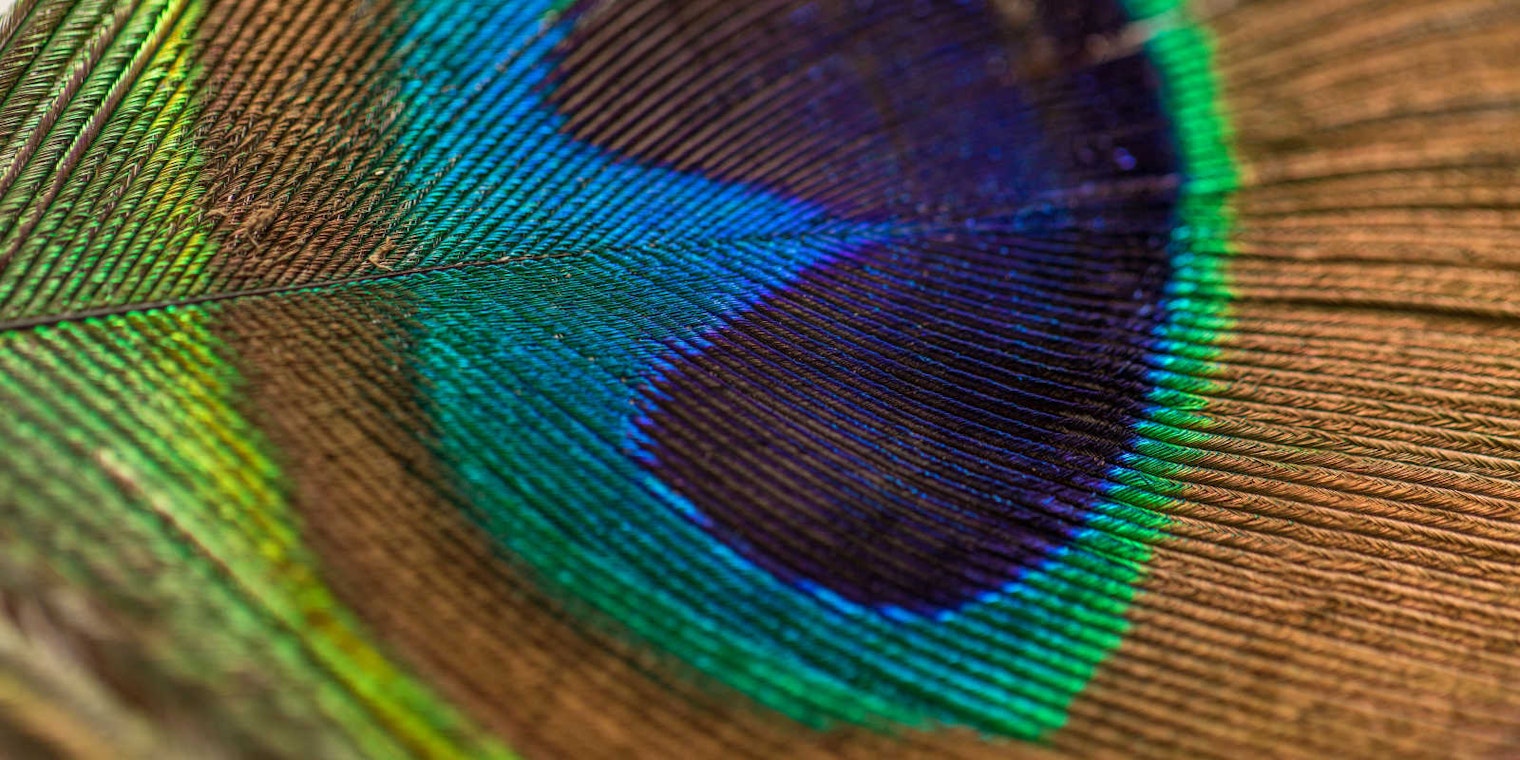
Iridescence seems particularly magical in fine fabric because our eyes don’t perceive the thread intersections and the effect is a solid sheen of color reflecting at a particular angle. However, not all weavers want to weave with thin threads, so it’s nice to know that you can achieve striking iridescence even with thicker yarns. When heavier threads cross, the different-colored thread intersections remain visible. You can see all the colors at any particular angle, but one color will be more dominant, and this apparent dominant color will still shift when you view the fabric from different angles.
Rigid-heddle weavers have many options for weaving iridescence, even if using one heddle and plain weave. Iridescence requires some visual contrast, which usually comes from crossing distinct colors. A balanced weave gives warp and weft equal opportunity to show. Color shifts are most evident seen at low and high angles. If you’re using a rigid-heddle loom and want to achieve iridescence in your cloth, I have a few recommendations.
First, cross unrelated colors for the most dramatic effect. You don’t have to use complementary colors (opposites on a color wheel). Those tend to create browned or grayed effects at certain distances and are not always the most attractive combinations. For iridescence that’s a little more subtle, choose colors that are easy to tell apart yet closely related on the color wheel (analogous or neighboring colors). Turquoise crossed with yellow-green is a combination I find especially pleasing.
Second, experiment with your weft size. If the weft color overwhelms a warp color of the same size, try a finer weft to subdue it a bit.
Lustrous yarns reflect light best and enhance iridescence. Pearl cotton in 3/2 or 5/2 sizes can be effective at setts of 12 or 15 ends per inch. Other enticing choices are 5/2 rayon (including bamboo) and heavy silk. Finer yarns (including Tencel, a type of rayon) can be doubled in the warp and weft. Metallic yarns are available in a variety of sizes and colors, as are yarns that reflect a whole spectrum of colors. Use these yarns judiciously so as to not overwhelm another yarn in your project. A sparkle of color from a fine metallic yarn mixed with a heavier weft may be a better choice than a metallic weft the same size as your warp.

Sara Bixler's Rainbow Connection Shawl from the 2017 Easy Weaving With Little Looms is an example of iridescence creating on a rigid-heddle loom. Photo Credit: George Boe
Space-dyed yarns can produce iridescence when crossed, as long as warp and weft are in distinct color families and do not contain the same colors. Some of the self-patterning sock yarns, which have short color sections, are also fun to experiment with.
You can weave three-color iridescence using two distinct weft colors that are different from, yet compatible with, a solid-colored warp. Using two shuttles, weave the two wefts in the same shed, traveling in the same direction. Keep them parallel and don’t allow them to cross. Beat them together in a closed shed, or beat each weft separately before reopening the same shed. Maintain the same weft-color sequence throughout. You can even weave with three weft colors in the same manner, using three shuttles to create four-color iridescence. All the colors are present at each thread intersection. With thick or coarse yarns, the ability to see all the colors at once can make these fabrics look complex and quite stunning. If you use pick-up sticks and/or more than one rigid heddle for different weave structures, the possibilities can be even more amazing!
For more on iridescence in weaving, check out Bobbie’s book Weaving Iridescence, from Stackpole Books. Weaving Iridescence is available in bookstores and online.
Originally published 6/30/2022; updated 1/21/2025
More from Little Looms
 Twill for the Rigid-Heddle Loom: It’s Easier Than You Think!Learn why weavers love twill—and what makes it a great weave for the rigid-heddle loom.Christina Garton · July 14, 2026
 A Celebration of Stripes: Call for Submissions Fall 2027We're looking for striped projects of all kinds for our Fall 2027 issue—and that includes plaids and checks, too!Christina Garton · July 9, 2026
 Make Your Own Cardboard Mini-ShuttlesButterflies are beautiful, but they’re not always the best choice when you’re weaving. Try winding small bits of weft on these simple, DIY cardboard shuttles instead!Christina Garton · July 7, 2026
 Designing Borders for Pick-Up BandsLearn tips and tricks for designing borders for your pick-up bands, from simple stripes to more complex color-and-weave designs. Christina Garton · July 2, 2026
 A Trio of Table ToppersGo beyond rectangular runners with table toppers. Christina Garton · June 30, 2026
 Crochet for Your Selvedges? Your Edges Will Thank YouFind out why Sara Bixler finishes some of her woven pieces with crochet. Watch her free video clip, and then dive into several stitch options to try on your next project. Little Looms Editors · June 25, 2026
 Compose a Masterpiece on Your LoomAfter all, a loom is just another type of stringed instrument. Christina Garton · June 23, 2026
 Two Ways to Make Terrific TasselsTurn loom waste or small bits of extra-special yarns into beautiful, custom-made tassels perfect for trimming handwoven projects and so much more!Christina Garton · June 18, 2026
 An Invitation to SparkleLearn three approaches for using metallic threads to weave fabric that literally shines bright! Christina Garton · June 16, 2026
 Just Glue It: Pin-Loom Coasters and Wall ArtDon’t let your pin-loom pieces go to waste; transform single squares into a finished piece with the help of a little glue. Little Looms Editors · June 11, 2026
From the Library

Comments
No comments yet — be the first to share your thoughts.
Sign in to join the conversation — commenting is for signed-in members.