
Loading the latest stories…

SUB
The meet-and-separate technique is just one beginner-friendly way to weave shapes in tapestry. Learn the basics from Tommye McClure Scanlin.
Tommye McClure Scanlin8 min read
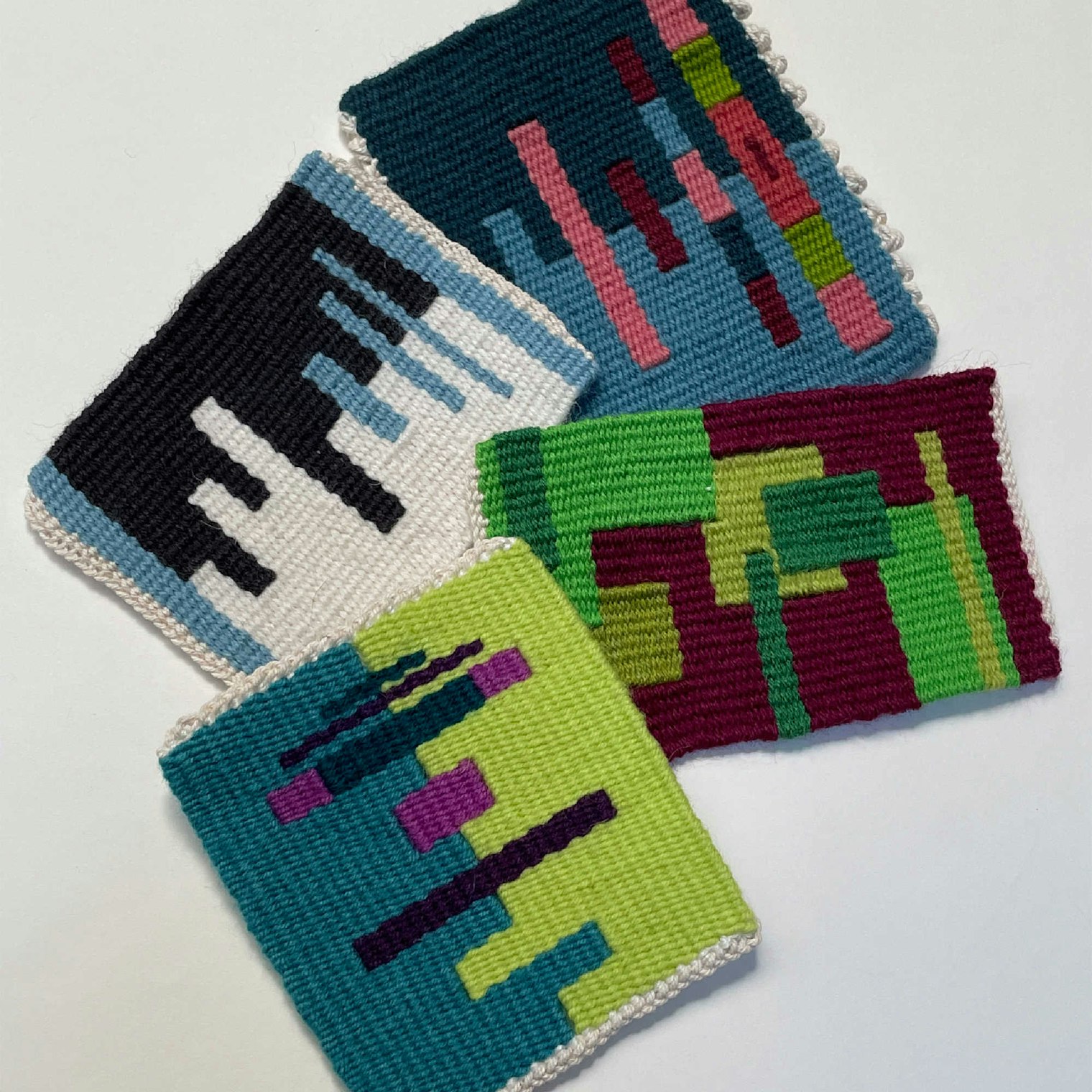
Featured in Easy Weaving with Little Loom's Summer 2022, Tommye McClure Scanlin's first installment of her Tapestry Talk series covers the meet-and-separate technique, an easy and fun way to weave shapes in tapestry. Current Easy Weaving with Little Looms subscribers can log in below to access this full article by Tommye, including step-by-step photos for meet and separate.
We usually think of handwoven tapestry as weft-faced plain weave and a fabric in which wefts don’t necessarily travel from selvedge to selvedge. In fact, there are often multiple wefts running in each row or pick of a tapestry.
Let’s look at the vocabulary that describes handwoven tapestry, starting with the structure. As mentioned, it’s usually plain weave with each row of weft woven in an over-one/under-one alternation of warp ends. Tapestry is also typically weft-faced, meaning the weft completely covers and hides the warp ends. As with other weaving, the weft insertion into a selected shed (the opening created when some warp ends are raised or lowered) is called a pick. When two picks are used in alternate sheds, the plain-weave structure is formed. These are the basic components that create the many results possible in handwoven tapestry. Although the fabric structure is simple, there are myriad ways in which multiple discontinuous wefts can be woven within it. I’ll describe one of those methods here: meet and separate. In this method, multiple wefts in the same shed don’t overlap one another.
More from Little Looms
 Skill Guide: A Weaver’s Guide to FiberNo matter what loom(s) you love to weave on, understanding the different characteristics of a fiber can help you make better choices when picking yarns for projects.Christina Garton · July 31, 2026
 A Celebration of Stripes: Call for Submissions Fall 2027We're looking for striped projects of all kinds for our Fall 2027 issue—and that includes plaids and checks, too!Christina Garton · July 9, 2026
 Two Ways to Make Terrific TasselsTurn loom waste or small bits of extra-special yarns into beautiful, custom-made tassels perfect for trimming handwoven projects and so much more!Christina Garton · June 18, 2026
 Roll the Dice on Your Next DesignFind out how easy it is to kick-start your creativity when you leave your design choices up to chance. Tommye McClure Scanlin · June 9, 2026
 Skill Builder: Easy Inlay TechniquesLearn multiple techniques for adding inlay to your weaving, then find out how to read and weave charted inlay patterns. Christina Garton · May 5, 2026
 Up Your Design Game with the Fibonacci SequenceLearn how easy it is to design beautiful, asymmetric patterns using a simple bit of math. Christine Jablonski · April 21, 2026
 Perfectly Portable Looms for Weaving on the GoInterested in weaving on small looms? Learn how easy it is to build your own tiny weaving studio and sampler looms using simple household items. Elizabeth Jensen · March 26, 2026
 Weave Tiny Masterpieces Anywhere with Sketch TapestriesFind out how tapestry weaver Rebecca Mezoff captures moments in small-form weavings she calls sketch tapestries. Learn her design technique as well as what she keeps in her to-go kit for weaving anytime, anywhere.Rebecca Mezoff · February 17, 2026
 Weaver’s Choice: Your Favorite Articles from 2025You picked them, the top 10 articles of 2025 featuring new techniques, fabulous projects, and interesting bits of textile history. Christina Garton · January 6, 2026
 Build a Picture Frame Tapestry Loom Learn how to build a travel-sized tapestry loom using items you probably already own.Christina Garton · December 17, 2025
From the Library



Comments
No comments yet — be the first to share your thoughts.
Sign in to join the conversation — commenting is for signed-in members.