
Loading the latest stories…





Different fibers and yarns have different wet-finishing needs. Learn everything you need to know to wet-finish your cloth with confidence.
Christina Garton5 min read
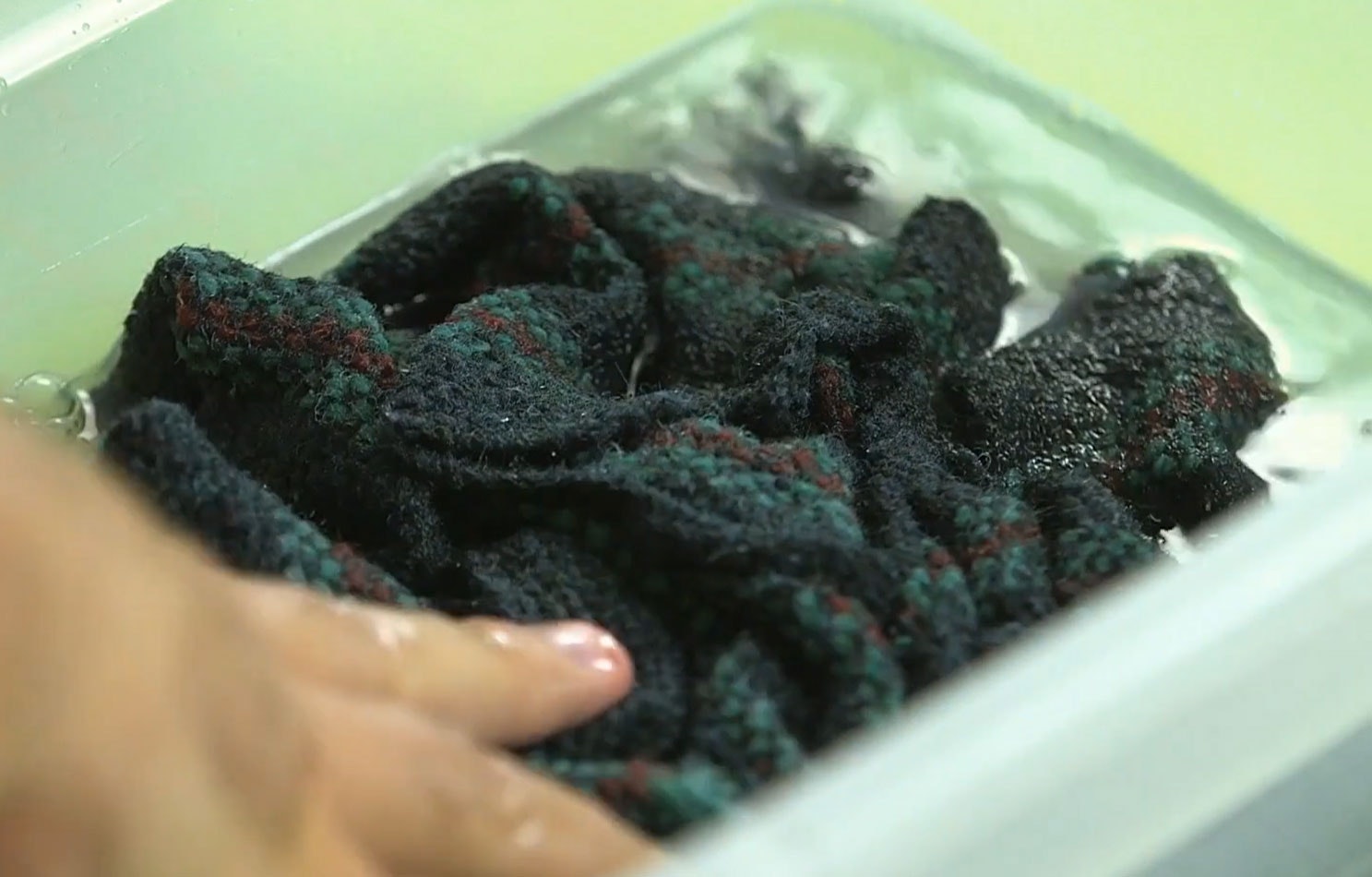
Worried about wet-finishing? You aren’t alone. Whether you are a beginner finishing your first project, or you are a weaver that is wet-finishing a new-to-you yarn, it can be nerve-racking. Will it shrink? Will the dyes bleed? Will it call forth eldritch nightmares from the deep? Okay, maybe that last one isn’t an issue, but it’s true—some fibers and yarns require more care than others.
Fortunately, wet-finishing without worry is possible.
Most handwoven cloth doesn’t require special handling during wet-finishing; however, if you’re dealing with fibers that could potentially full or felt, dark-colored yarns prone to bleeding, or delicates such as silk, you will need to adjust how you approach wet-finishing. This guide will take you from the basics to adjusting your methods for several special fiber use cases.
Regardless of what fiber you’re working with you’ll want to choose a mild detergent—one with a neutral (or close to it) pH. Avoid using soaps, as they’ll leave a soap scum film in the fibers of the finished cloth. If you’re wet-finishing in the washing machine, only use washing machine detergent or other detergents approved for use in the washing machine, such as Synthrapol. Never use dish detergent or shampoo in the washer.

One of these is not like the other! While the laundry detergent and dish detergent shown here are both great choices for wet-finishing handwoven cloth, the Castille soap is not. Soap reacts with minerals in the water to create a film or residue in and on your cloth leaving it dingy, less absorbent, and sometimes even smelly! Photos by George Boe
When wet-finishing sturdy cloth made of robust fibers such as cotton, linen, or rayon, most any mild detergent will work. Baby shampoo, “blue Dawn,” and even your regular washing machine detergent are all good choices.
Here are the basic instructions for wet-finishing most items by hand:
You can also wet-finish in your washing machine. If a set of towels will be thrown in the washer and dryer when its dirty, it makes sense to wet-finish them in the same way. If you're not worried about your yarn bleeding, you can even wet-finish them in a regular load of laundry!

No-rinse wool washes aren't just for wet-finishing! Use them to wash delicate fibers or wools you don't want to full.
The biggest concern most folks have with wet-finishing seems to stem from a fear of fulling and shrinking wool fabrics and rendering them useless. The key to wet-finishing wools is to do so slowly. If you want some fulling, agitate your fabric is warm water with a mild detergent and check its status frequently. Contrary to common fears, when fulling by hand, it’s very hard to overfull (but not impossible). Go slowly; when in doubt, stop, let the piece dry, and full again as and if needed. Carefully rinse in cold water, being careful not to full the fabric as you do so.
For pieces that don’t require fulling, using a no-rinse wool wash, such as Eucalan or SOAK, as your detergent protects against accidental shrinkage. Simply add the wool wash to water according to the product’s instructions, fully submerge the cloth, and let it sit for a set amount of time. Once the time is over, it’s ready to dry—no agitation or rinsing needed.
Vibrant, heavily dyed yarns might be beautiful on the loom, but they can be terrifying in the washbasin. Bleeding dye can dull bright yarns or leach into other lighter-colored yarns in the same piece. Using Synthrapol, manufactured by Jacquard, or Professional Textile Detergent, manufactured by Dharma Trading Company, can help alleviate these problems. Through the magic of science, both detergents are specially designed to remove excess dye in fabric without redepositing it in another place.
Of course, these detergents aren’t perfect, so keep an eye on your fabric and rinse and refill the washbasin as needed until the water stays clear. Keep your fabric moving in the water; don’t let it sit on itself as this can lead to dye migration from one section to another. Color-catching sheets designed to absorb dye in wash water can also be a useful tool, and I recommend using them for the first few washes after wet-finishing.
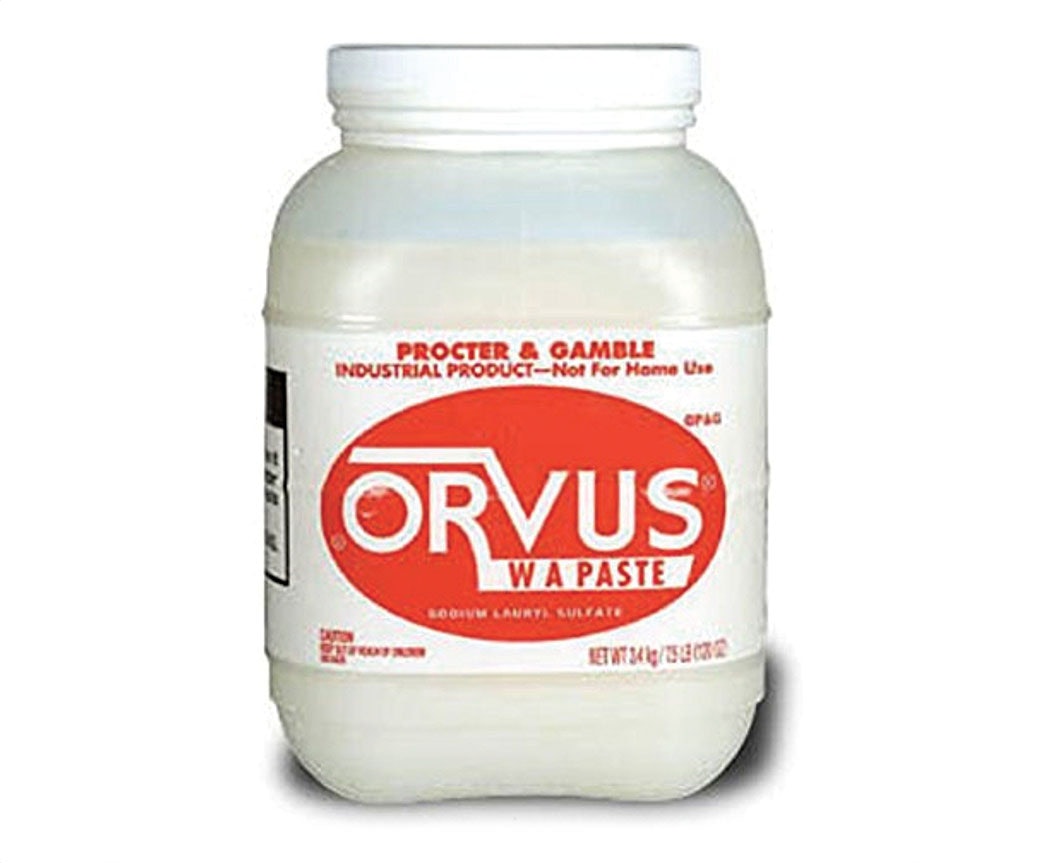
Designed as a horse shampoo, Orvus WA Paste makes an excellent detergent for extra-delicate fibers such as silk.
Wet-finishing extra-special fibers such as silk doesn’t need to be scary. Conservators and people who work with historic textiles recommend using Orvus WA Paste for delicate or sensitive fabrics. Designed originally as a horse shampoo, Orvus WA Paste has a neutral pH and contains no perfumes or dyes that might damage fabric. As a bonus, because it’s sold as a horse and livestock wash, Orvus WA Paste is often available in a large quantity at a very reasonable price. Wet-finish these items by hand in lukewarm water, being careful not to agitate too much. Often a gentle swirling motion is all you need. Rinse in cold water, again being careful not to abrade the yarn with too much agitation. You can also use no-rinse wool washes on these fibers as a no-agitation, no-rinse option.
While this primer is the perfect starting point for wet-finishing, it's not the end-all, be-all guide. For even more information on wet-finishing and what to do once your fabric is dry, check out these helpful resources:
Whatever detergent you choose for your cloth, just remember to test it on a sample or inconspicuous place on the weaving. Trust your senses as you wet-finish. Pay attention to the look and feel of the fiber as well as the wash water. Rinse and repeat as necessary—good advice for wet-finishing and good advice for life. If you'd like more information on wet-finishing, check out these other resources:
Happy Weaving! Christina
More from Little Looms
 Skill Guide: A Weaver’s Guide to FiberNo matter what loom(s) you love to weave on, understanding the different characteristics of a fiber can help you make better choices when picking yarns for projects.Christina Garton · July 31, 2026
 A Celebration of Stripes: Call for Submissions Fall 2027We're looking for striped projects of all kinds for our Fall 2027 issue—and that includes plaids and checks, too!Christina Garton · July 9, 2026
 Designing Borders for Pick-Up BandsLearn tips and tricks for designing borders for your pick-up bands, from simple stripes to more complex color-and-weave designs. Christina Garton · July 2, 2026
 Crochet for Your Selvedges? Your Edges Will Thank YouFind out why Sara Bixler finishes some of her woven pieces with crochet. Watch her free video clip, and then dive into several stitch options to try on your next project. Little Looms Editors · June 25, 2026
 Two Ways to Make Terrific TasselsTurn loom waste or small bits of extra-special yarns into beautiful, custom-made tassels perfect for trimming handwoven projects and so much more!Christina Garton · June 18, 2026
 An Invitation to SparkleLearn three approaches for using metallic threads to weave fabric that literally shines bright! Christina Garton · June 16, 2026
 Just Glue It: Pin-Loom Coasters and Wall ArtDon’t let your pin-loom pieces go to waste; transform single squares into a finished piece with the help of a little glue. Little Looms Editors · June 11, 2026
 Roll the Dice on Your Next DesignFind out how easy it is to kick-start your creativity when you leave your design choices up to chance. Tommye McClure Scanlin · June 9, 2026
 Weave Outside the Box! Exploring Pin-Loom ShapesThe 4" square pin loom might be the most well-known, but pin looms come in a wide variety of shapes and sizes. Christina Garton · June 1, 2026
 Skill Builder: Easy Inlay TechniquesLearn multiple techniques for adding inlay to your weaving, then find out how to read and weave charted inlay patterns. Christina Garton · May 5, 2026
Comments
No comments yet — be the first to share your thoughts.
Sign in to join the conversation — commenting is for signed-in members.